Search Results
862 results for “water changes”

Florida Red-bellied Cooter
The Florida Red-bellied Cooter (Pseudemys nelsoni) is a brightly marked freshwater turtle from Florida and Georgia, popular with keepers who want a colorful alternative to the Red-eared Slider. Hardy and easy to care for, it thrives under slider-like conditions with good water quality and a basking spot.

Philippen’s Stripe-necked Turtle
Philippen's Stripe-necked Turtle (Ocadia philippeni) is a large striped-neck turtle endemic to Hainan, China, resembling the Chinese stripe-necked turtle but with a larger carapace. Sensitive to temperature swings, it is omnivorous and fairly easy to keep, though wild individuals are scarce and often mislabeled as the Chinese stripe-necked turtle.

Tomato Frog
The tomato frog (Dyscophus guineti) is a brilliantly red, frog-shaped amphibian from Madagascar's eastern coast. Despite its looks, its skin secretes a painful defensive toxin, and it thrives in a humid, mostly terrestrial setup fed on crickets and other insects.

Texas Map Turtle
The Texas Map Turtle lives in the Colorado River basin of the Edwards Plateau in Texas and is a relatively common map turtle, though priced higher; it resembles the Mississippi Map Turtle and is sometimes hard to tell apart. It is the smallest-shelled of all map turtles, with no prominent keel.
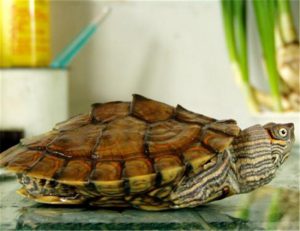
Graptemys pseudogeographica (False Map Turtle)
The false map turtle is a map turtle that is less commonly kept than sliders, needing clean water and a quiet environment. It is omnivorous but especially loves shrimp, and is distinguished by bright yellow markings behind the eyes.
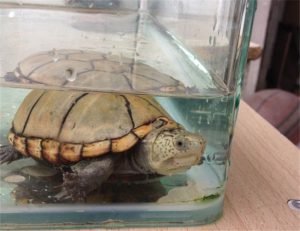
Kinosternon alamosae (Alamos Mud Turtle)
The Alamos mud turtle lives in aquatic-rich habitats and unique ponds, retreating into mud to aestivate during dry periods. In the wild it eats insects, small shrimp, and other invertebrates, and is a shy turtle that withdraws into its shell when threatened.
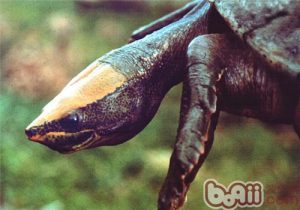
Central American River Turtle
The Central American River Turtle (Dermatemys mawii) is a large aquatic turtle, scarce in number and protected by local governments. It is a rarely seen aquatic species, the sole surviving member of the family Dermatemydidae, and an ancient reptile now found only in a small part of Mexico.

Why Do Blood Parrot Cichlids Bite Other Fish?
Blood parrot cichlids may bite tankmates over territory, food shortages, or poor water quality that makes them dart around. Prevent it with a larger tank, regular feeding, clean water (pH 6.5–7.0), and separating aggressive individuals if needed.

Symptoms and Causes of Arowana Gill Eversion
Arowana gill eversion (flip-gill) starts with abnormal gill movement and breathing, then rapid breathing, surfacing, and starvation, and finally fully everted gills that suffocate the fish. Causes: foul water (low oxygen), temperature swings, cramped space, a misplaced wave pump, or bacterial/parasite infection. Treat early with better water and oxygen; hardened tissue needs surgery.
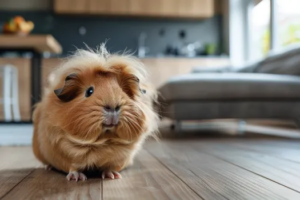
Which Hamster Is the Smallest? The Roborovski
The Roborovski dwarf hamster is the smallest of all, only 4 to 5 cm long with a yellowish back and white whiskers and brows that earn it the nickname 'little old man.' It is gentle but timid and noise-sensitive, nocturnal, and needs chew items because its incisors never stop growing.