Search Results
862 results for “water changes”

Black Arowana
The Black Arowana is a South American freshwater predator from the Amazon and Guyana, born with two long barbels and flowing fins. Aggressive and best kept alone in a covered tank over 120 cm, it needs 24–28°C soft water and a meaty diet of live foods. Watch for white spot and tail rot.

Malayan Golden Arawana
The Malayan Golden Arawana (Crossback Golden Arowana) is a prized Asian arowana from the Malay Peninsula whose gold scale frames extend all the way up the back. A large, skittish carnivorous fish, it needs a quiet, covered tank over 120 cm long and a meaty diet of live foods.

African Lungfish
The African lungfish is a living fossil of a fish: besides gills, it breathes with a lung-like swim bladder and can bury into mud to aestivate through a six-month dry season. A carnivorous, mostly placid fish that grows up to 1–2 m, it is now threatened as its native African waters shrink.
Taisho Sanshoku
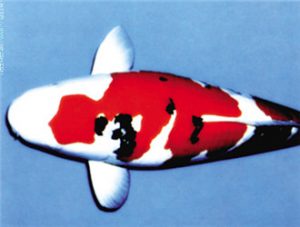
Taisho Sanshoku, commonly called Sanke, is one of the two representative koi varieties alongside Kohaku. Bred in Japan during the Taisho era (around 1915), it is a red-white-black tricolor koi whose appeal lies in the placement and quality of its black sumi markings over a pure white-and-red body. Its care is the same as for any koi.

Goldfish
The goldfish (Carassius auratus), native to China, is the world's oldest ornamental fish with more than 125 varieties. This guide covers its taxonomy, body and head shapes, care, tank environment, and feeding.

Red Arowana
The red arowana (Scleropages formosus) is a tropical freshwater dragon fish whose scales develop color in three phases—from yellow, to orange-red, to deep red. It needs a tank over 120 cm, full-spectrum light, and a meat-based diet.

Guangxi stripe-necked turtle
The Guangxi stripe-necked turtle is a rare, beautifully marked freshwater turtle endemic to Guangxi, China, long suspected—though never confirmed—to be a natural hybrid. In captivity it is an active, omnivorous species that enjoys warm water and is relatively easy for keepers to maintain.
Burman Big-headed Turtle
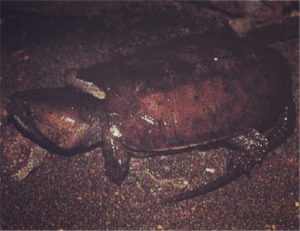
The Burmese Big-headed Turtle (Platysternon megacephalum) is a subspecies of the beaked turtle found mainly in Myanmar and Vietnam, an aggressive carnivore that adapts fairly well to captivity. It mates in autumn and lays eggs from early summer, but its fierce temperament demands careful handling.

Burmese Eyed Turtle
The Burmese eyed turtle (Morenia ocellata) comes from southern Myanmar and occasionally appears in the Chinese pet market at reasonable prices with an appealing look. Weak at adapting to new environments, it is nevertheless easy to keep as a largely aquatic turtle.
Pink-ringed Tent Turtle
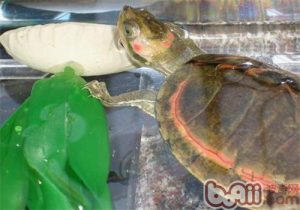
The Pink-ringed Tent Turtle (Pangshura tentoria) is a striking high-domed turtle with pink cheeks and a pink ring around its carapace, but it is delicate, with hatchling mortality often above 80%, mostly from skin rot. Best suited to experienced keepers who can provide stable temperatures and a basking area.