Your Pet Encyclopedia
All-in-One Expert Knowledge Platform
From breed identification to disease prevention, from expert Q&A to health care — ChirpyPet provides reliable, professional knowledge for every pet family.
667+
Pet Breeds
449+
Disease Entries
898+
Expert Q&A
1,375+
Health Tips
🐕
💊
Disease Encyclopedia
449+ Entries
🩺
Expert Q&A
898+ Answers
Breeds
Popular Pet Breeds
Explore the most popular dog and cat breeds — learn about their temperament, care tips, and health considerations
🐾
Onion Snail
Aquatic Species
The Onion Snail is rare in species, mostly spherical with a thin, brittle shell. The shell surface is plain and translucent, abundant in tropical soft-coral reefs, with a few in the deep sea.
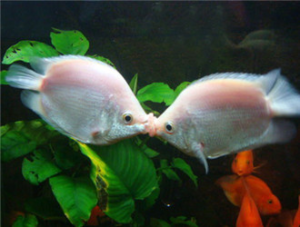
Kissing Gourami
Aquatic Species
The Kissing Gourami (Helostoma temminckii), also called the Kissing Fish, is a common, well-known tropical ornamental. Many think its 'kissing' shows love, but it is actually territorial fighting.
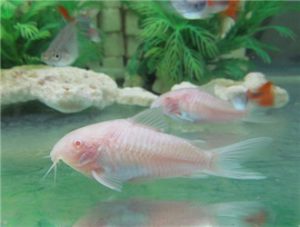
White Corydoras
Aquatic Species
The White Corydoras is native to South American waters and is now mostly captive-bred. An albino form of the Bronze Cory, it has a milky white body with clear red eyes, is gentle, and is kept in schools. Egg-laying and good with small fish, it suits planted tanks as a bottom fish.
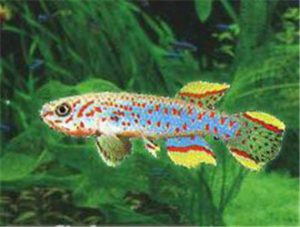
Aegean Killifish
Aquatic Species
The Aegean Killifish (Aphyosemion celiae) is native to West Africa and shaped like the harp killifish, 6-7 cm long. It likes weakly acidic water and higher temperature (optimal 24-28 C), eats live foods like bloodworms and artemia, and is hardy and easy to keep.
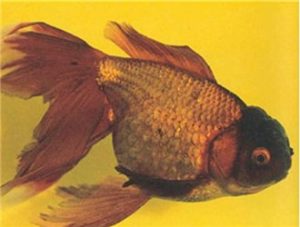
Brown Oranda with Curled Opercula
Aquatic Species
In goldfish, curled opercula is usually a disease sign, but the Brown Oranda with Curled Opercula has gill covers that grow everted from inside out like a wound - a hereditary variation.
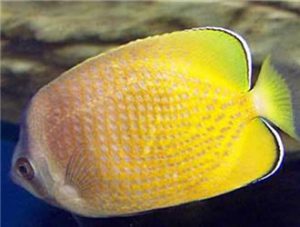
Sunburst Butterflyfish
Aquatic Species
The Sunburst Butterflyfish (Chaetodon kleinii) is pale tea-colored in front and dark yellow behind. Though not vivid at depth, it is liked by some aquarists and can mix with other butterflies, including its own kind, if added together.
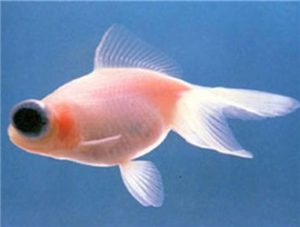
Cinnabar-eye Big Butterfly-tail Goldfish
Aquatic Species
The Cinnabar-eye Big Butterfly-tail Goldfish is a goldfish variety with a pure white belly and only cinnabar-red eyes, very striking. Gentle, it is beloved by hobbyists.
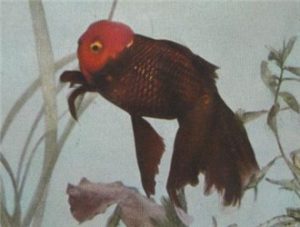
Brown Oranda with Red Head
Aquatic Species
The Brown Oranda with Red Head is a goldfish variety, a rather precious one of the Wen-jin group. Because it resembles the Purple Oranda, care is needed when buying to tell them apart.
Expert Q&A
Popular Expert Q&A
A professional Q&A knowledge base — from daily care to disease prevention, providing reliable references for pet owners
Why does my cat eat less despite seeming normal?
Often estrus (reduced appetite is normal then); or it dislikes/craves the current food. Test with favorite treats; if it eats those, it's just being picky - vary the diet and limit snacks.
Why do cats recover from distemper after surviving 7 days?
The virus's cycle is about 7 days; passing day 7 means clearing the danger period. Days 3-5 are the riskiest, with white cells dropping then rebounding; by day 7 vomiting eases and appetite returns.
What do ladybugs eat?
Ladybugs are beneficial insects divided into predatory, fungus-eating and plant-eating types. The familiar seven-spotted ladybug is predatory, feeding on aphids, scale insects, mites and similar pests.
Is feline panleukopenia contagious between cats?
Yes - it spreads via feces, vomit and direct contact. Keep unvaccinated or sick cats away, and disinfect your hands after going out before touching your cat.
Diseases
Common Disease Encyclopedia
A comprehensive dog and cat disease knowledge base to help pet owners understand symptoms, prevention, and treatment options
Canine and Feline Lymphosarcoma
Lymphosarcoma is a malignant cancer of the lymph nodes and lymphoid tissue that affects both dogs and cats, most often dogs over four years of age. It presents in multicentric, alimentary, and thymic forms, each with distinct clinical signs. While incurable, prompt chemotherapy can extend life from a matter of weeks to 6–24 months.
Digestive System
Canine and Feline Lymphosarcoma (Lymphoma)
Lymphosarcoma, or lymphoma, is a malignant lymphoid tumor in dogs and cats that appears as multicentric, alimentary, or thymic forms with lymph-node enlargement, diarrhea, or chest masses. Diagnosis uses aspirate, biopsy, and imaging, and veterinary-directed chemotherapy can extend life, though the disease is generally not curable.
Cardiovascular Diseases
Canine and Feline Spinal Cord Tumors
Spinal cord tumors in dogs and cats compress the cord and cause weakness, incoordination, or paralysis depending on location, with German Shepherds commonly affected. Diagnosis uses imaging and myelography, and treatment is usually veterinary-directed chemotherapy, though prognosis is often poor.
Neurological Diseases
Canine and Feline Brain Tumors
Brain tumors in dogs and cats are usually meningeal or glial growths that appear in older pets and compress brain tissue, causing behavior changes, circling, head tilt, blindness, and seizures. Diagnosis uses neurological exam and MRI or CT, and treatment may include surgery, radiation, or chemotherapy, though prognosis is often poor.
Neurological Diseases
Pet Health
Featured Health Articles
Science-based care knowledge — from daily routines to disease prevention, helping your pets grow healthy and happy
🐾Cat Health
Is It Normal for Cats to Sleep With Their Eyes Open?
A cat sleeping with eyes open is usually normal and tied to its sleep style. In light sleep, cats stay alert with eyes partly open so they can react and escape danger fast; deep sleep closes the eyes. Some cats simply prefer partially open eyes. But eye disease can also cause it, so check for...
🐾Nutrition & Diet
CoQ10 for Cats: How to Choose and Use It
Cats produce less CoQ10 as they age—below half of youth levels by 7—and breeds like Maine Coons, Ragdolls, and British Shorthairs are prone to hypertrophic cardiomyopathy, so veterinary-guided CoQ10 is common supportive care. When buying, avoid false-potency claims, 'heart hydrolysate' labeling that adds almost no CoQ10, and fake imported-ingredient or cure claims. Choose a product...
🐾Nutrition & Diet
CoQ10 for Dogs and Cats: A Heart-Health Supplement Guide
CoQ10 supports heart-muscle energy and antioxidant defense, making it a staple for senior pets over 7 and high-risk breeds such as Pomeranians, Toy Poodles, Maine Coons, and Ragdolls, as well as adjunct care for heart disease. Choose a product with a clear stated CoQ10 value and independent testing rather than vague claims, and prefer a...
🐾Disease Prevention
Parasite Prevention for Cats: What Every Owner Should Know
Cats face hidden parasite risks—fleas, lice, ticks, and mites cause itching and anemia, while internal worms and mosquito-borne heartworm can be life-threatening even in indoor cats. A combined internal-and-external spot-on simplifies prevention: the ingredient pair imidacloprid plus moxidectin paralyzes external parasites and clears roundworms, hookworms, and heartworm in one monthly, pill-free dose at the back...
🐾Disease Prevention
How Combined Spot-On Parasite Treatments Work
Regular parasite control protects pets from hair loss, dermatitis, anemia, and gut upset, and some parasites can spread to people. Combined spot-on treatments pair imidacloprid and moxidectin to cover fleas, lice, ear and sarcoptic mites, roundworms, hookworms, and whipworms, and prevent heartworm in one monthly, no-pill application at the back of the neck. The formula...
🐾Daily Care
Do Budgerigars Tolerate Cold Weather
Budgerigars cannot tolerate below 5 C, so keep them indoors and warm in winter with lamps or heaters, and feed oil-rich seeds. Bathe sparingly in warm water, and if a cold appears, keep warm and treat with an appropriate antibiotic while maintaining cage hygiene.
🐾Nutrition & Diet
CoQ10 for Cats: What to Know Before You Buy
Cats—particularly Ragdolls, Maine Coons, and British Shorthairs—can inherit a high risk of heart disease, and veterinarians may recommend CoQ10 as supportive care alongside medication. A worthwhile feline formula shows a verified CoQ10 amount, uses a pure yeast-fermented source, includes taurine (essential for cats), and pairs antioxidants like astaxanthin or vitamins C and E without redundant...
🐾Nutrition & Diet
White Bear Hamster: Traits and Care
The White Bear hamster is a white, red- or black-eyed Teddy Bear type that is often short-tempered, nocturnal, timid, and heat-sensitive near 27 C. Bond through patience and hand-feeding, and control diet to prevent obesity-linked disease.
Have Pet Health Questions?
Browse our expert Q&A knowledge base — from daily care to disease prevention, get professional reference information
View Expert Q&A →