Search Results
46 results for “turtle behavior”
Are Red-Eared Sliders Smarter Than Pond Turtles?
The red-eared slider is widely regarded as the smartest turtle species and is brighter than the pond turtle. With regular feeding at set times and plenty of interaction, a slider quickly learns its owner's voice and scent, recognizes them, and dares to approach, showing real attachment. Compared with pond turtles, sliders have faster reactions, stronger learning, and better memory, and they can form conditioning more quickly. Feeding by hand from a young age is the fastest way to build that bond.
What Are the Differences Between Tortoises and Sea Turtles?
Tortoises and sea turtles differ greatly in form, habitat, and habits, even though both belong to the order Testudines. Tortoises live on land, needing only occasional soaking and unable to stay in water long; sea turtles spend life at sea, coming ashore only to lay eggs and bask. A tortoise's shell is thick and domed, with short sturdy legs that bear its weight; a sea turtle's shell is thin and smooth, with long front flippers. Tortoises can pull their limbs inside when threatened; sea turtles cannot. Both are omnivorous, but tortoises eat roots, leaves, fruit, and vegetables, while sea turtles favor seaweed. Knowing these differences helps any keeper care for them correctly.

What Happens When You Overfeed a Turtle?
Overfeeding burdens a turtle's digestive system and can lead to diarrhea, indigestion, and gastroenteritis over time. Leftover food fouls the water, lowering immunity and raising the risk of eye infections, shell rot, and skin disease. Rapid growth that outpaces shell renewal can even cause deformity. To avoid these problems, control portion size and feeding method. Hatchlings need daily feeding, but no more than the size of the head; adults tolerate hunger well and can be fed every few days.

When Do Yellow-Margined Box Turtles Reach Sexual Maturity?
Yellow-margined box turtles generally reach sexual maturity at 5 to 7 years of age, then mate each mid-April and lay eggs from May to September. But breeding needs more than maturity—suitable environment, diet, light, temperature, and humidity all matter, and you need one male and one female paired together. After laying, check the eggs for fertilization and remove infertile ones so they don't spoil the rest of the clutch. This article covers their maturity timeline and breeding behavior.

Sulawesi Forest Turtle
The Sulawesi forest turtle is the sole member of its genus, a gentle, semi-aquatic turtle found only in limited areas of northern Sulawesi, Indonesia. Modest in size and undemanding in diet, it remains rare and difficult to obtain in the pet trade.

Western Pond Turtle
The western pond turtle, also called the California pond turtle, is a broad-headed, relatively secretive freshwater turtle native to the U.S. West Coast. An accomplished swimmer that loves basking, it is a protected species usually available only as captive-bred stock.

Sonoran mud turtle
The Sonoran mud turtle is an uncommon, nocturnal musk turtle from the southwestern United States and northern Mexico, notable as the only subspecies in its group with night-active habits. A medium-sized aquatic turtle, it adapts well to captive care once settled.
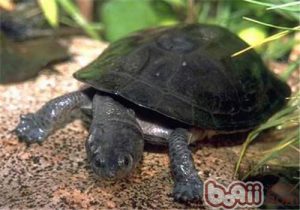
Mesoclemmys Turtle
The Mesoclemmys turtle is a little-known, wide-ranging South American species that has been largely overlooked by both researchers and hobbyists. A small, secretive turtle inhabiting shaded forest streams, it remains rare in the pet trade.
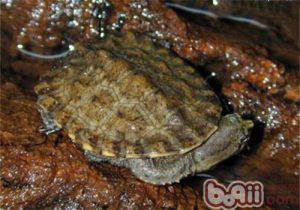
South American Snake-necked Turtle
The South American Snake-necked Turtle (Hydromedusa tectifera), also called the Argentine snake-necked turtle, is a popular but challenging species with a long smooth neck and rock-like shell. It is prone to shell rot and demands cool, slightly acidic water and careful husbandry.

Chinese False-eyed Turtle
The Chinese False-eyed Turtle (Mauremys pallidiceps) is a turtle endemic to China that favors clear, slow-moving streams with sandy bottoms and is sometimes found in farmland. Shy and largely carnivorous in captivity, it remains uncommon and is best kept with attention to water quality and a varied diet.