Search Results
46 results for “turtle behavior”
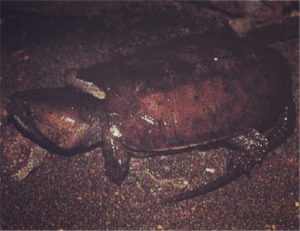
Burman Big-headed Turtle
The Burmese Big-headed Turtle (Platysternon megacephalum) is a subspecies of the beaked turtle found mainly in Myanmar and Vietnam, an aggressive carnivore that adapts fairly well to captivity. It mates in autumn and lays eggs from early summer, but its fierce temperament demands careful handling.
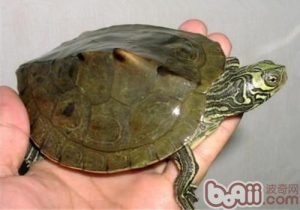
Barbour’s Map Turtle
Barbour's Map Turtle (Graptemys barbouri) is a strikingly marked map turtle from the river systems of the southeastern United States, resembling a painted turtle in form. Though widespread in the wild, it is uncommon in captivity, with the Mississippi map turtle being the most frequently kept of the group.

Madagascan Big-headed Side-necked Turtle
The Madagascan Big-headed Side-necked Turtle (Erymnochelys madagascariensis) is the sole member of its genus, endemic to the rivers and lakes of Madagascar. Listed as critically endangered and heavily exploited for food, it remains rare in the pet trade and its captive care requirements are not yet fully established.
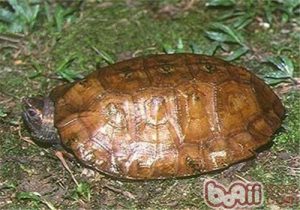
Malayan Flat-shelled Turtle
The Malayan Flat-shelled Turtle (Notochely platynota) is a secretive, chiefly herbivorous freshwater turtle from Southeast Asia that prefers shallow, plant-rich waters. Wild-caught individuals are notoriously fragile, making it one of the most difficult turtles to keep successfully in captivity.

Three-striped roofed turtle
The giant roofed turtles (including the Burmese, Red-crowned, and Three-striped roofed turtles) are large, rare Asian river turtles that need spacious outdoor ponds with basking sites. Timid yet personable, they require warm water and careful temperature gradients to stay healthy.

Chiapas giant musk turtle
The Chiapas Giant Musk Turtle (Staurotypus triporcatus) is the largest and most vividly patterned of the musk turtles, native to Central America. A highly aquatic, somewhat aggressive omnivore, it needs a large, sturdy, well-filtered aquatic setup.
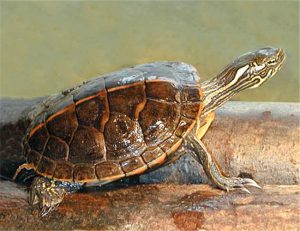
Southern Painted Turtle
The Southern Painted Turtle (Chrysemys picta dorsalis) is the smallest, most strikingly marked subspecies of painted turtle, known for the bold red, orange, or yellow stripe along its carapace midline. Easy to keep and fond of basking, it is omnivorous with a diet shifting from meat as a juvenile to mostly plants as an adult.

Black Wood Turtle
The Black Wood Turtle (Rhinoclemmys funerea) is a striking freshwater turtle with a black or dark brown carapace and yellow-edged plastron, native from Honduras south to the Panama Canal. Cold-tolerant and highly adaptable, it can be kept aquatic or terrestrial, though males should be housed separately to avoid fighting.

African Keeled Mud Turtle
The African Keeled Mud Turtle (Pelusios carinatus) is a side-necked turtle from Africa, dark gray to black with a keeled shell and a yellow plastron. A gentle, hardy semi-aquatic species that adapts well to captivity and makes a good, if uncommon, community turtle.
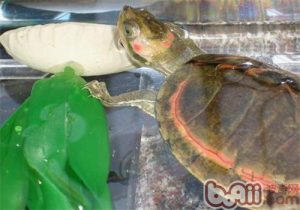
Pink-ringed Tent Turtle
The Pink-ringed Tent Turtle (Pangshura tentoria) is a striking high-domed turtle with pink cheeks and a pink ring around its carapace, but it is delicate, with hatchling mortality often above 80%, mostly from skin rot. Best suited to experienced keepers who can provide stable temperatures and a basking area.