Search Results
58 results for “parrot stress”

Why Parrots Are a Poor Fit for Full-Time Workers
Parrots need companionship and enrichment; long alone hours in a small, monotonous cage lead to stress, depression, and feather-plucking. Full-time workers who cannot meet these needs should think twice, or keep a pair and enrich the environment.

How to Tell If a Parrot Is Healthy
Choose a healthy parrot by checking bright clear eyes, glossy plumage, intact strong feet, loud penetrating vocalizations, and a clean living environment. Avoid birds kept in dirty conditions even if they look fine, as they may carry disease.
How long for an adult blood parrot to adapt to a new tank?
A blood parrot adapts to a new tank in 3 to 5 days, or up to 10 for shy fish. Do not feed for the first 3 days.

Pacific Parrotlet
The Pacific Parrotlet (Pacific Parrotlet), also known as the Pocket Parrot, is relatively small among parrots. This parrot has a very good, playful, brave, and confident personality, which is why so many people keep it.

Double-eyed Fig Parrot
The Double-eyed Fig Parrot is a tiny, charming parrot from Indonesia, New Guinea, and Papua New Guinea. Scarce in captivity and difficult to breed, it needs careful husbandry and is sensitive to cold, stress, and vitamin K deficiency.
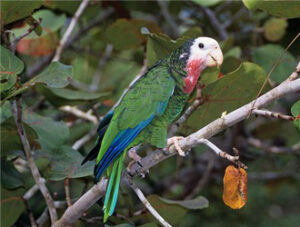
Cuban Parrot
The Cuban Parrot is a typical perching bird, listed under CITES Appendix I, a critically endangered first-class protected parrot. It has 4 subspecies, mainly distributed in mountain forests and low-latitude woodland.

Jardine Parrot
The Jardine Parrot (Poicephalus gulielmi) currently has three subspecies. Its body is almost entirely green and is the second-largest parrot species after the Cape Parrot. Its distribution is scattered and not concentrated, mainly across central Africa and parts of West Africa.

What Taboos Should New Parrot Owners Avoid?
Parrots are popular but easy for beginners to hurt. Avoid drowning (close toilet/bathroom), ceiling fans, open windows, exposed wires and glue traps, and temperatures outside 20–30°C. Feed a varied diet, keep the cage clean and quiet, and wash produce to remove pesticide. Trim flight feathers if needed for safety.

Why Does a Parrot Pluck Its Feathers?
A parrot plucks its feathers to groom, out of boredom or stress, from calcium/vitamin deficiency, or due to infection (feather lice). Bathe it every 2–3 days, give chew toys and out-of-cage time, keep a quiet spacious cage, supplement calcium and greens, and deworm or see a vet for skin disease. Occasional plucking is normal; frequent plucking needs attention.

How Often Do Blood Parrot Cichlids Lay Eggs, and What Are the Signs?
Blood parrot cichlids are popular, colorful hybrid fish. The male cannot reproduce, so breeding requires a female crossed with a red devil. This article covers laying frequency, pre-spawning signs, and breeding notes.