Search Results
612 results for “morning”
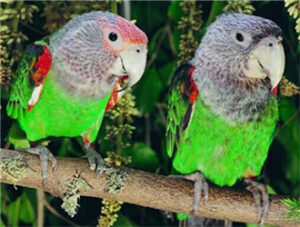
Cape Parrot
The Cape Parrot (Poicephalus robustus) has plumage very similar to most other parrots and is hard to tell apart without expertise. Its sex can be judged by appearance: the female has orange-red crown feathers, while the male does not. It is a popular, long-lived pet bird native to southeastern Africa.

Yellow-browed Warbler
The Yellow-browed Warbler (Yellow-browed Warbler) is a very active little bird, smaller than a sparrow, with its type locality in India. It is listed in the 'National Protected Terrestrial Wildlife of Beneficial or Important Economic and Scientific Value' directory issued by the State Forestry Administration on August 1, 2000.
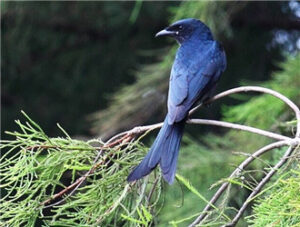
Black Drongo
The Black Drongo (Dicrurus macrocercus) is fierce by nature, especially during the breeding season when it is highly territorial, and is usually very active and likes to fight in groups. In the wild it feeds mainly on insects. It is distributed from Iran and Afghanistan through South and Southeast Asia to Java and Bali.

Brown Shrike
The Brown Shrike (Lanius cristatus), also known as the Red-tailed Shrike, Brown Bush Shrike, Tiger Shrike, and Little Shrike, likes moist habitats, feeds on insects, and occasionally eats a little fresh grass. It is mainly distributed across Siberia, from the Irtysh River and Altai east to the Anadyr Basin and Kamchatka Peninsula, as well as Korea, Mongolia, and Japan; in winter it is also seen in India, Indochina, Malaysia, the Philippines, and Indonesia.
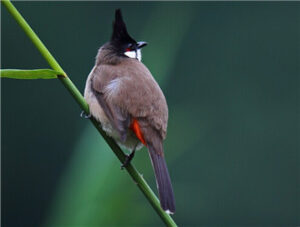
Red-whiskered Bulbul
The Red-whiskered Bulbul (Pycnonotus jocosus) has a wide distribution, mainly in southeastern Tibet, southern Yunnan, southern Guizhou, southwestern Guangxi, and Guangdong in China, as well as India, Nepal, Sikkim, Bhutan, Bangladesh, and Indochina. Each March, Yala Province in southern Thailand holds an annual Red-whiskered Bulbul singing contest, rewarding the winning owner.

Siberian Chipmunk
The Siberian Chipmunk has the habits of storing food and hibernating; hibernation occurs in the wild, while in warm indoor captivity it does not need to hibernate. Wild chipmunks are mainly distributed in North China, Northwest China, and Northeast China. Their fur is of good quality and attractive.

Yellow-naped Amazon
The Yellow-naped Amazon is a parrot with outstanding talking ability; with proper training it can be truly astonishing. However, although it talks well, it can also be very noisy, so before keeping one you must be sure it will not disturb you or those around you. Of course, it has quiet moments too - for example, wild Yellow-naped Amazons are very quiet while foraging.
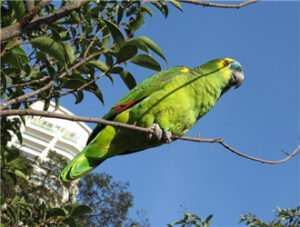
Green-Cheeked Amazon
The Green-Cheeked Amazon is now endangered due to habitat destruction and illegal trapping by humans. It is currently listed under CITES Appendix I as a protected species.

How Often to Feed Turtles in Summer
In hot summer a turtle's metabolism speeds up and its appetite grows, so you can feed a bit more to build reserves. Hatchlings under 5 cm should be fed daily, larger turtles every other day, and feeding should avoid the strong midday sun. Good summer care also means shade plants, checking food for spoilage, balanced nutrition, and frequent water changes to prevent shell rot.

Can a Dog Recover from Heatstroke on Its Own
Mild heatstroke in dogs can sometimes resolve on its own if the dog is moved to a cool place and cooled promptly, but moderate to severe heatstroke rarely self-heals and can be fatal. Treatment ranges from fan cooling and oral rehydration to emergency cooling and immediate veterinary care, while prevention focuses on coat trimming, never leaving a dog in a car, and avoiding midday walks.