Red-whiskered Bulbul
2 Photo Gallery
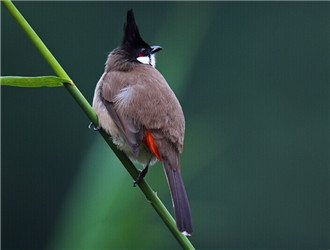
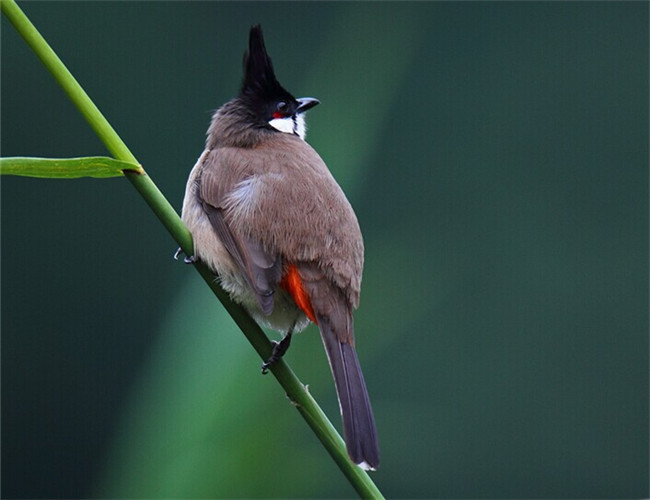
1 Red-whiskered Bulbul Breed Overview
The Red-whiskered Bulbul (Pycnonotus jocosus) has a wide distribution, mainly in southeastern Tibet, southern Yunnan, southern Guizhou, southwestern Guangxi, and Guangdong in China, as well as India, Nepal, Sikkim, Bhutan, Bangladesh, and Indochina. Each March, Yala Province in southern Thailand holds an annual Red-whiskered Bulbul singing contest, rewarding the winning owner.
Chinese Name: Red-whiskered Bulbul
Chinese Aliases: Hightop, High-crest Bird, Black-headed Bulbul
English Name: Red-whiskered Bulbul
Binomial Name: Pycnonotus jocosus
Kingdom: Animalia
Phylum: Chordata
Subphylum: Vertebrata
Class: Aves
Subclass: Neornithes
Order: Passeriformes
Family: Pycnonotidae
Genus: Pycnonotus
Species: Pycnonotus jocosus
Distribution: Southeastern Tibet, southern Yunnan, southern Guizhou, southwestern Guangxi, Guangdong, India, Nepal, Sikkim, Bhutan, Bangladesh, and Indochina.
2 Physical Characteristics of the Red-whiskered Bulbul
The Red-whiskered Bulbul has bright plumage and is easy to keep; it is very active, likes to sing, and has a beautiful voice, making it one of the best pet birds. It usually moves in small flocks of a dozen or so, sometimes 20-30, and sometimes mixes with the Brown-breasted and Yellow-vented Bulbuls. Most of the day it is active and foraging in the tree canopy or shrubs.
The Red-whiskered Bulbul has a black forehead to crown with a tall black crest; below and behind the eye is a deep red tuft forming a red patch. The ear coverts and cheeks are white, sitting just below the red patch. The nape, back, and uppertail coverts are brown or earthy brown, some specimens with reddish-brown edges. The tail is dark brown or black-brown; except the central 1-2 pairs, the other tail feathers have white tips on the inner web, widening outward, until the whole tip is white. The wing coverts match the back; flight feathers are dark or black-brown with earthy-yellow outer edges. The cheeks and throat are white, separated from the white cheek by a thin black line from the bill base along the cheek patch to behind the ear. The rest of the underparts are white or near-white; the flanks are light brown or pale smoky brown; each side of the chest has a broad dark-brown or black band starting at the lower neck and extending to the chest center, narrowing and breaking at the middle, forming an incomplete breast band. The undertail coverts are bright red or orange-red. The iris is brown, brown-red, or dark brown; bill and feet are black.
3 Red-whiskered Bulbul Living Environment
In the wild, the Red-whiskered Bulbul likes to inhabit low hills and foothills below 1,500 m, and is occasionally seen by roadsides, small streams, or farmland, sometimes even lingering in courtyards.
A newly caught bird can be tamed in a dark-board cage for a week, then kept in a Hwamei cage. For large aviary keeping, place directly in; a cage 2.5 m high, 3 m long, 2 m wide can hold 20-25 birds, with many perches for resting, hopping, and flying to increase exercise. Keep it clean. The bulbul likes water baths – give 2-3 a week; in winter keep warm, and bring indoors below 0 degrees C.
4 Red-whiskered Bulbul Feeding Guidelines
The Red-whiskered Bulbul is known for its voice; a newly arrived bird’s call is simple but improves with keeping, and its breeding-season song is especially moving. A newly caught bird can be tamed in a dark-board cage for a week, then kept in a Hwamei cage.
Main feed: a mash of 6 parts millet-flour, 1 part soybean flour, 1 part egg, and 2 parts fish/meat paste, plus egg-rice (500 g rice fried yellow over low heat with 5 eggs). Green feed: apple, banana, tomato, greens, with some insects. Or daily mix of 20% soybean flour, 50% corn flour, 10% fish meal or silkworm-pupa meal, 20% cooked egg yolk, plus leaves, fruit, and mealworms. Refill water twice daily; egg-rice always available; mash and greens fed morning and afternoon, clearing leftovers after 1 hour in summer to prevent spoilage.