Search Results
876 results for “indoor”

Brown Chinchilla
The Brown Chinchilla results from crossing a beige or gold chinchilla with a black one. It has brown ears, brown exterior, and even a brown belly. Because its coat varies in shade, it is divided into three color degrees.

Homozygous Ebony Chinchilla
The Homozygous Ebony Chinchilla is striking in appearance, as it carries no stray hairs of any other color and is so completely black that its eyes are nearly impossible to find. Because its pure black is far more precious than other colors, it is also relatively more expensive than other chinchillas.

Orthopsittaca manilata
The Red-bellied Macaw (Orthopsittaca manilata) is relatively large among small parrots, with a body almost entirely covered in beautiful green feathers. Its featherless, striped face resembles a painted Beijing-opera mask and can turn red when excited. It feeds almost exclusively on the fruit of one special palm tree.

Yellow-crowned Parrot
The Yellow-crowned Parrot is a very intelligent Amazon parrot with four subspecies. It looks plain and is fairly cheap, but has excellent talking ability; captive-bred birds are tame and interact frequently with owners, though most on the market are wild-caught.
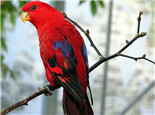
Red Lory
The Red Lory is beautiful from every angle and is very common in Taiwan, especially in bird shops where Red Lory chicks are often seen. It is a fairly noisy parrot whose occasionally piercing calls can be unbearable, so before buying an adult, first assess whether your home environment suits such a noisy species.

Java Sparrow
Wild Java Sparrows have plain plumage, but selective breeding has produced many color variants. Now found worldwide, the Java Sparrow has been bred into various new colors and has become a world-famous cage bird.
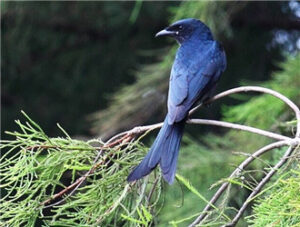
Black Drongo
The Black Drongo (Dicrurus macrocercus) is fierce by nature, especially during the breeding season when it is highly territorial, and is usually very active and likes to fight in groups. In the wild it feeds mainly on insects. It is distributed from Iran and Afghanistan through South and Southeast Asia to Java and Bali.

Brown Shrike
The Brown Shrike (Lanius cristatus), also known as the Red-tailed Shrike, Brown Bush Shrike, Tiger Shrike, and Little Shrike, likes moist habitats, feeds on insects, and occasionally eats a little fresh grass. It is mainly distributed across Siberia, from the Irtysh River and Altai east to the Anadyr Basin and Kamchatka Peninsula, as well as Korea, Mongolia, and Japan; in winter it is also seen in India, Indochina, Malaysia, the Philippines, and Indonesia.
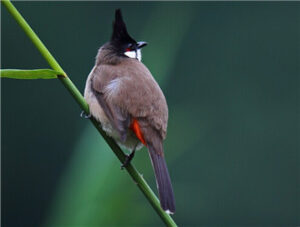
Red-whiskered Bulbul
The Red-whiskered Bulbul (Pycnonotus jocosus) has a wide distribution, mainly in southeastern Tibet, southern Yunnan, southern Guizhou, southwestern Guangxi, and Guangdong in China, as well as India, Nepal, Sikkim, Bhutan, Bangladesh, and Indochina. Each March, Yala Province in southern Thailand holds an annual Red-whiskered Bulbul singing contest, rewarding the winning owner.

Oriolus
The Oriole (Oriolus), also called 'oriole' or 'golden oriole', is the subject of many poems and is very famous. Females are mainly distributed across the tropical Eastern Hemisphere except New Zealand and the Pacific islands. They breed in eastern China and migrate south to India in winter.