Search Results
876 results for “indoor”

Siberian Chipmunk
The Siberian Chipmunk has the habits of storing food and hibernating; hibernation occurs in the wild, while in warm indoor captivity it does not need to hibernate. Wild chipmunks are mainly distributed in North China, Northwest China, and Northeast China. Their fur is of good quality and attractive.

Jardine Parrot
The Jardine Parrot (Poicephalus gulielmi) currently has three subspecies. Its body is almost entirely green and is the second-largest parrot species after the Cape Parrot. Its distribution is scattered and not concentrated, mainly across central Africa and parts of West Africa.
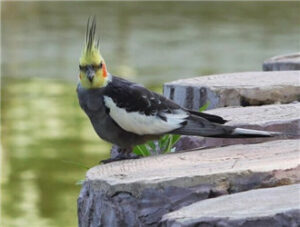
Cockatiel
The Cockatiel (Cockatiel) goes by different names in different regions; in Hong Kong and Taiwan it is often called the Crested Parrot. The Cockatiel is one of the most common medium-sized parrots in the world. Hand-reared young birds are very lively and love to bond with their owners.

Blue-fronted Amazon
The Blue-fronted Amazon is one of the more common Amazon parrots, with very bright plumage. Its drawback is a loud call, so it is best kept in a detached house where it will not disturb neighbors. Its diet is varied and easy to manage.

Chestnut-Fronted Macaw
The Chestnut-Fronted Macaw rivals the large macaws in talking ability. It has very beautiful plumage, a medium build, and a featherless face covered with small black spots. It originates from the tropical regions of the Americas.

Bluethroat
The Bluethroat (Luscinia svecica), also known as the bluethroated robin, is a small, shy songbird that favors shrubland and reed beds. It darts short distances along the ground and frequently flicks or fans its tail, and its song is especially beautiful.
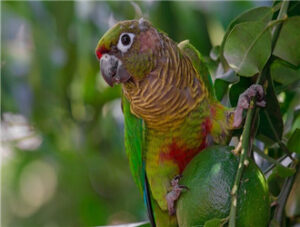
Green-cheeked Conure
The Green-cheeked Conure (Pyrrhura molinae), also called the green-cheeked parakeet, is a typical climbing bird with richly colored plumage. It is mainly distributed in the highlands of eastern Bolivia.

Siberian Blue Robin
The Siberian Blue Robin (Luscinia cyane), also called the blue-tailed robin, is widely distributed and in the wild likes to dwell near the ground, hiding among reeds and thorns. Its type locality is the Daurian region of Siberia.

Can a Dog Recover from Heatstroke on Its Own
Mild heatstroke in dogs can sometimes resolve on its own if the dog is moved to a cool place and cooled promptly, but moderate to severe heatstroke rarely self-heals and can be fatal. Treatment ranges from fan cooling and oral rehydration to emergency cooling and immediate veterinary care, while prevention focuses on coat trimming, never leaving a dog in a car, and avoiding midday walks.

Rabbit Rhinitis: Symptoms and Treatment
Infectious rabbit rhinitis is usually triggered by temperature swings; young rabbits are hit hard with high death rates. This guide covers symptoms, when it strikes, and treatment plus prevention (isolation, penicillin/streptomycin, vaccines).