Search Results
295 results for “feed management”

Mini Lop Rabbit
The Mini Lop, also called the Dwarf Lop, is a certified pet rabbit breed with adorably small, drooping ears. Developed from French Lop and Chinchilla crossings, it is larger than the Holland Lop and American Fuzzy Lop, making a charming and gentle companion.
Belgian Rabbit
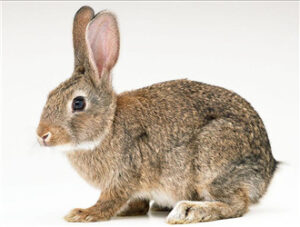
The Belgian Rabbit, also known as the Giant Gray Rabbit or Flemish Giant, is a famous meat rabbit breed originally from Belgium. With its large build, yellowish-brown coat, and high meat yield, it is mostly raised on farms in rural areas rather than kept as a pet.

Chinese Bulbul
The Chinese Bulbul (Pycnonotus sinensis) is a small passerine bird of the family Pycnonotidae. Its forehead to crown is black, with white above the eyes extending to the nape, forming a white nape ring, and a white belly with yellow-green streaks. Lively, it flocks in fruit trees and sometimes sallies from a perch to catch insects. Common south of the Yangtze, it lives in hills or plains shrubbery and coniferous forests. Lively and not very afraid of people. Omnivorous, eating both animals and plants. It eats many agricultural and forestry pests and is a beneficial bird worth protecting.
Dremomys pernyi
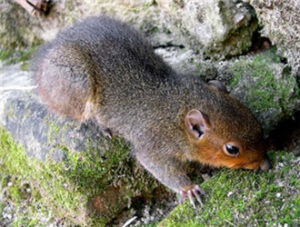
The Long-nosed Squirrel, also called the 'red-mouthed rat', has habits little different from ordinary squirrels, being active in the morning and at dusk. Captive Long-nosed Squirrels are often called 'little devils' because, small as they are, they are the most destructive at home.

Yellow-browed Warbler
The Yellow-browed Warbler (Yellow-browed Warbler) is a very active little bird, smaller than a sparrow, with its type locality in India. It is listed in the 'National Protected Terrestrial Wildlife of Beneficial or Important Economic and Scientific Value' directory issued by the State Forestry Administration on August 1, 2000.

Brown Shrike
The Brown Shrike (Lanius cristatus), also known as the Red-tailed Shrike, Brown Bush Shrike, Tiger Shrike, and Little Shrike, likes moist habitats, feeds on insects, and occasionally eats a little fresh grass. It is mainly distributed across Siberia, from the Irtysh River and Altai east to the Anadyr Basin and Kamchatka Peninsula, as well as Korea, Mongolia, and Japan; in winter it is also seen in India, Indochina, Malaysia, the Philippines, and Indonesia.
Hyacinth Macaw
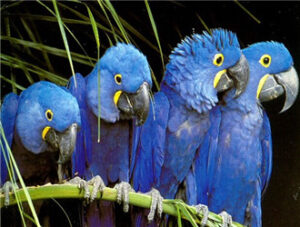
The Hyacinth Macaw (Anodorhynchus hyacinthinus) is the largest parrot in the world and one of the rarest creatures on Earth. Because of its high value it has long been a target for hunters, and this has pushed the species toward a survival crisis.

How to Wean Kits (Baby Rabbits)
Wean kits to let the doe recover and the young adapt: breeding/Angora/Rex at 30–40 days, meat rabbits at 28–35 days, or before 28 days under intensive 'blood mating'. Use one-time weaning for uniform litters and staged weaning for uneven ones, cut the doe's concentrates first to prevent mastitis, and keep kits in their original hutch 3–5 days post-weaning to reduce stress and losses.

How Environmental Factors Affect Meat Rabbit Fattening
A dim, quiet environment helps fatten meat rabbits: it suppresses sexual development, raises feed efficiency, calms the animals, and speeds weight gain — trials show rabbits in darker cages weigh 250–350 g more after six months. Because they get little sunlight, keep cages clean, disinfect often, and feed a complete diet rich in vitamins and minerals.

Precautions for Group-Fattening Meat Rabbits
Group-fattening meat rabbits saves labor and improves finishing, but only if you manage stocking density, separate sexes and group by condition, keep littermates together, run an all-in/all-out system, and maintain strict hygiene, disinfection, quiet, and temperature control. These measures raise survival and finishing rates.