Belgian Rabbit
2 Photo Gallery

1 Belgian Rabbit Breed Overview
Belgian Rabbit (details)
The Belgian Rabbit originates from Belgium and is a well-known meat rabbit breed, also raised in large numbers in China. It does not look especially appealing, but it has a high meat yield and is mostly raised in rural areas.
In Belgium, the price of high-quality rabbit pelts is almost equal to that of the meat. Rabbit meat makes up the vast majority of Belgian consumption. Besides domestic consumption, rabbit meat is also exported to the UK. Belgium exports about 6,000 tons of rabbit meat to the UK each year, almost half of its current total production.
Chinese name: Belgian Rabbit;
Aliases: Giant Gray Rabbit, Flemish Giant;
Origin: Beveren, Belgium;
Temperament: Timid and gentle;
Habits: The Belgian Rabbit likes dry conditions, has strong adaptability, and tolerates coarse feed;
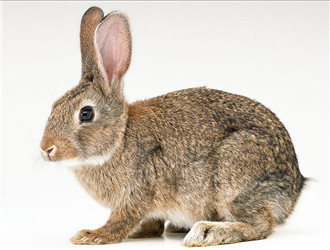
Appearance: The Belgian Rabbit’s coat is yellowish-brown or chestnut, with black-tinged hair tips and a grayish-white belly;
Breeding performance: Strong fertility, 4–5 litters per year, averaging 7–8 kits per litter, high milk production, and even growth among the young;
Price: Around 100 yuan.
2 Belgian Rabbit Physical Characteristics
Belgian Rabbit (details)
The Belgian Rabbit is a meat rabbit breed, so it is larger than ordinary household rabbits, especially adults, which can weigh 7–8 kg. The Belgian Rabbit eats a lot and is not suited to being a home pet, so most Belgian Rabbits are raised in rural areas as economic animals.
The Belgian Rabbit’s coat is yellowish-brown or chestnut, with black-tinged hair tips and a grayish-white belly; there are irregular white rings around the eyes, and the ear tips have a black shiny fur edge. The eyes are black, the ears are large and upright, leaning slightly to the sides; the cheeks protrude, the forehead is broad and round, and the nasal bone is raised, resembling a horse’s head, commonly called the ‘horse rabbit’.
The Belgian Rabbit’s build closely resembles that of a wild hare; the coat is deep red with yellowish-brown or sesame color, the body is large, and the torso and limbs are long. The eyes are dark brown, the ears are large and long and upright, with a shiny black fur edge on the ear margin. The tail is black on the inside, and the coat texture is tough.
The Belgian Rabbit has broad, large, upright ears leaning slightly to the sides. The head is large and thick, the cheeks protrude, the forehead is broad and round, and the nasal bridge is raised. The body is long, the limbs are sturdy, and the hindquarters are well developed—features typical of a meat rabbit.
3 Belgian Rabbit Care Tips
Belgian Rabbit (details)
In keeping the Belgian Rabbit, the main issue is disease prevention. For rabbits, prevention is usually more important than treatment. Professional rabbit farms devote more energy to prevention, and when a sick rabbit is found, they abandon treatment immediately and bury it to quickly isolate the disease.
I. Production performance of the Belgian Rabbit
This rabbit is a large meat breed with the traits of large size, fast growth, tolerance of coarse feed, wide adaptability, and strong disease resistance. At 6 weeks, kits weigh 1.2–1.3 kg; at 3 months, 2.8–3.2 kg. Adult weight: bucks 5.5–6.0 kg, does 6.0–6.5 kg, up to 7–9 kg. Its tolerance of coarse feed is higher than other breeds, suiting extensive rural keeping. It produces 4–5 litters per year, averaging 7–8 kits, with high milk production and fast kit development.
II. Disease prevention for the Belgian Rabbit
After being introduced to China, this rabbit suits rural keeping and is welcomed by farmers, especially in northern rural areas. Its main drawbacks are: in cage conditions it is prone to foot dermatitis and high incidence of ear mange; litter size varies; kits vary in size; and the inheritance of coat color is not very stable.
4 Belgian Rabbit Living Environment
Belgian Rabbit (details)
The Belgian Rabbit is widely distributed in rural China, usually kept in the form of farms. The most important part of building a farm is site selection and environment layout; below are suitable environments for rabbit houses and notes on their internal construction.
I. Scientific site selection
Choose a site on high, dry ground. The rabbit house should have some thermal insulation, and be far from slaughterhouses, livestock markets, animal-product factories, and main roads—preferably more than 200 m from transport arteries and more than 100 m from ordinary roads, in a quiet place. There should be more than 200 m between the rabbit farm and residential areas, and the farm should be downwind of them. For drainage, the farm ground should be flat or slightly sloped.
II. Good water source
Production and domestic water should be clean and odorless, free of excess impurities, bacteria, and parasites, and free of decaying toxic substances; mineral content should not be excessive or insufficient. Ideal sources are tap water and qualified deep-well water; flowing river or lake water, if not polluted by domestic or industrial wastewater, can be used after purification and disinfection.
III. Durable materials
The building materials of the rabbit house, especially the cages and cage furniture, must be sturdy and durable to prevent damage from chewing; structurally there should be measures to prevent rabbits from burrowing and escaping.
IV. Economic and practical
When designing the rabbit house, consider scale, purpose, and breed, and proceed according to your own financial capacity—adapt to local conditions and make do with what is available; do not blindly pursue a modern rabbit house.
V. Reasonable design
The rabbit house design should suit rabbit habits, support growth and production performance, facilitate management and work efficiency, and aid cleanliness and disease prevention. Also avoid disconnects or incompatibilities between the steps of the production flow.
5 Belgian Rabbit Feeding Guidelines
Belgian Rabbit (details)
For the Belgian Rabbit, food selection can follow two principles: first, ensure complete nutrition, and second, control feeding costs. For economic rabbits, one does not feed them at any cost like pet rabbits, so breeders often mix their own concentrates according to the situation.
I. Hay should be the staple for rabbits
For the herbivorous Belgian Rabbit, pasture hay is an essential staple; its high crude fiber, protein, and amino acids make it an ideal food. The abundant crude fiber in hay not only helps the Belgian Rabbit’s large, long digestive tract peristalsize, effectively avoiding digestive diseases, but also wears down the teeth—important because a rabbit’s teeth grow throughout its life.
II. Add some concentrates to the diet
Providing an appropriate amount balances the Belgian Rabbit’s nutrition and supplies daily energy, protein, fat, minerals, and amino acids, and also helps wear down teeth. Too much easily causes soft stools and digestive problems; rabbit vets recommend that young rabbits get pellets at 3–5% of their body weight per day.
III. Clean drinking water is necessary
Always provide boiled, mineral, or purified water—fresh boiled water within 24 hours is best—available without limit. Provide it in a dedicated ball-valve water bottle to prevent mouth inflammation.
IV. Some appetite-opening snacks: green feed
Young rabbits (1–6 months) have weak stomachs and should not be fed greens. Edible vegetables include lettuce, celery, broccoli, cabbage, carrots, and Indian lettuce; fruits such as apples, pears, peaches, and papaya that humans eat are all fine for the Belgian Rabbit.