Search Results
4113 results for “ear pH”

Peruvian Golden Copper Tarantula
The Peruvian Golden Copper Tarantula (Lasiodorides polycuspulatus) is a medium-sized, calm tarantula from central Peru whose silver-gray spiderlings develop golden-copper markings as they mature. Though wild collection has dwindled, it remains a favored, beginner-friendly species.

Brazilian Gray Smoke Tarantula
The Brazilian Gray Smoke Tarantula (Grammostola alticeps) is a terrestrial tarantula from Brazil and Uruguay named for the gray fuzz covering its body. A slow-growing species reaching about 14 cm, it is defensive enough that keepers should avoid oversized prey that may trigger hair-kicking.
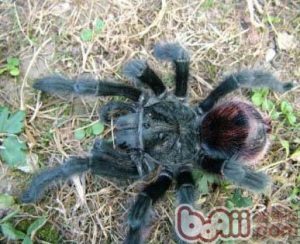
The Entre Rios Tarantula
The Entre Rios Tarantula (Grammostola iheringi) is a large, strikingly colored pet tarantula from southern Brazil and the Rio Grande do Sul region, noted for its calm temperament. Its dark green-to-black body contrasted with a vivid red abdomen makes it one of the most coveted species among hobbyists, though export restrictions keep it rare and pricey.
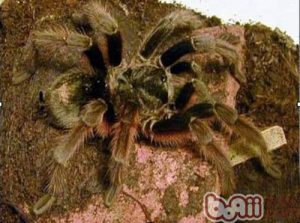
Brazilian Coffee Tarantula
The Brazilian Coffee Tarantula (Acanthoscurria suina), also known as the Argentine Coffee, is a ground-dwelling species from Argentina and Uruguay that favors subtropical grassland. With a mild temperament, slow speed, and modest size, it is often recommended as a good starter tarantula for beginners.

Psalmopoeus pulcher
The Panama Golden (Psalmopoeus pulcher), also called the Panama Blonde, is a striking arboreal tarantula from Panama's rainforests, reaching 15-16 cm. Golden adults with pink-legged slings are beautiful but fast, somewhat aggressive, and best for experienced keepers.

Takydromus wolteri
The mountain grass lizard (Takydromus wolteri) is a grass lizard very widely distributed across northern China. A small, slender, burrowing lizard, it is kept by both researchers and hobbyists and does well on a sand substrate with 12-14 hours of daylight.

Tiliqua nigrolutea
The blotched blue-tongued skink (Tiliqua nigrolutea) is found in southeastern Australia and Tasmania, feeding on insects, land snails, flowers, and fruit. A terrestrial skink that adapts well to captivity, it needs a temperature gradient of 22-32 deg C and humidity of 50-80%.

Vipera ruselli siamensis
The white-browed pit viper (Vipera ruselli siamensis) is a venomous pit viper found in Fujian, Guangdong, and Guangxi in China, and abroad in India, Pakistan, Myanmar, and Thailand. Despite its potent venom, used medically to treat cerebral thrombosis, it is one of the easiest snakes to keep and tolerates a wide range of temperatures.

Kapuas Mud Snake
The Kapuas Mud Snake (also called the color-changing snake) is found in swamps and swamp forests along Indonesia's Kapuas River. A rear-fanged colubrid discovered only around 2005, it is venomous but not yet kept as a pet.

Xenesthis monstrosa
The Colombian Giant Black (Xenesthis monstrosa) is a dark-colored tarantula little known in the pet trade and described as very similar to the Colombian Laser. With a black carapace marked only by pink spots around the eyes and a large 22-24 cm legspan, it is a challenging, expert-level species.