Kapuas Mud Snake
2 Photo Gallery
View All 9 Photos


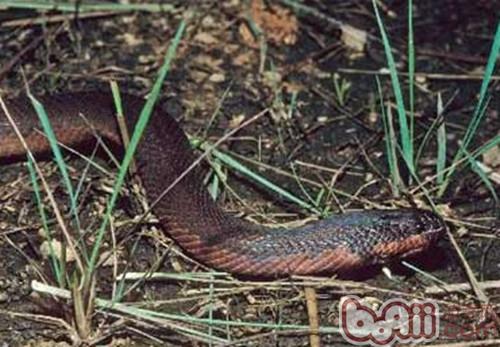
1 Overview
The Kapuas Mud Snake, also known as the Kapuas mud snake, is found mainly in swamps and swamp forests along Indonesia’s Kapuas River. It belongs to the Kapuas mud snake species.
Kingdom: Animalia
Phylum: Chordata
Subphylum: Vertebrata
Class: Reptilia
Order: Squamata
Suborder: Serpentes
2 Physical Characteristics
The Kapuas Mud Snake differs in length between sexes: males total 286-466 mm, females 306-504 mm. Scale counts observed: rostral (1), internasal (1), prefrontal (2), frontal (1), parietal (2), nasal (1 per side), loreal (1 per side), supraocular (1 per side), anterior temporal (1 per side), mental (1), chin shields (4), dorsal scales (19-19-17 rows), preanal (1).
Reproductive traits: secondary sexual characteristics mainly appear as a relatively longer tail in males and a correspondingly higher number of subcaudal scales; the secondary sex ratio at birth is close to 1:1, and the tertiary ratio is also about 1:1 in larger populations but about 0.5:1 in smaller ones; females reach sexual maturity (based on first parturition) at a total length above 350 mm.
3 Geographic Distribution
The Kapuas Mud Snake is mainly distributed in Borneo. It favors various water bodies, mostly still or slow-moving water, with very few found in still water or slow irrigation canals. From July 2005 to September 2006, scientists surveyed 22,000 square km of core tropical rainforest across Borneo (Indonesia, Malaysia, and Brunei) and found 30 fish species, 2 tree frogs, 16 ginger species, 3 trees, and 1 broadleaf plant.
The World Wildlife Fund announced last April that since 1996, 361 new species have been found in Borneo, an average of at least three per month, and over a thousand species there remain unstudied. Stuart Chapman, international coordinator of WWF’s ‘Heart of Borneo’ project, said: ‘These discoveries again prove that Borneo is one of the world’s most important centers of biodiversity.’
With agricultural clearing and cash-crop planting, only half of the island’s primary forest remains, and local wildlife urgently needs protection. Borneo is home to 10 primate species, 350 birds, 150 reptiles and amphibians, and 15,000 plant species, and is also the refuge of endangered species such as orangutans, Malayan sun bears, and rhinos.
4 Care Guidelines
Because the Kapuas Mud Snake is the first new snake species discovered in about five years and is venomous, no one has yet kept it as a pet; we can only introduce its environment, food, and habits.
1. Habitat: various water bodies, mostly still water, mainly in Borneo’s swamps, with very few in still water or slow irrigation canals.
2. Feeding and diet: feeding begins in April, peaks in June, and stops in September; food is mainly small frogs and tadpoles, then small fish.
3. Reproductive habits: secondary sexual characteristics mainly appear as a relatively longer tail in males and a higher number of subcaudal scales; the secondary sex ratio at birth is close to 1:1, and the tertiary ratio is about 1:1 in larger populations but about 0.5:1 in smaller ones; females reach sexual maturity at a total length above 350 mm.
5 Feeding Requirements
Like most homalopsid water snakes, many people assume water snakes are non-venomous, but in fact a water snake’s venom is in its rear fangs. What dietary requirements does this distinctive snake have?
Besides favoring various freshwater fish and loaches, it especially likes eels and various frogs; feed should follow the catchable season or the snake’s fattening needs, with as much variety as possible to meet growth needs. Most water snakes have a strong appetite, feeding every 4-5 days; a snake weighing about 100-200 g can swallow 1-2 small fish per meal, sometimes 3-4. Also, the Kapuas Mud Snake is very bold, people nearby do not disturb its feeding. After eating, like other snakes, it lies still; do not disturb it then, or it will regurgitate the food, delaying the next meal and reducing intake, which harms its growth. Therefore, reduce visits or deny entry to strangers.