Search Results
9 results for “bird heating”
Do Budgerigars Tolerate Cold Weather
Budgerigars are sensitive to cold and cannot survive below 5 C, so keep the room above that in winter. Move the cage indoors and, if needed, use an incandescent lamp or heater. Feeding more oil-rich seeds like peanuts and sunflower helps them build fat reserves. Lower the bath frequency in cold weather, bathe only in warm water, and if a bird catches a chill, keep it warm and use an antibiotic as directed. Good hygiene supports recovery.

Burmese Black Turtle
The Burmese Black Turtle (Melanochelys trijuga indopeninsularis) is one of the seven subspecies of the Indian black turtle (three-keeled turtle). Common in Chinese pet markets — almost all sourced from wild capture — it is inexpensive but plain-looking, so it is kept in modest numbers.
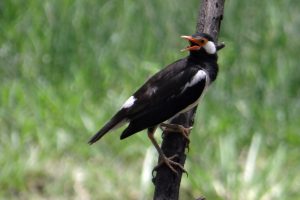
Crested Myna
The crested myna (Acridotheres cristatellus) is a common and uniquely Chinese cage bird, all black with a yellow bill and feet and white wing patches that form a figure-eight in flight. Highly intelligent and a great mimic, it is a favorite talking bird.
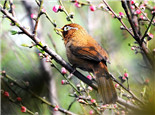
Hwamei (Chinese Hwamei)
The hwamei (Garrulax canorus) looks plain but has a famously loud, melodious song and has long been a prized cage bird in China. It is shy and alert, feeds on insects and seeds, and is the city bird of Guangzhou.

Vipera ruselli siamensis
The white-browed pit viper (Vipera ruselli siamensis) is a venomous pit viper found in Fujian, Guangdong, and Guangxi in China, and abroad in India, Pakistan, Myanmar, and Thailand. Despite its potent venom, used medically to treat cerebral thrombosis, it is one of the easiest snakes to keep and tolerates a wide range of temperatures.

Dyscophus antongili
The Antongil Bay Tomato Frog (Dyscophus antongili) is native to the east coast of Madagascar and feeds on insects. Restricted to a narrow range and threatened by habitat loss and poaching for the pet trade, it is listed under CITES Appendix I. Wild individuals come in red (females) or yellow (males), so choose a female if you want a red 'tomato'.

Tuatara
The tuatara (Sphenodon punctatus) is one of the oldest surviving reptiles, a nocturnal inhabitant of the rocky coastlines and seabird burrows of New Zealand's offshore islands. It predates the dinosaurs and is the sole surviving member of the order Rhynchocephalia.

Fox Snake
The fox snake (Pantherophis vulpinus) is a North American colubrid named for the fox-like musk its glands release when disturbed. A harmless, non-venomous constrictor found near the Great Lakes, it is an uncommon and somewhat specialist pet.

Adanson’s Mud Turtle
The Adanson's Mud Turtle is a small, seldom-seen aquatic turtle from central Africa, a minor member of the African side-neck genus. Although not internationally listed as endangered, it is rarely traded.