Search Results
3409 results for “Heat”

Why Does a Parrot Fish Have a White Film Over Its Eyes?
A white film over a parrot fish's eyes is usually cloud-eye disease, caused by poor water quality or injury letting bacteria in, excess nitrogen, or accompanying white-spot disease. Treatment depends on the cause: improve water and raise temperature for mild cases, add antibiotics and salt baths for infection, or treat the underlying white-spot disease.

Symptoms, Prevention, and Treatment of Turtle Enteritis
Turtle enteritis is best prevented—clean enclosures, good water quality, and sensible feeding greatly lower the outbreak rate. Early signs are lethargy, poor appetite, and misshapen or discolored stools; advanced cases show sunken eyes and dry skin. Control relies on sanitation, water quality, proper feeding, isolation, and herbal or berberine injections.

Why Do Cats Fight Each Other?
Cats may fight for several reasons: playful wrestling, territorial disputes, hormone-driven aggression during mating season, or redirected frustration. Understanding the trigger helps owners step in safely and prevent injuries — for example, by providing separate resources, isolating new cats, or neutering after the mating season.

British Shorthair
The British Shorthair is a compact, powerful, easygoing cat with a round face, dense short coat, and large round eyes. With a history tracing to Roman times, it became a recognized breed in 19th-century Britain and is beloved for its calm, friendly, adaptable nature—an ideal companion that gets along with everyone.

Siberian
The Siberian Forest Cat, shortened to Siberian Cat, has the earliest written records from the 11th century: it was a very common cat in Russian markets and Siberian villages. Living in a harsh country, it is covered in long fur with a thick ruff around the neck. Its outer guard hairs are hard, smooth, and oily, and its dense undercoat resists the Siberian cold.
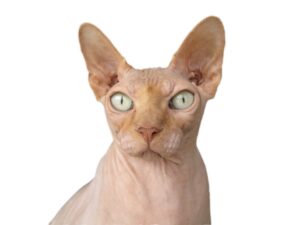
Sphynx
Sphynx (details)

Chinchilla
The Chinchilla, with the English name Chinchilla, originates from Britain and descends from the Angora and the Persian. Some call it the artificial cat, hinting it was deliberately bred by humans. Notably, the Chinchilla was the first fully human-bred cat, appearing in 1894.

Russian Blue
The Russian Blue, also called Russian Blue, Archangel Blue, or Maltese cat, with English name Russian Blue, is known as the 'aristocrat of shorthairs' and 'elf of winter.' Originating in the 19th century, once only in Russia, now worldwide. Few in number globally; buying one costs at least tens of thousands. Cheap ones are hybrids.

Cornish Rex
The Cornish Rex, English name Cornish Rex, originates from England. Its ancestor is a non-purebred shorthair, dating to 1950, with a childlike, mischievous personality. The breeder mated the first kitten, Kallibunker, with its mother, producing more cats. This is the origin of the Cornish Rex breed.

Somali
The Somali cat looks much like the Abyssinian—slender, slightly rounded, with big V-shaped ears and almond eyes—but with a semi-long, soft, dense coat. Developed in the US and Canada from a spontaneous long-haired mutation of the Abyssinian, the Somali is intelligent, gentle, playful, and water-loving, though its abundant coat needs regular grooming.