Cornish Rex
2 Photo Gallery
View All 5 Photos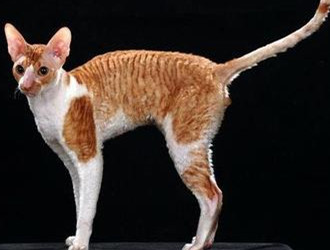

1 Cornish Rex Breed Overview
The Cornish Rex, English name Cornish Rex, originates from England. Its ancestor is a non-purebred shorthair, dating to 1950, with a childlike, mischievous personality. The breeder mated the first kitten, Kallibunker, with its mother, producing more cats. This is the origin of the Cornish Rex breed.
2 Cornish Rex Physical Characteristics
Cornish Rex (details)
The Cornish Rex has a coat curled like finger-waves, a slender long body, high waist, arched back, long straight legs, developed tendons, strong jumping, and big ears-striking traits.
As the name says, it originates from Cornwall, England, plus curly fur, hence Cornish Rex.
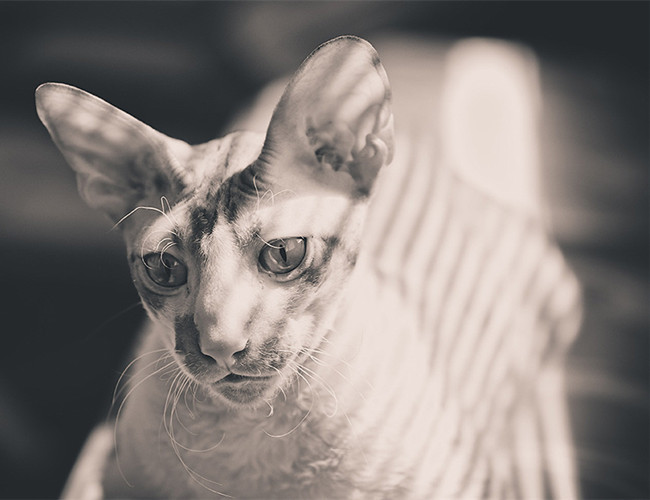
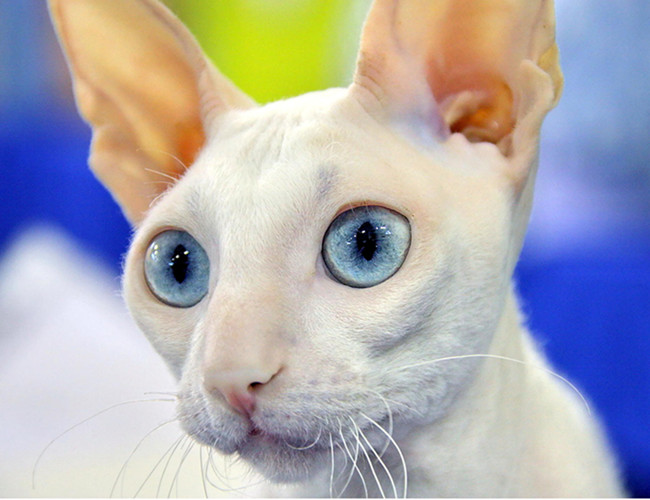
Its ears are very large, head flat on top, very cute. Slender neck, tall build, looks clever; muscular but not thin. A shorthair with soft curly fur like fine waves. Narrow round skull; long face; ears to chin a straight line; from the side, forehead to bridge arches like a hump; whisker area clearly dipped; curved whiskers; compact muzzle; hook nose; strong jaw.
Its eyes are beautiful-large, oval, slightly upturned, spirited; colors gold, bronze, blue, and more. Medium build, long and elegant, fine bones, arched topline, compact withers, broad deep chest, tucked belly, parallel belly fur, curly; oval toes, compact strong claws. Long thin tail, pointed tip, soft elastic like a whip, fully covered in curly fur.
The whole coat is curly head to tail, even the whiskers; only undercoat, no topcoat; tail silky; fur dense, close to the body. Many colors: solid, smoke, tabby, spotted, tortie, etc.; white, blue, orange, cream, yellowish, tabby, brown common.
If you want one, give it a try-you’ll adore it.
3 Cornish Rex Temperament
Cornish Rex (details)
Childlike, smart, mischievous, outwardly cool but warm inside, lively, curious, intelligent, independent, people-loving, energetic, playful. Curious about everything; while other cats fear exhibition crowds and noise, the Cornish Rex happily watches. They love humans and social activity. All small animals are children at heart, wanting love and company, tolerating bad moods and busy neglect-fine companions.
Despite elegant looks, the Rex is surprisingly sturdy, needing no special care. Active cats love exercise; entertaining them is easy. Many breeds lose kitten play as adults, but a Rex never does, playing like a kitten even grown. Because it wants in on everything, it hates confinement; caged and denied contact, it loses interest in life-coat dulls, curls vanish, body thins. Roaming the home is its lifestyle.
Its short coat makes it uncomfortable in cold, damp outdoors. In winter, give a thick bed and gentle heating. It loves heat and stays by the source; if you use heaters, it will sit on them all winter-but ensure safety. In summer, even on hottest days it suns. Hold it on a balcony-good for cat and you.
4 Cornish Rex Care Tips
Cornish Rex (details)
It loves humans, very outgoing; bold ones enjoy company. A bit mischievous but very easy to keep.
I. Keeping
It loves humans, very outgoing; bold ones enjoy company. A bit mischievous but very easy to keep. Some cats are picky, rare in this breed. It eats any cat food and has a big appetite; avoid obesity-for health, not looks. Control diet or diseases and bone issues follow.
II. Grooming
Its healthy short coat stays clean and wavy without help. But grooming tricks add effect, especially for show. Tool: a chamois. Rubbing with chamois adds shine. Best is daily hand-combing; gentle strokes bring waves and spread needed oils, and the Rex loves it. If combing other breeds is a chore, combing a Rex is a pleasure.
The Cornish Rex coat is short, so cold tolerance is weaker. In cold damp seasons, keep it warm and dry. Sometimes overactive skin oils cause stud-tail; note this in care. Careful attention keeps it from obesity, disease, and bone problems, and gives you a healthy life together.
5 Cornish Rex Feeding Requirements
Cornish Rex (details)
Lively and food-loving (all small animals love food). When feeding, choose quality tasty kibble and mind this active cat’s habits-it may scratch furniture. Let me share.
I. How to choose quality cat food
1. Ensure quality: buy from pet hospitals or proper stores, or supermarkets. Never the wet market or bulk food-cheap but plant-based; long-term causes heart disease or worse. Cats are carnivores; meat and needed nutrients required.
2. Flavor choice: many brands offer ‘beef,’ ‘chicken,’ ‘lamb’ etc. When a label says ‘beef’ or ‘chicken,’ how much is unknown.
Pro ingredients are listed by weight descending. If chicken is first, it’s the main ingredient, more than others.
So check the ratio; if ‘chicken flavor’ but chicken not first, it’s not high-chicken.
Pets favoring one flavor is normal, but rotate or mix to avoid pickiness and shortage panic.
II. How to train the Cornish Rex not to scratch furniture
1. It scratches the same spot because foot glands secrete sticky scent that attracts re-scratching; also after waking. Act accordingly.
2. Prepare a post about 70 cm long, about 20 cm thick, upright near the bed, sturdy.
3. Train from kittenhood: bring to post, place front paws on it, mimic scratching so glands mark it.
4. Repeated marking attracts it to the post; it stops furniture scratching.
5. For established furniture-scratchers, cover the spot with plastic or wood, place a post just before it, train same way, then slowly move the post 5-10 cm at a time to your spot-never rush.
That’s all. Some cats are picky, rare in this breed. It eats any food and has a big appetite, troubling for weight-control diet. In training, be patient; each cat differs.