Search Results
5271 results for “Can f 5”
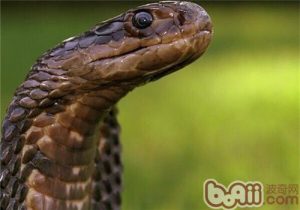
Forest Cobra
The Forest Cobra (Naja melanoleuca) is the largest and one of the longest cobras, a glossy black, highly venomous elapid of African rainforests. Mainly neurotoxic and delivering large venom doses, it is dangerous but generally avoids human settlements; captive individuals have lived over 28 years.
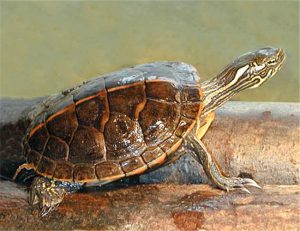
Southern Painted Turtle
The Southern Painted Turtle (Chrysemys picta dorsalis) is the smallest, most strikingly marked subspecies of painted turtle, known for the bold red, orange, or yellow stripe along its carapace midline. Easy to keep and fond of basking, it is omnivorous with a diet shifting from meat as a juvenile to mostly plants as an adult.

Geoffroy’s Side-necked Turtle
The Geoffroy's Side-necked Turtle (Phrynops geoffroanus) is a shy, nocturnal South American side-necked turtle that dislikes basking and prefers dark, vegetated waters. Small and aquatic, it needs a large, clean setup and a varied omnivorous diet.

Bengal Roof Turtle
The Bengal Roof Turtle (also called the Red-crowned Roof Turtle) is a Critically Endangered Asian river turtle famed for the brilliant red, white, and blue courtship colors of mature males. Rare in captivity and heavily protected, it needs pristine filtered water and warm temperatures, and is mainly herbivorous as an adult.

Home’s Hinge-back Tortoise
The Home's Hinge-back Tortoise (Kinixys homeana) is a shy, high-difficulty African tortoise known for its hinged rear carapace and a 90-degree rear shell drop. It prefers warm, humid conditions with ample shade and a varied omnivorous diet, but is prone to stress-induced sudden death, so it is not recommended for beginners.

Black Wood Turtle
The Black Wood Turtle (Rhinoclemmys funerea) is a striking freshwater turtle with a black or dark brown carapace and yellow-edged plastron, native from Honduras south to the Panama Canal. Cold-tolerant and highly adaptable, it can be kept aquatic or terrestrial, though males should be housed separately to avoid fighting.
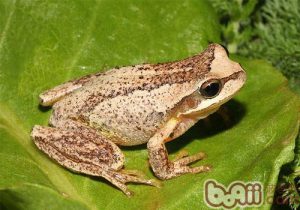
Brown Tree Frog
The Brown Tree Frog (Litoria ewingii) is a small, highly adaptable hylid frog native to southeastern Australia and introduced to New Zealand, classified as a species of Least Concern. It breeds year-round—peaking in summer after rain—and is known for its distinctive whistle-like call and brown body marked with two black stripes.

Rana grylio
The Pig Frog (Rana grylio), named for its pig-like call, is a large aquatic frog from the southeastern United States, resembling a bullfrog but smaller (under 150 mm). A hardy, mostly carnivorous feeder that thrives in a clean, spacious, planted aquarium with live or cleverly presented food.
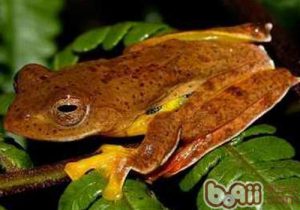
Rhacophorus bipunctatus
Rhacophorus bipunctatus, a flying-tree-frog relative from India, Myanmar, and Malaysia, has toe pads for climbing and can change color like a chameleon. An arboreal frog that needs a planted, humid terrarium and live, moving prey.

Gopher Tortoise
The Gopher Tortoise (Gopherus polyphemus) is a burrowing land turtle of the southeastern United States, strictly herbivorous and protected by law due to its small wild population. Famous for digging deep burrows (11–15 m), it needs a dry, sandy outdoor enclosure with plenty of sunny space.