Forest Cobra
2 Photo Gallery
View All 8 Photos
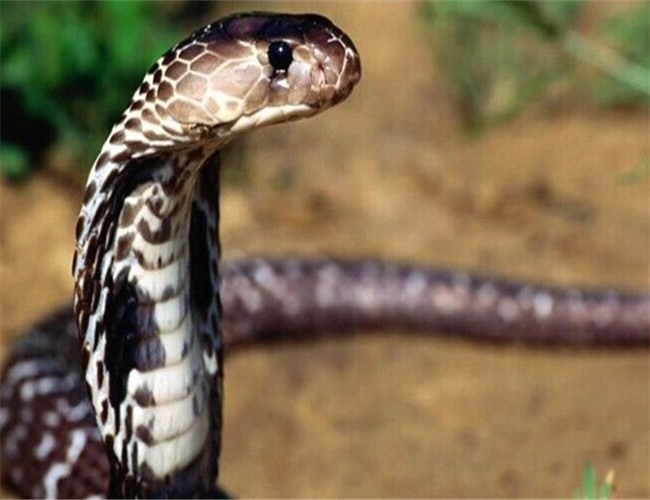


1 Overview
The Forest Cobra (Naja melanoleuca) is distributed from Senegal in the west to Somalia in the east, southwest to Angola, and south to eastern South Africa. It is very long-lived, with captive records over 28 years. Highly venomous, mainly neurotoxic, and delivering a large venom dose per bite, it is dangerous but generally does not approach human dwellings.
Chinese name: Forest Cobra
Binomial name: Naja melanoleuca
Kingdom: Animalia
Phylum: Chordata
Subphylum: Vertebrata
Class: Reptilia
Order: Squamata
Family: Elapidae
Genus: Naja
Species: Forest Cobra (Naja melanoleuca)
Distribution: Tropical rainforest and surrounding areas.
2 Physical Characteristics
The Forest Cobra is native to Africa and carries potent venom. Normally it does not approach human dwellings, and its recorded length approaches that of the king cobra.
It is a large cobra, 1.2–2 m long, up to 2.7 m. Apart from a brown head and neck, the back is black. The belly is yellow-white with black cross-bands. The labial scales are white with black edges.
3 Natural Habitat
Because its body is glossy black, it is also called the black forest cobra, and is the largest of the Naja genus. It is long-lived. Although highly venomous, it will not enter human dwellings without reason; if not disturbed, it generally will not attack people.
It occurs mainly in Africa, favoring tropical rainforest and surrounding areas. Because it is highly venomous, avoid approaching it if encountered.
4 Care & Husbandry
The Forest Cobra is not only among the longest cobras but also long-lived, with records over 28 years. It is oviparous, laying about 15 eggs per clutch on average.
It generally eats small mammals, frogs, lizards, or other snakes, and is also skilled at catching fish. Highly venomous and mainly neurotoxic, with a large venom dose per bite, it is a dangerous snake.