Black-throated Finch
2 Photo Gallery
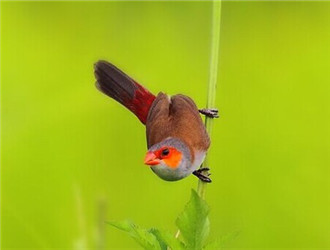
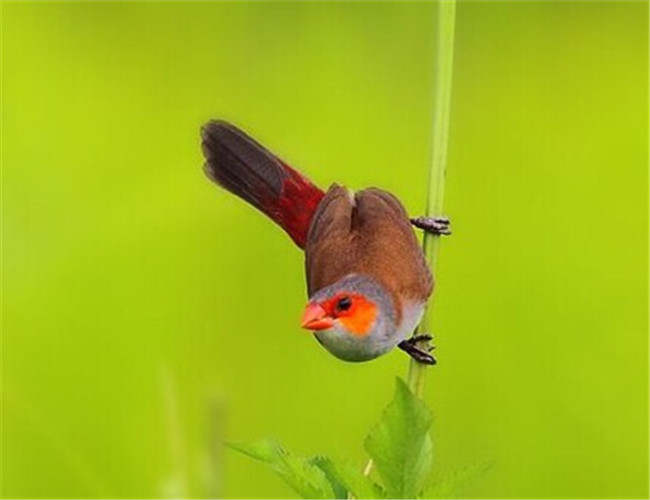
1 Black-throated Finch Breed Overview
The Black-throated Finch (Poephila cincta) is a small, prized ornamental bird. It likes to forage densely on the ground in groups. Whether in posture, movement, or plumage, it gives an artistic enjoyment that relaxes and pleases the spirit. Its call is extremely pleasant; while singing it can also dance, often making people smile.
Chinese Name: Black-throated Finch
Latin Name: Poephila cincta
Chinese Aliases: Baisen Finch, Pastor Bird
Kingdom: Animalia
Phylum: Chordata
Subphylum: Vertebrata
Class: Aves
Subclass: Neornithes
Order: Neognathae, Passeriformes
Family: Ploceidae
Species: Black-throated Finch
Distribution: Wild populations are found in eastern and northeastern Australia. Domestic breeders in Beijing, Jiangsu, Fujian, Zhejiang, and Guangzhou have successfully bred the Black-throated Finch.
2 Black-throated Finch Physical Characteristics
Adult Black-throated Finches reach about 12 cm in length, with an ideal weight of 11-17 g. Males and females have the same plumage; the small Black-throated Finch has long been a famous ornamental bird. The bill is conical with often vivid coloring.
The Black-throated Finch’s head is silver-gray, with a band-like black patch on the flanks, throat, and upper chest. Males have a higher bill ridge. The head is silver-gray. The upperparts are gray-brown, the lower back white, and the tail black. The breast and belly are gray-brown; the cheeks, throat, and upper chest feathers have a bow-tie-like black patch, hence the nickname ‘pastor’. The bill is black, the feet reddish-brown. Females are smaller, with a flatter bill ridge, and the black patch on the throat and upper chest spreads horizontally.
3 Black-throated Finch Living Environment
In the wild the Black-throated Finch likes to inhabit forests and areas with water. In the past it was rarely kept in China, but in recent years cage-bird enthusiasts have taken notice. It is very active and has a lovely call. It serves as both an ornamental and a songbird, beloved by many.
For a display cage, a canary cage or siskin cage can be used. A breeding cage is 50x40x40 cm, with one water cup, one food cup, two perches, one bath dish, and one pot-shaped grass nest.
The Black-throated Finch is very clean; most cage birds enjoy bathing. Bathing can be done by placing the bird in a bath cage then setting it in a shallow water tray, or by placing a shallow water tray in the cage. If the bird is not used to bathing in the cage, drip water from the cage top onto it. Bathing should not be too long, stop before feathers are soaked through. Frequency varies by season: generally every 1-2 days, every 4-5 days in winter and early spring, and less during molt. If the bird catches a chill while bathing in low temperatures, dry its feathers and place it in a warm, sheltered, sunny spot, or move the cage near a radiator to dry quickly.
4 Black-throated Finch Care Tips
The Black-throated Finch has an average lifespan of about 7 years and can survive in environments from 0 to 47 C. Although its plumage is not brilliant, it feels plain and elegant. For various reasons its price is relatively high. Feed mainly on millet, foxtail millet, and sorghum, supplemented with bone meal, oyster shell powder, and vegetable leaves. During breeding, add egg-food (egg and millet). It can also be fostered by the Gouldian Finch or White-rumped Munia.