Tan Rabbit
2 Photo Gallery
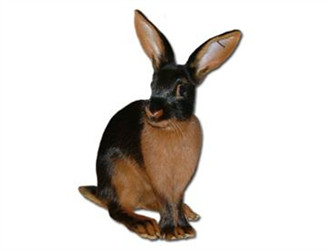

1 Tan Rabbit Breed Overview
The Tan Rabbit’s coat color is the result of selective breeding—not fixed, but pieced together from color blocks. It is a small-to-medium rabbit, usually kept on a small scale, and not commonly seen in the market.
Chinese name: Tan Rabbit
Common aliases: Coffee rabbit
Place of origin: United States
Size and weight: 1.8–2.7 kg; body type tends toward two extremes—very thin, or very heavy and large—and it is a good runner.
Diet: Herbivorous
Reproduction: Viviparous
Certifying association: American Rabbit Breeders Association (ARBA)
Historical origin: The Tan Rabbit was originally black, but around 1887 an American hare enthusiast conducted crossbreeding experiments, turning the originally black Tan Rabbit into today’s tan appearance, through about 3–4 rounds of crossbreeding. Around the same time, in Derbyshire, England, the production and exhibition of successfully crossbred Tan Rabbits began, along with rabbit trading. In 1891 the Tan Rabbit Club was founded, bringing wider international recognition to the breed.
2 Physical Characteristics of the Tan Rabbit
The Tan Rabbit has two different colors, a drawback left from breeding the variety. It is a medium-sized rabbit, suitable both as a pet and as a household rabbit, and now more often kept as a pet.
I. Appearance of the Tan Rabbit
The Tan Rabbit is a pet rabbit with a standard weight of 4–6 lb, a medium-sized breed. It was originally black, then bred to tan around 1887, so the Tan Rabbit comes in two different colors. Its body type tends toward two extremes—very thin, or very heavy and large—and it is a good runner.
II. Breeding history of the Tan Rabbit
The Tan Rabbit was originally black, but around 1887 an American hare enthusiast conducted crossbreeding experiments, turning the originally black Tan Rabbit into today’s tan appearance, through about 3–4 rounds of crossbreeding. Around the same time, in Derbyshire, England, the production and exhibition of successfully crossbred Tan Rabbits began, along with rabbit trading. In 1891 the Tan Rabbit Club was founded, bringing wider international recognition to the breed.
3 Tan Rabbit Care Tips
In keeping the Tan Rabbit, the most important part is ensuring an excellent environment to prevent disease. “Excellent” here does not mean spotless, but appropriate—suitable temperature, suitable humidity, and so on.
I. The Tan Rabbit dislikes fright
The Tan Rabbit is timid and easily startled. Sudden stimuli cause extreme nervous tension, faster breathing and heartbeat, and raised blood pressure. Some dash and crash around the cage; some pregnant does abort or even bite kits to death. Given this weakness, create a quiet environment, forbid visits, guard against animals breaking in, and handle the rabbit steadily to avoid startling it.
II. The Tan Rabbit dislikes heat
The Tan Rabbit has dense fur and few sweat glands; it tolerates cold but fears heat. The ideal temperature is 15–25°C; prolonged direct sun and temperatures above 30°C easily cause heatstroke, which can be fatal. Therefore, in rabbit production, create an ideal living environment—guard against cold in winter and heat in summer—for good economic returns.
III. The Tan Rabbit dislikes dampness
A damp, filthy environment favors microbial growth and easily leads to coccidiosis, mange, conjunctivitis, and respiratory disease in the Tan Rabbit. Therefore, keep the hutch dry, clean, and well-ventilated year-round to ensure the rabbit’s health and normal reproduction.
IV. The Tan Rabbit dislikes over-breeding
The doe’s pregnancy lasts 30–31 days; over-breeding seriously harms her health, shortens her breeding years, and lowers her value. So formulate and follow a scientific breeding plan, avoiding over-breeding—generally 6–7 litters per year is appropriate.
4 Tan Rabbit Living Environment
An excellent environment ensures the Tan Rabbit’s normal growth and avoids some diseases. So what kind of environment counts as excellent for the Tan Rabbit?
I. Suitable temperature for the Tan Rabbit
The Tan Rabbit’s sweat glands are underdeveloped and its body is covered with thick fur, so its surface heat dissipation is poor. Therefore it fears heat greatly; the ideal environmental temperature is 15–25°C. In hot summer, excessively high temperatures endanger its life. When building the hutch, note the principle that “large rabbits fear heat, small rabbits fear cold.”
II. Suitable humidity for the Tan Rabbit
The suitable humidity for the Tan Rabbit is 60%–70%; humidity greatly affects the rabbit. Build the hutch on high, dry ground—never in low-lying, damp areas.
III. Ventilation for the Tan Rabbit
Air quality greatly affects the Tan Rabbit. With high-density housing, the hutch produces harmful gases; combined with dirty fur, dust, and moisture, this is extremely unfavorable to the Tan Rabbit’s growth and health.
IV. Lighting for the Tan Rabbit
Light plays a pivotal role in the Tan Rabbit’s growth and reproduction. Through ultraviolet light in sunlight, the rabbit synthesizes vitamin D in its body, promoting calcium-phosphorus absorption and bone development; light also promotes gonadal development, crucial for the doe’s estrus and mating. Insufficient light can cause long-term infertility in does.
5 Tan Rabbit Feeding Guidelines
The Tan Rabbit’s food can follow local crop habits—in summer feed some strawberries, in winter feed hay. It is an easy rabbit to feed; any reasonable food is fine. So what food is reasonable for the Tan Rabbit?
Foods not to feed: Strongly pungent vegetables are unsuitable, such as onions, chives, and garlic. Also, chocolate easily causes food poisoning, so it must be avoided absolutely.
Vegetables: Carrot, sweet potato, cabbage, cucumber, radish leaves, pumpkin, greens. Wash vegetables and drain before feeding.
Fruits: Orange, banana, grape, apple, strawberry. When feeding fruit, appropriately reduce the rabbit’s drinking water to balance moisture intake.
Greens: Shepherd’s purse, plantain, dandelion, chickweed.
Other foods: Tofu residue, bread.
It is not easy to assemble enough varied vegetables daily, so buying ready-made specialized rabbit pellets is more convenient. The nutrition formula in specialized pellets is comprehensive; just add some greens, vegetables, and fruit.
Most specialized rabbit food contains deodorizing substances, so even if you keep your Tan Rabbit in the bedroom you will not notice odors. There is also specialized hard food sold for tooth-wearing to prevent overgrown teeth.