Standard Gray Chinchilla
2 Photo Gallery
1 Breed Overview
The name ‘chinchilla’ became familiar to many through Hayao Miyazaki’s animated film My Neighbor Totoro, which introduced this round, charming animal to a wide audience. Few people knew the creature well before that. In fact, the chinchilla’s real name is the South American chinchilla; it was Hong Kong fans of the film who nicknamed it ‘dragon cat’ (longmao).
The Standard Gray Chinchilla is native to the high plateaus of the Andes Mountains in South America. In Chinese it is called li shu or rong shu, also known as the chinchilla (mao si shu), a direct transliteration of the Latin Chinchilla. It is a rodent that has existed since prehistoric times. Its average lifespan is 8–10 years, and it can live up to 20. It is lively and active, loves to hop around, and is full of curiosity. Because chinchillas are clean, gentle, easy to care for, and free of lice, they are an ideal pet for city dwellers.
Although both are rodents, the chinchilla and the hamster differ in many ways. The hamster is omnivorous while the South American chinchilla is vegetarian; their digestive systems are different. The hamster has a double uterus while the South American chinchilla has a single uterus, so a hamster can produce a litter every 20 days, whereas the South American chinchilla can give birth only 1–2 times a year, with an 80% chance of 1–2 babies per litter.
The chinchilla’s average lifespan is 8–10 years. Because it is vegetarian, its droppings generally have little odor. Its dense fur does not easily harbor parasites, and it is very clean — if its fur gets messed up it will sit and groom for a long time. It does not need you to bathe it; with special chinchilla bath sand it will roll around and clean its whole body by itself. Its temperament is quite gentle, and its personality is as adorable as a child’s. The most magical part is that it has its own expressions — you can even see it look surprised or deep in thought.
2 Morphological Characteristics
The Standard Gray Chinchilla and the dark (heterozygous) chinchilla can be hard to tell apart, and price varies with color, so only by clearly understanding the Standard Gray’s appearance can you avoid being cheated by unscrupulous sellers.
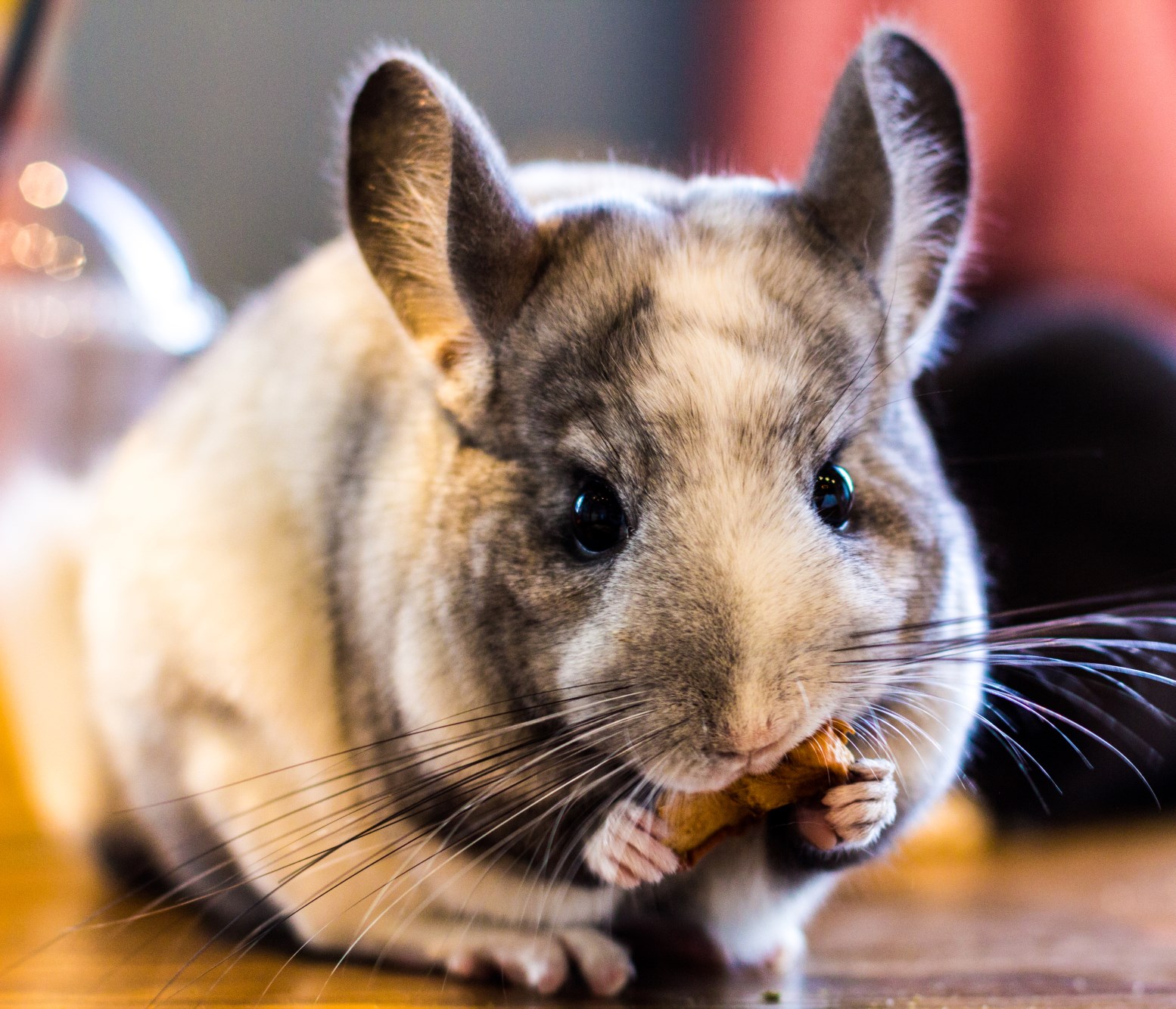
Looking closely at the Standard Gray Chinchilla, you will see that its belly is white, and some front paws carry dark ‘foot lines’ (black markings) while the hind paws do not. The palms of the front paws are white; seen from the side, the belly shows a sharp black-and-white contrast.
The points above are the Standard Gray’s special appearance traits. Other features — such as five fingers, four toes, and twenty teeth (four incisors and sixteen molars) — and its general traits (average lifespan 8–10 years, up to 20; lively, active, fond of jumping, curious) are no different from those of chinchillas in general.
3 Care Essentials
To care for a Standard Gray Chinchilla well you must use the right method; the housing temperature is especially important. As chinchillas have grown popular, care questions have drawn more attention — so how do you raise your Standard Gray Chinchilla correctly?
One: Before you decide to keep a Standard Gray Chinchilla, prepare the following supplies to welcome them.
1. Cage: The Standard Gray Chinchilla must be kept in a cage to stop it chewing furniture and wires indoors. Choose a cage based on how many you keep, their sex, and your available space.
2. Toilet: Chinchilla droppings have almost no smell, but urine is fairly strong, so it is best to train the chinchilla to urinate in a toilet — this makes cleaning the cage tray much easier.
3. Bedding: Place absorbent, deodorizing bedding in the toilet or cage tray to cut urine odor and stop urine from corroding the plastic tray and toilet.
4. Nest: A sleeping shelter and a refuge from danger; choose a suitable small house so they feel comfortable and safe.
5. Chew items: A chinchilla’s incisors grow continuously throughout its life, so it must keep wearing them down to stay healthy. Overgrown incisors cause eating difficulty and even death — which shows how important chewing is.
6. Water bottle: Essential for drinking; use a bottle to keep the room and the water clean.
7. Food bowl: Build good eating habits with a bowl; choose a tip-resistant, chew-proof bowl so the chinchilla cannot flip its ‘rice bowl.’
8. Bath supplies: Bathing a chinchilla is easy — you do not wash it with water and a dryer. Chinchillas bathe in sand; they roll in it by themselves, so prepare special bath sand and a bath container.
9. Platforms: Chinchillas love to jump high, so place platforms in the cage so they can leap from low to high. Arranging platforms of different styles at various heights is also fun.
Two: Feeding the Standard Gray Chinchilla. There is much to watch for — too much or too little food makes a pet sick, and carelessness can bring worse consequences, so note the following before feeding.
Feed once at dusk each day. A three-month-old gets half the portion; the amount rises with age until it reaches the adult portion at eight months. If much is left over or none is left, adjust the portion; if appetite is poor, check its health. Treats should be small, and avoid spicy or strongly flavored foods.
During the day it only needs enough hay, used as bedding in its house.
4 Living Environment
Summer is very hard for the Standard Gray Chinchilla because it is an animal that easily suffers heatstroke, so in daily care pay close attention to the environment and the care method.
One: Cage placement and the water routine.
The cage must be placed somewhere elevated — on a table, cabinet, or chair — never directly on the floor, because in the wild chinchillas are preyed on by eagles swooping from the sky. Place the cage in the shade: no direct sun, and avoid drafts (through-wind).
The former causes heatstroke, dehydration, and death; the latter gives the chinchilla a cold.
Drinking water is usually cooled boiled water, or clean pure or mineral water fit for people. Fresh clean water must always be available; generally change the bottle water every other day and clean the bottle, including the spout washer, to avoid microbial growth.
Hang the bottle outside the cage; a good spot we found is at the cage door — high enough that the chinchilla can easily stand and drink, yet shielded by the door so it cannot easily chew the bottle body.
Two: Cooling the chinchilla without air conditioning.
1. Buy two cola-sized bottles, fill with water and freeze into ice.
2. Buy two bags of pet cooling gel (‘tech ice’) — cheap and easy to find at most chinchilla shops — and freeze them too.
3. Find a metal or plastic box (avoid plastic with sharp corners, which they may chew, and any painted box).
4. Lay a towel under the box, put two roughly 300 ml tech-ice packs inside, place the cola ice on top, cover with the towel, close the box, and put it in the cage — the chinchilla will lie on it to cool off. It is a bit of work but saves on electricity.
5 Feeding Requirements
Although the chinchilla differs from the hamster, as rodents both still need chewing care, or over-long teeth cause disease. Here are five ‘don’ts’ when feeding a Standard Gray Chinchilla, plus why hay matters.
One: Five don’ts when feeding.
1. Don’t buy supermarket foods with additives and preservatives — these bring unpredictable danger to the chinchilla.
2. Don’t give fresh vegetables or fruit; high-water foods cause diarrhea. Only a small amount of fresh apple is allowed.
3. Don’t give roasted sunflower seeds. Seeds are fed because they contain the linoleic acid the chinchilla’s fur needs, but roasting destroys it, and human roasted seeds contain salt and additives — salt causes fur loss and additives harm the body. Feed raw sunflower seeds, about a dozen a day, which is enough.
4. Don’t give soybeans. Soybeans absorb a lot of water in the gut and cause bloating; severe cases can lead to intestinal obstruction and danger to life.
5. Don’t give peanuts. Peanuts are too oily and bad for the chinchilla’s stomach.
Two: The importance of feeding hay.
Hay helps wear the chinchilla’s teeth, so not giving hay is like letting the chinchilla harm itself — you must give hay! Especially the stalks, which are excellent for chewing. Don’t indulge it by skipping hay just because it dislikes it; that is absolutely wrong. You can also offer chew items such as a pumice stone or apple-branch sticks. Chewing the platforms and wooden nest also helps wear the teeth.