Showa Sanshoku
2 Photo Gallery
1 Breed Profile
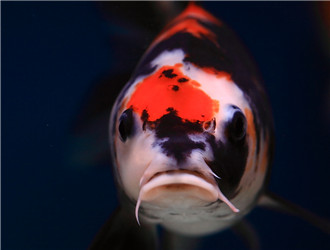
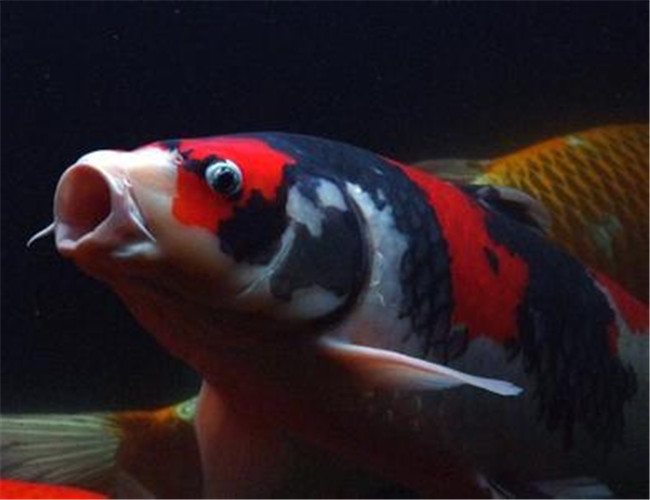
Showa Sanshoku is a very important koi variety. Like Taisho Sanshoku, it is made of ink-black, crimson, and white, but Showa Sanshoku is based on black, with white and crimson overlaid.
English name: Showa Sanshoku
Type: Koi, temperate freshwater fish
Origin: Japan
Reproduction: oviparous
2 Appearance
Showa Sanshoku is an important koi variety, but relatively hard to keep. In autumn around 18 C its colors look best.
The red should be deep red; the black should be glossy lacquer black. The head must have a large red patch, even red, clear edges, deep color best. White should be pure; white patches on head and tail are higher grade. Black markings: face-splitting (menkiri) on the head is best; body black patterns must be lightning- or triangle-shaped, thick and curling to the belly. Pectoral fins should have base black, not all white, all black, or red.
3 Husbandry
Harder than other koi to keep, but adaptable, surviving 5-30 C, with growth temperature 21-27 C.
Because it grows large and lives long, true fans should custom-build a tank, not use small shop tanks. Volume over 1.5 cubic meters! And not too many. Three Showa of 40+ cm plus six of 10 cm in a 2.8×0.8×1 m tank is crowded, slowing growth, so run the filter 24 hours (it also adds oxygen); on power loss prevent oxygen death.
4 Feeding
Harder than other koi, but omnivorous, eating animals, higher plant fragments, benthos, and fine algae. What to feed?
Omnivorous: mollusks, higher plant fragments, benthos, fine algae. Broad diet and tolerant conditions give it strong vitality. Feeding varies with growth and season; strongest in summer, almost none in winter. New fry eat rotifers and small cladocerans; fry over 3 cm eat benthos, insect larvae, clams, snails, plant fragments. It can swallow food and also sift from pond mud. No jaw teeth; uses developed pharyngeal teeth to chew hard food.