Search Results
89 results for “turtle skin disease”

Treating and Preventing Turtle Water Mold Disease
Poor water quality from leftover food and waste is the root cause of turtle water mold, usually from poor management. Treatment uses antifungal medication—povidone-iodine applied topically, diluted soaks, gentle brushing, or in severe cases miconazole ointment with dry-docking—always keeping the environment at 28–32°C. Prevention means sunlight, prompt cleanup of food waste, regular water changes, and isolating sick turtles. Do not confuse water mold with normal shedding.

Can Water Mold Disease in Turtles Be Avoided? (Causes & Prevention)
Water mold disease is preventable. Although Saprolegnia is widespread in water, its presence alone does not cause the disease—infection requires a wound. A healthy, uninjured turtle will not get water mold, so the key is good husbandry: smooth enclosures, regular sunlight, balanced nutrition, and clean water. Early signs include gray-white spots and white fuzzy growths on the skin and shell; untreated, the disease progresses to swelling, ulcers, appetite loss, and death.

How to Prevent and Treat Water Mold Disease in Turtles
Prevention is the cornerstone of managing turtle water mold, and the root of prevention is avoiding injury—a turtle without wounds rarely develops the disease. Already-infected turtles must be isolated and treated promptly based on their condition. Practical steps include smoothing tank decorations, avoiding mixed-keeping of mismatched turtles, and keeping water stable rather than merely clean. Early isolation and wound care stop the fungus from taking hold.

How to Treat and Prevent Water Mold Disease in Turtles
Water mold disease (saprolegniasis), caused by Saprolegnia and Achlya fungi, is a common illness in aquatic turtles that usually strikes during overwintering and spring. Infected turtles may lose appetite, grow weak, and develop gray-white patches and fuzzy white growths on the skin; severe cases lead to emaciation, swelling, skin ulcers, and even death from exhaustion. Because the fungus is widespread in water and hard to eliminate, prevention focuses on keeping the turtle injury-free, maintaining water temperature around 28–30°C, and providing regular sunlight. If infection occurs, dry-docking the turtle with short daily soaking, applying povidone-iodine for disinfection, and using a pet-safe antibacterial ointment on affected areas can aid recovery.

Eastern Painted Turtle
One of four painted-turtle subspecies - smaller, plainer and a bit harder to keep than the western form, but a classic, hardy North American pet with a red-edged shell.

Asian Leaf Turtle
A common, beginner-friendly semi-aquatic turtle of the genus Cyclemys - four subspecies differ in shell and neck pattern; hardy and interactive, great for newcomers.

Spiny Turtle
The 'sun turtle' - a bizarre, spiky juvenile that sadly loses most of its spikes with age. CITES II and wild-imported specimens often arrive near death; a delicate, specialist turtle.
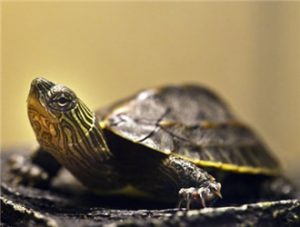
Chinese Striped-neck Turtle
A pretty, beginner-friendly Asian water turtle with green-and-black neck stripes and pearly juvenile edge spots - common captive-bred, but wild stocks are scarce.
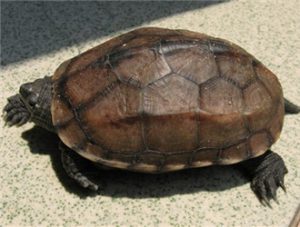
Chinese Pond Turtle (Reeves’ Turtle)
China's most common native turtle - hardy, cheap, and the 'ink turtle' that turns black with age. A classic, beginner-friendly pond turtle.

Pig-nosed Turtle
A bizarre, soft-shelled, flipper-limbed 'fly river turtle' that looks more like a turtle-bream hybrid - fully aquatic, sensitive to water quality, and a committed non-basker.