Search Results
90 results for “turtle skin disease”

Pig-nosed Turtle
A bizarre, soft-shelled, flipper-limbed 'fly river turtle' that looks more like a turtle-bream hybrid - fully aquatic, sensitive to water quality, and a committed non-basker.

Beal’s Eyed Turtle
A rare, China-endemic, largely vegetarian water turtle with four 'eye-spots' on its head - sensitive to water quality and of conservation concern.

Western Painted Turtle
The largest painted-turtle subspecies - colourful, common, and a good (if feisty) North American water turtle for keepers who avoid crowding.

Razor-backed Musk Turtle
The Razor-backed Musk Turtle (Sternotherus carinatus), affectionately called the 'razor' or 'little razor,' has a uniquely keeled, roof-like carapace. A common and easy musk turtle, it is active and interactive with keepers.

Black Marsh Turtle
The Black Marsh Turtle (Siebenrockiella crassicollis), also called the Siamese temple turtle, is a medium-sized black freshwater turtle from Southeast Asia. Wild numbers are low, but captive-bred individuals now meet demand. An IUCN Vulnerable species, it is not for beginners.

Crowned River Turtle
The crowned river turtle (Hardella thurjii) is a South Asian pond turtle that is relatively easy to keep but remains uncommon in the hobby. It is a largely herbivorous, placid water turtle from the rivers and swamps of the Indian subcontinent.
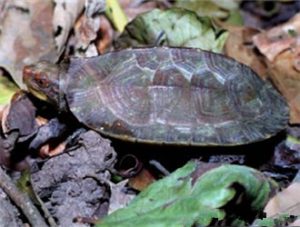
Cochin Forest Cane Turtle
The Cochin Forest Cane Turtle (Vijayachelys silvatica) is a rare, semi-aquatic turtle from the forested hills of southern India above 300 m. Secretive and burrowing, it is seldom seen in trade and hard to keep.

African Keeled Mud Turtle
The African Keeled Mud Turtle (Pelusios carinatus) is a side-necked turtle from Africa, dark gray to black with a keeled shell and a yellow plastron. A gentle, hardy semi-aquatic species that adapts well to captivity and makes a good, if uncommon, community turtle.
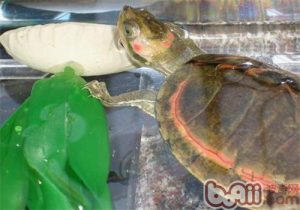
Pink-ringed Tent Turtle
The Pink-ringed Tent Turtle (Pangshura tentoria) is a striking high-domed turtle with pink cheeks and a pink ring around its carapace, but it is delicate, with hatchling mortality often above 80%, mostly from skin rot. Best suited to experienced keepers who can provide stable temperatures and a basking area.
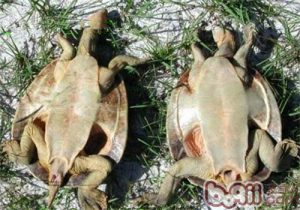
Fitzroy River Turtle
The Fitzroy River Turtle (Rheodytes leukops) is an Australian river turtle famous for 'breathing through its bottom'—it draws oxygen via cloacal sacs, letting it stay submerged far longer than most turtles. A bottom-dweller of flowing, gravelly waters, it is sensitive to poor water quality and warm temperatures.