Eastern Painted Turtle
2 Photo Gallery
1 Overview
There are four painted-turtle subspecies (eastern, midland, western, southern). The eastern is less kept than the western because its shell is less vivid and it is somewhat harder and more disease-prone.
Small and adaptable, painted turtles are popular pets with entertaining personalities. They fit a about 4-foot aquarium with UV, heater, filter and a rock basking spot. Binomial: Chrysemys picta picta (eastern painted turtle), North America; oviparous.
2 Appearance
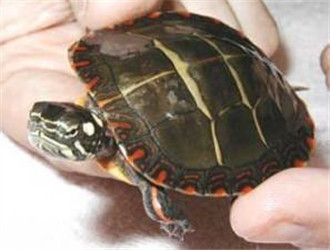
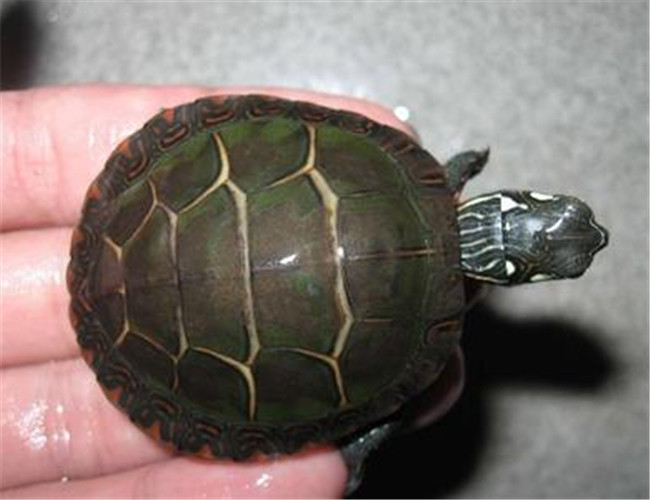
A small turtle, carapace 16-17 cm, olive with a low keel. Yellow plastron; head with yellow stripes (some show large blotches); limbs with bright red stripes. Uniquely among North American turtles, its vertebral and costal scutes align in rows (not staggered) – the easiest identification feature.
The western form is prettier (more pattern, deeper green with age); the eastern is dark as a juvenile, nice mid-life, then darkens again with ugly white seams – hence fewer keepers.
3 Care & Temperament
Found on North America’s east coast west to the Great Lakes. Small (max 16-17 cm). The row-aligned scutes make it the easiest turtle to identify. Clear yellow plastron, yellow head stripes, red limb stripes.
Captive care: 4-foot tank with UV, incandescent, heater, filter, rock basking platform and hiding spot over pebbles.
4 Habitat & Environment
Hatchlings may overwinter in the nest and survive freezing; adults are cold-hardy (seen swimming under ice). Most eastern painted turtles brumate in winter, burrowing in pond-bottom mud or using muskrat holes. While brumating they need little oxygen, absorbed through skin, throat and cloacal sacs.
5 Diet & Feeding
Omnivorous: snails, slugs, insects, crayfish, tadpoles, small fish, carrion, algae and aquatic plants. Juveniles are carnivorous, older ones more herbivorous.
They eat anything, but cheap low-nutrition food causes imbalance – vary the diet and ensure calcium. Koi pellets and dog food are acceptable; occasional boneless fish, snake or mouse. Avoid all-fish or all-meat diets (add water-soluble vitamins). Use leafy greens, cabbage, carrot with supplements.