Search Results
48 results for “tortoise care”
How to Care for a Hermann’s Tortoise as a Beginner
The Hermann's tortoise is a popular, beginner-friendly land tortoise, but new keepers still need to get the environment right. Aim for steady warmth—around 26–32°C by day, 18–21°C at night—using a thermostat to avoid swings, and keep humidity near 40–50%, adding moisture when the air is dry. Plenty of light matters: natural sun is best, while indoor setups need UVB and full-spectrum lamps to support appetite, digestion, and growth. Give the tortoise room to roam plus a hide for security, and wait three days after arrival before offering food so it can settle. A habitat that mimics nature is the foundation of good health.
Can Tortoises Swim?
Tortoises cannot truly swim. Their body structure is built for land, not water, yet they will not drown instantly if they fall in—their large lungs and broad shell create enough buoyancy to float for a while. That floating ability varies by species; the Aldabra giant tortoise, for example, moves faster in water than on land. But floating is not living: tortoises belong on land, and long soaks risk shell rot and drowning. Keepers should respect this by offering only a shallow soaking area with a ramp, never deep water. Even aquatic turtles can drown if kept too deep, especially as juveniles, so match the habitat to the species.
What Are the Differences Between Tortoises and Sea Turtles?
Tortoises and sea turtles differ greatly in form, habitat, and habits, even though both belong to the order Testudines. Tortoises live on land, needing only occasional soaking and unable to stay in water long; sea turtles spend life at sea, coming ashore only to lay eggs and bask. A tortoise's shell is thick and domed, with short sturdy legs that bear its weight; a sea turtle's shell is thin and smooth, with long front flippers. Tortoises can pull their limbs inside when threatened; sea turtles cannot. Both are omnivorous, but tortoises eat roots, leaves, fruit, and vegetables, while sea turtles favor seaweed. Knowing these differences helps any keeper care for them correctly.

Radiated Tortoise
One of the most beautiful star-patterned tortoises - a Madagascan CITES I species that is common in captivity yet wild-endangered. 'The rich man's sulcata'; hardy if set up right.
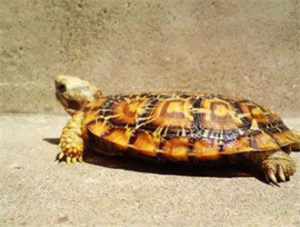
Pancake Tortoise
A flat, flexible, rock-crevice tortoise (Malacochersus tornieri) that flees instead of hiding - a fast, escape-prone, CITES II conservation concern.

Angonoka (Ploughshare) Tortoise
One of the world's ten most endangered turtles - fewer than 1,000 left in Madagascar, CITES I, and effectively not tradable. Education-only profile.

Impressed Tortoise
A large, temperamental Southeast Asian forest tortoise (Manouria impressa) - China's Grade II protected, wild-caught and declining; not recommended for keepers.

Marginated Tortoise
The largest Mediterranean tortoise, with a fan-like flared rear shell - temperate-climate friendly and a good (if winter-careful) European tortoise.

Indian Star Tortoise
A stunning radiated-pattern star tortoise - beautiful but famously prone to sudden death from humidity/temperature swings. CITES I; captive-bred only.

Aldabra Giant Tortoise
One of the two largest tortoises on Earth - a gentle giant that may outlive you. Captive-bred, legally imported animals only.