Search Results
568 results for “staple”

Chinese Bulbul
The Chinese Bulbul (Pycnonotus sinensis) is a small passerine bird of the family Pycnonotidae. Its forehead to crown is black, with white above the eyes extending to the nape, forming a white nape ring, and a white belly with yellow-green streaks. Lively, it flocks in fruit trees and sometimes sallies from a perch to catch insects. Common south of the Yangtze, it lives in hills or plains shrubbery and coniferous forests. Lively and not very afraid of people. Omnivorous, eating both animals and plants. It eats many agricultural and forestry pests and is a beneficial bird worth protecting.
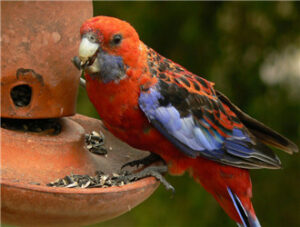
Platycercus eximius
The Eastern Rosella (Platycercus eximius) is one of the more common Australian long-tailed parrots. Its market price is not high, making it very suitable for beginners starting with Australian long-tailed parrots. It has 3 subspecies and has developed the most color variants among rosellas.

Homozygous Ebony Chinchilla
The Homozygous Ebony Chinchilla is striking in appearance, as it carries no stray hairs of any other color and is so completely black that its eyes are nearly impossible to find. Because its pure black is far more precious than other colors, it is also relatively more expensive than other chinchillas.
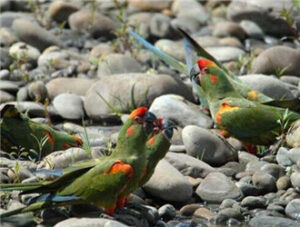
Red-fronted Macaw
Although the Red-fronted Macaw (Ara rubrogenys) is the smallest of the macaws, its sturdy build is unmatched by ordinary parrots. Native to the tropical regions of the Americas, its wild population is now quite scarce.
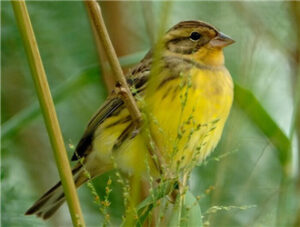
Emberiza aureola
The Yellow-breasted Bunting (Emberiza aureola), also known as the Rice bird, has two subspecies. Due to various causes the species is now endangered and could go extinct within ten years. The state has listed it in the national directory of beneficial or economically and scientifically valuable terrestrial wildlife under protection. It is mainly distributed from northern Europe to Siberia, northern Japan, and China, wintering in India and other regions.

Rhinopithecus
The snub-nosed monkey (Rhinopithecus) is quite rare in number, and as the saying goes, rarity makes things precious, so it has become a rare and endemic animal of China. Because the earliest discovered snub-nosed monkey was the Sichuan golden snub-nosed monkey living in Sichuan, Shaanxi, and Gansu, this genus is generally called the golden snub-nosed monkey, whose English name translates literally as 'snub-nosed monkey.'

Siberian Chipmunk
The Siberian Chipmunk has the habits of storing food and hibernating; hibernation occurs in the wild, while in warm indoor captivity it does not need to hibernate. Wild chipmunks are mainly distributed in North China, Northwest China, and Northeast China. Their fur is of good quality and attractive.

Green-winged Macaw
The Green-winged Macaw (Ara chloropterus), also called the Red-and-green Macaw, is a relatively large parrot with a lifespan of up to 80 years. Its colorful plumage resembles Beijing-opera face paint and can turn red when excited. It comes from the tropical Americas.

What Is a Proper Hamster Diet
A correct hamster diet is built on staples (grains), supplemented by fresh vegetables and fruit, occasional oily seeds as treats, and protein-rich foods like boiled egg white or mealworms. Mix about 70% staple, 20% vegetable/fruit, 10% treats. Avoid chocolate, coffee, sugar, and pungent vegetables like onion and garlic.

How Often to Feed Turtles in Summer
In hot summer a turtle's metabolism speeds up and its appetite grows, so you can feed a bit more to build reserves. Hatchlings under 5 cm should be fed daily, larger turtles every other day, and feeding should avoid the strong midday sun. Good summer care also means shade plants, checking food for spoilage, balanced nutrition, and frequent water changes to prevent shell rot.