Search Results
2129 results for “pet diet”

Cymric
The Cymric, English name Cymric, is also called the Longhaired Manx or Longhaired Isle of Man cat. From its alias we know it is a longhaired cat; though long-haired, it's not hard to groom. Its most striking feature is having no tail, drawing immediate attention.
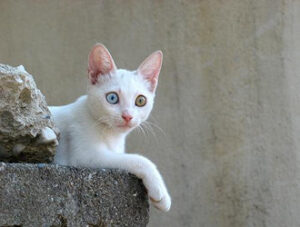
TurkishVan
Turkish Van (details)

Turkish Angora
The Turkish Angora, named for Turkey's capital Ankara, is one of the oldest long-haired breeds, dating to the 16th century. Elegant with silky, medium-length coat and almond eyes, it is agile, independent, and famously fond of water. Once nearly supplanted by the Persian, it was revived in the US from 1963 and is now carefully bred to preserve its pure bloodline.

Siberian
The Siberian Forest Cat, shortened to Siberian Cat, has the earliest written records from the 11th century: it was a very common cat in Russian markets and Siberian villages. Living in a harsh country, it is covered in long fur with a thick ruff around the neck. Its outer guard hairs are hard, smooth, and oily, and its dense undercoat resists the Siberian cold.

Chinchilla
The Chinchilla, with the English name Chinchilla, originates from Britain and descends from the Angora and the Persian. Some call it the artificial cat, hinting it was deliberately bred by humans. Notably, the Chinchilla was the first fully human-bred cat, appearing in 1894.

Russian Blue
The Russian Blue, also called Russian Blue, Archangel Blue, or Maltese cat, with English name Russian Blue, is known as the 'aristocrat of shorthairs' and 'elf of winter.' Originating in the 19th century, once only in Russia, now worldwide. Few in number globally; buying one costs at least tens of thousands. Cheap ones are hybrids.

Cornish Rex
The Cornish Rex, English name Cornish Rex, originates from England. Its ancestor is a non-purebred shorthair, dating to 1950, with a childlike, mischievous personality. The breeder mated the first kitten, Kallibunker, with its mother, producing more cats. This is the origin of the Cornish Rex breed.

Somali
The Somali cat looks much like the Abyssinian—slender, slightly rounded, with big V-shaped ears and almond eyes—but with a semi-long, soft, dense coat. Developed in the US and Canada from a spontaneous long-haired mutation of the Abyssinian, the Somali is intelligent, gentle, playful, and water-loving, though its abundant coat needs regular grooming.

Korat
The Korat cat, also called the Korat or Si-Sawat, originates from the Khorat Plateau in northwest Thailand and is an ancient breed. Introduced to the US in 1959 and recognized by American cat lovers in 1965, and by Britain 10 years later. Its coat, like the Russian Blue and Chartreux, is solid blue with no shading or pattern, with a silvery sheen, and it has a unique heart-shaped face.

Nebelung
The Nebelung is essentially a long-haired Russian Blue, a rare variant recognized by TICA in 1987 and hailed as the 'nobility of long-haired breeds.' Apart from its coat, it is identical to the Russian Blue. Quiet, shy, and gentle, yet intelligent and adaptable, it is well suited to calm households.