Search Results
1413 results for “healthy cat”

Cornish Rex
The Cornish Rex, English name Cornish Rex, originates from England. Its ancestor is a non-purebred shorthair, dating to 1950, with a childlike, mischievous personality. The breeder mated the first kitten, Kallibunker, with its mother, producing more cats. This is the origin of the Cornish Rex breed.

Somali
The Somali cat looks much like the Abyssinian—slender, slightly rounded, with big V-shaped ears and almond eyes—but with a semi-long, soft, dense coat. Developed in the US and Canada from a spontaneous long-haired mutation of the Abyssinian, the Somali is intelligent, gentle, playful, and water-loving, though its abundant coat needs regular grooming.

Canadian Hairless
The Canadian Hairless, also called the Sphynx, is an extremely rare hairless genetic variant that appeared during the breeding of American or European domestic cats. Although it shares the skin pigment of domestic cats, its skin bears only a few hairs. With a wedge-shaped body, large ears, and a bulky frame, its head looks like Yoda's. The whole look makes it seem not cute but rather frightening compared with domestic cats.

Korat
The Korat cat, also called the Korat or Si-Sawat, originates from the Khorat Plateau in northwest Thailand and is an ancient breed. Introduced to the US in 1959 and recognized by American cat lovers in 1965, and by Britain 10 years later. Its coat, like the Russian Blue and Chartreux, is solid blue with no shading or pattern, with a silvery sheen, and it has a unique heart-shaped face.
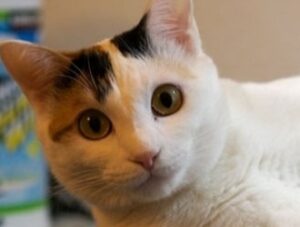
Japanese Bobtail
The Japanese Bobtail, also known as the Lucky Cat (Maneki-neko), is very popular in Japan. Cat lovers, upon hearing 'lucky,' want one. It is a native Japanese breed with a history tracing back centuries. Bred in the US after introduction, it is said an American cat lover in Japan found a cat with a short rabbit-like tail and brought several back after WWII; these are the ancestors. The Japanese Bobtail sits with one front paw raised, said to represent good fortune.

Tonkinese
The Tonkinese, also known as the Vietnamese cat, is not from Vietnam but a purebred short-haired breed produced by crossing the Siamese with the Burmese, first appearing in North America in the 1930s. With pointed coloring softer than the Siamese and a short, silky coat like the Burmese, the Tonkinese is famously affectionate, active, and people-oriented.

Persian
The Persian cat, also called Persian, Chinchilla, or Himalayan, with the Latin name Persian, represents nobility in people's minds. In China, most people's first pet cat was a Persian. However, most kept Persians are not purebred but non-purebred bred by merchants to meet the market; purebred Persians cost over a thousand dollars. Originating in Persia (Iran), it was developed in Britain over more than 100 years from Afghan longhair and Angora cats.

Siamese
The Siamese cat, also called the Thai cat, with English name Siamese, traces its origins to Thailand in the 14th century from non-purebred Asian cats. Once living in royal palaces and temples, it was later given as a diplomatic gift to other countries. Famous for its striking color points, blue almond eyes, and vocal, affectionate personality, the Siamese is a beloved and distinctive breed.

Singapura、Kucinta
The Singapura originates from Singapore and is also known as the Lion City Cat. With the English names Singapura and Kucinta, it is the smallest cat breed in the world, attracting much attention from cat lovers. Its less pleasant nicknames, drain cat and sewer cat, come from its living environment: early on, the Singapura was unwelcome among locals and forced to live in drains or sewers, hence the names.

Scottish Fold
The Scottish Fold's ears fold neatly forward over the head, earning it a place among the 'elf' cats. It is said that in 1961, a farm cat in Scotland gave birth to a litter containing a strange kitten with white fur, folded ears, and an owl-like face. Named after its birthplace near Coupar Angus, Scotland, and its folded ears, the breed became known as the 'Scottish Fold'.