Search Results
1014 results for “doe nutrition”

Red Arowana
The red arowana (Scleropages formosus) is a tropical freshwater dragon fish whose scales develop color in three phases—from yellow, to orange-red, to deep red. It needs a tank over 120 cm, full-spectrum light, and a meat-based diet.

Sonoran mud turtle
The Sonoran mud turtle is an uncommon, nocturnal musk turtle from the southwestern United States and northern Mexico, notable as the only subspecies in its group with night-active habits. A medium-sized aquatic turtle, it adapts well to captive care once settled.

Guangxi stripe-necked turtle
The Guangxi stripe-necked turtle is a rare, beautifully marked freshwater turtle endemic to Guangxi, China, long suspected—though never confirmed—to be a natural hybrid. In captivity it is an active, omnivorous species that enjoys warm water and is relatively easy for keepers to maintain.

Chinese False-eyed Turtle
The Chinese False-eyed Turtle (Mauremys pallidiceps) is a turtle endemic to China that favors clear, slow-moving streams with sandy bottoms and is sometimes found in farmland. Shy and largely carnivorous in captivity, it remains uncommon and is best kept with attention to water quality and a varied diet.
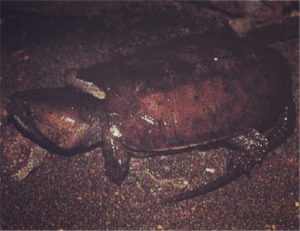
Burman Big-headed Turtle
The Burmese Big-headed Turtle (Platysternon megacephalum) is a subspecies of the beaked turtle found mainly in Myanmar and Vietnam, an aggressive carnivore that adapts fairly well to captivity. It mates in autumn and lays eggs from early summer, but its fierce temperament demands careful handling.
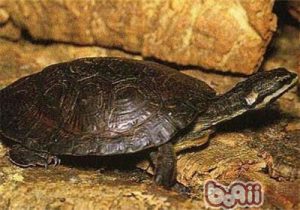
Phrynops williamsi
Phrynops williamsi, also called the Masked Toadhead Turtle, is a side-necked turtle from South America that loves basking and is semi-aquatic in the wild. Lively and relatively easy to keep, it remains uncommon in captivity and is found mainly as wild-caught individuals.

Burmese Eyed Turtle
The Burmese eyed turtle (Morenia ocellata) comes from southern Myanmar and occasionally appears in the Chinese pet market at reasonable prices with an appealing look. Weak at adapting to new environments, it is nevertheless easy to keep as a largely aquatic turtle.
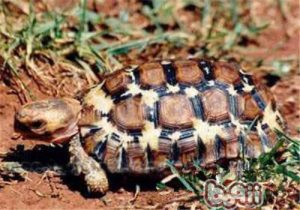
Lobatse Hingeback Tortoise
The Lobatse hingeback tortoise (Kinixys lobatsiana) is a relatively dry-adapted hingeback found in Botswana and South Africa. Though its range has two distinct rainy seasons, its habitat remains very hot overall, and it is seldom kept due to its rarity and similarity to other hingebacks.

Geoffroy’s Side-necked Turtle
The Geoffroy's Side-necked Turtle (Phrynops geoffroanus) is a shy, nocturnal South American side-necked turtle that dislikes basking and prefers dark, vegetated waters. Small and aquatic, it needs a large, clean setup and a varied omnivorous diet.

Home’s Hinge-back Tortoise
The Home's Hinge-back Tortoise (Kinixys homeana) is a shy, high-difficulty African tortoise known for its hinged rear carapace and a 90-degree rear shell drop. It prefers warm, humid conditions with ample shade and a varied omnivorous diet, but is prone to stress-induced sudden death, so it is not recommended for beginners.