Phrynops williamsi
2 Photo Gallery
View All 8 Photos


1 Overview
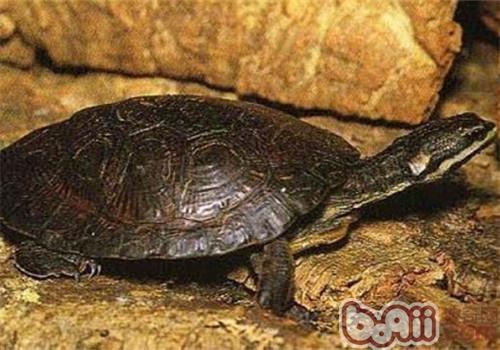
Phrynops williamsi, also known as the Masked Toadhead Turtle, is one of the many branches of the genus Phrynops. It enjoys direct sunlight on its shell, is semi-aquatic in the wild, is uncommon in captivity, and wild individuals are mainly distributed in South America.
Chinese name: Masked Toadhead Turtle
Chinese alias: Masked Toadhead Turtle
English name: Phrynops williamsi
Kingdom: Animalia
Phylum: Chordata
Subphylum: Vertebrata
Class: Reptilia
Order: Pleurodira
Family: Chelidae
Genus: Phrynops
Species: Masked Toadhead Turtle
Geographic distribution: South America; Argentina, Paraguay, Uruguay, and Brazil.
Habitat: Semi-aquatic in the wild; streams.
Care: A medium to large aquarium with a proper basking spot and hiding places; substrate of soil, natural earth, gravel, or coarse sand.
Reproduction: Oviparous.
Diet: Carnivorous.
2 Physical Characteristics
The adult Phrynops williamsi has beautiful markings and vivid colors. The black shell bears gray-green spots, and the pink underside has irregular black dots. The head is somewhat flat with irregular small white spots. Phrynops williamsi is very active and should be kept in a deeper tank so it can swim freely; it has high ornamental value. The adult carapace can reach 35.5 cm.
3 Care Guidelines
The genus Phrynops has many species with both similarities and differences in husbandry. Phrynops williamsi is among the easier to keep, and its environment and feeding can draw on general semi-aquatic turtle care.
I. Care essentials for Phrynops williamsi
Phrynops williamsi grows relatively fast; from a hatchling, the shell can exceed 10 cm in a year. It is outgoing and not demanding about water quality or temperature, perhaps the easiest aquatic turtle of its size to keep. It is very active and feeds well. It also enjoys sunbathing, so provide a good land area. Feed mainly on commercial food, but occasionally offer small live fish, when you can watch it shake its head chasing the fish. Keep at 20 to 32 degrees Celsius.
II. Breeding traits of Phrynops williamsi
Phrynops williamsi is a multiple-clutch aquatic animal. Usually the first laying is as early as mid-May and as late as early June, ending around the start of autumn, with the peak between the grain-in-ear and great-heat solar terms. Laying usually occurs after 10 p.m. The female crawls out of the water and chooses a higher, sheltered, sunny spot without standing water, preferably under soft moist sandy soil, to dig a nest. A mature clutch is laid all at once, and if disturbed she stops immediately. After laying, she uses her hind claws to cover the hole with sand, then smooths and compacts it with her belly, leaving no obvious trace.
4 Behavior & Habitat
Phrynops williamsi is a rather timid semi-aquatic turtle. In the wild it prefers humid land but also adapts well to water. In captivity you can keep it in water with a basking platform, or in a land setup that maintains humidity.
I. Temperature requirements for Phrynops williamsi
Phrynops williamsi likes a humid, dark, plant-dense environment. Only when the surroundings are quiet does it cautiously emerge to bask and forage. Because humid environments harbor abundant fungi and bacteria, including harmful ones, captive conditions must provide enough light to prevent infection and rickets. Indoors, use a UVB lamp 4 to 7 hours daily, and UV light 1 to 2 times a week for about 3 hours each. Keep the ambient temperature between 25 and 32 degrees Celsius.
II. Phrynops williamsi likes a humid environment
The ideal relative humidity for Phrynops williamsi is 50 to 70 percent. Whether humidity is right directly affects health and whether the turtle sheds smoothly. Turtles in higher humidity have smooth shells; those in dry environments cannot fully shed the keratin layer, leaving the shell rough and uneven. Control humidity by spraying. Frequency varies by climate and season, usually 1 to 2 times a week in spring and autumn, and every 1 to 2 days in summer.
5 Feeding Requirements
Phrynops williamsi is not picky about food and is omnivorous, which makes feeding convenient, as many foods can be offered. But balance nutrition and the way food is offered, and learn to judge the turtle’s health yourself.
I. Food selection and feeding tips for Phrynops williamsi
Phrynops williamsi is omnivorous, eating both meat and plants. Animal foods include insects, small aquatic animals, and invertebrates such as snails, slugs, earthworms, worms, crickets, and mealworms; it also eats low-fat cat and dog food. Plant foods include some leafy greens and fruits such as tomato, banana, water spinach, and grape leaves.
Feed once a day or once every two days. More is given in spring and summer, less in autumn and late autumn; especially when temperatures are unstable, it is better to feed less or not at all, otherwise temperature swings can cause indigestion. A mix of meat and plants is suitable; you can also feed mainly animal food one week and vegetables 1 to 2 times a week.
II. Health monitoring for Phrynops williamsi
A healthy Phrynops williamsi has a mouth that is pink or peach-colored. A pale mouth or white ulcers indicates illness. A healthy turtle has clear, bright eyes that open and close freely with no mucus or discharge; a sick turtle has white cottage-cheese-like discharge in the eyes, severe cases swelling. The area around the nostrils is dry with no mucus; a sick turtle has mucus, severe cases bleeding. Healthy feces are cylindrical and brown or dark green; liver-colored, yellow-brown, or light-green feces are abnormal.