Lobatse Hingeback Tortoise
2 Photo Gallery
View All 8 Photos

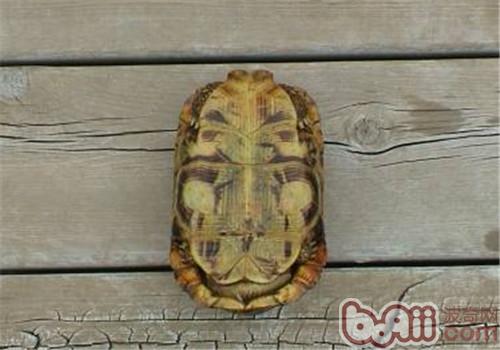

1 Overview
The Lobatse hingeback tortoise is distributed across Botswana and South Africa. Among hingeback tortoises it is relatively fond of and well adapted to dry conditions. Although the region has two distinct rainy seasons, the habitat as a whole remains very hot.
Chinese name: Lobatse hingeback tortoise
Common aliases: Lobatse leaf hingeback tortoise
English name: Lobatse hingeback
Latin name: Kinixys lobatsiana
Kingdom: Animalia
Phylum: Chordata
Class: Reptilia
Order: Testudines
Family: Testudinidae
Species: African hingeback tortoise
Geographic distribution: Botswana, South Africa
Reproduction: Oviparous
Care: A tortoise that prefers dry environments. The most marked climatic feature of its habitat is the winter from May to August and the rainy season from November to March; the habitat is warm to hot throughout the year.
Size: 18–20 cm
2 Physical Characteristics
The Lobatse hingeback tortoise has a modest carapace with vivid and striking patterns, but it is not very numerous, and because its appearance resembles that of other hingebacks, few people keep it.
The shell length of the Lobatse hingeback tortoise usually does not exceed 20 cm, though individuals up to 22 cm occur. Hatchlings measure 3.5–5.0 cm in carapace length. Sex is distinguished mainly by the tail: males have a thick, large tail and females a short one, and males have a concave plastron. The Lobatse hingeback (K. lobatsiana), Speke’s hingeback (K. spekii), and the Bell’s hingeback (K. belliana) are extremely difficult to tell apart by external appearance alone.
Information on the Lobatse hingeback tortoise is very scarce, with no complete research data available. It is known only to occur in South Africa and Botswana. Fundamentally it is a tortoise that prefers dry environments; its habitat overlaps with that of the serrated tent tortoise (Psammobates oculiferus), and generally lies within the Kalahari Desert region of southern Africa, characterized by a typical desert and semi-desert climate with low and highly variable rainfall.
3 Care & Maintenance
The Lobatse hingeback tortoise reproduces by laying eggs. Mating usually takes place from July to November and eggs are laid in May. They prefer to lay during relatively humid weather, producing 2–4 eggs each time. Egg size is typically (41–45) x (28–38) mm, in fact determined by the size of the mother — larger mothers lay larger eggs. The incubation period is usually 148–172 days at about 29°C; excessively high temperatures cause deformities in hatchlings, and newly hatched tortoises typically measure 45–47 mm.
4 Natural Habitat
The Lobatse hingeback tortoise’s native environment is harsh, with large temperature fluctuations and very low humidity. We know tortoises are prone to dehydration, yet the Lobatse hingeback survives — not because of strong survival ability, but simply because it is well adapted.
1. Distribution of the Lobatse Hingeback Tortoise
The Lobatse hingeback is a relatively recently separated species, named after a region — Lobatse refers to the Lobatse area of Botswana, hence its name. Its husbandry and wild conditions are not far from those of the Natal hingeback and the Bell’s hingeback, so it can be kept following the model for dry-climate tortoises, and its incubation conditions should be similar to those of other hingebacks.
2. Temperature Tolerance of the Lobatse Hingeback Tortoise
The Lobatse hingeback’s habitat overlaps with that of the serrated tent tortoise, generally lying within the Kalahari Desert region of southern Africa, characterized by a typical desert and semi-desert climate with low and highly variable rainfall; rainy seasons do not occur every year. Temperature variation is considerable, with extreme day-night differences: summer days often exceed 40°C and nights drop to about 26°C, while winter days warm rapidly, often above 30°C, yet nights can fall below 0°C with frost in the early morning. On the whole, summer averages about 35–40°C with nights rarely below 26°C, while winter days are warm at about 25°C on average and cold nights average around 4°C.
5 Care Guidelines
In keeping the Lobatse hingeback tortoise, food selection and complete nutrition matter greatly. Do not assume tortoises are all vegetarian; in captivity we often need to offer some animal-based food to maintain nutritional balance.
1. The Roles of Fiber and Vitamins
The Lobatse hingeback tortoise needs a fairly high level of fiber (dietary fiber) to promote intestinal motility and healthy digestion. Low-fiber foods easily cause insufficient gut movement, with immediate effects such as difficult defecation, and in the long term lead to digestive decline, refusal to eat, and even death. Vitamins, as the name implies, are the basic elements that sustain life and important active substances for keeping the body healthy; without them, the tortoise’s growth, metabolism, and development will all suffer.
2. The Importance of Water
Feeding large amounts of high-moisture food easily causes loose stools and other intestinal diseases, especially affecting the gut of dry-climate tortoises. In general, the drier the region of origin, the lower the moisture content of the Lobatse hingeback’s food should be. However, the small amount of surface moisture from rinsing food need not be a concern, since surface water is absorbed in the stomach and generally does not disrupt the gut or cause diarrhea.
3. Methods of Calcium Supplementation
Calcium is essential for healthy bone and shell growth; deficiency leads to osteoporosis and shell disorders, and calcium distributed in soft tissues also helps regulate physiological balance. The Lobatse hingeback needs more calcium during growth and egg-laying. Note that calcium absorption requires sunlight: UVB rays enable the tortoise to synthesize vitamin D3 efficiently, which in turn aids calcium absorption; otherwise, simply adding calcium is of limited value.