Search Results
295 results for “cat sex”

Chinchilla laniger
The Chinchilla laniger (Chinchilla laniger) is native to the Andes Mountains of South America, where it lives in caves and rock crevices at about 1,600 m elevation. Its appearance resembles that of a rabbit and a squirrel. A special feature is its pair of large, bright, ruby-red eyes, which are beautiful.

Jardine Parrot
The Jardine Parrot (Poicephalus gulielmi) currently has three subspecies. Its body is almost entirely green and is the second-largest parrot species after the Cape Parrot. Its distribution is scattered and not concentrated, mainly across central Africa and parts of West Africa.
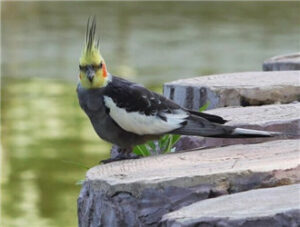
Cockatiel
The Cockatiel (Cockatiel) goes by different names in different regions; in Hong Kong and Taiwan it is often called the Crested Parrot. The Cockatiel is one of the most common medium-sized parrots in the world. Hand-reared young birds are very lively and love to bond with their owners.

Crossbill
The Crossbill, also called the crossbill or green crossbill, currently has three subspecies. Its most distinctive feature is the crossed upper and lower mandibles, used to pry open pine cones and extract the seeds.

Blue-fronted Amazon
The Blue-fronted Amazon is one of the more common Amazon parrots, with very bright plumage. Its drawback is a loud call, so it is best kept in a detached house where it will not disturb neighbors. Its diet is varied and easy to manage.

Hyacinth Macaw
The Hyacinth Macaw (Anodorhynchus hyacinthinus) is the largest parrot in the world and one of the rarest creatures on Earth. Because of its high value it has long been a target for hunters, and this has pushed the species toward a survival crisis.
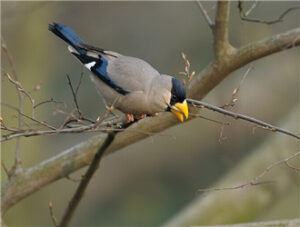
Hawfinch
The Hawfinch (Coccothraustes coccothraustes) is one of China's most popular pet birds and has great ornamental value. A medium-sized bird, the adult is about 19 cm long, and both sexes look adorably chubby and lovable.

How Chinchillas Mate and Reproduce
Chinchillas can be paired from 8 months and 500 g; males mature at 4-6 months but females should not be bred early. After a brief evening mating a copulatory plug appears within 1-2 hours, and the pair must be separated to protect the 111-day pregnancy. Litters are 2-3 kits; watch for rejected kits when more are born than the two productive teats can feed.

How Long Is a Guinea Pig’s Estrus Cycle — and What Are the Signs?
Female guinea pigs cycle every 15–16 days for about 16–18 hours, mostly 5 PM to 5 AM; males have no fixed cycle and react to a female in heat. Signs include dropped appetite, urine-marking everywhere, mounting, cooing, and irritability. Year-round breeders can only be stopped by spaying, which is risky, so manage by learning the pattern.

Guinea Pig Care Essentials
Guinea pigs (cavies) are social, vegetarian pets that need a companion, a roomy cage, constant access to hay and water, and never onion, garlic, meat, or human snacks. Keep them at 18 to 29°C away from cats and dogs, handle them with support, and groom, trim nails, and bathe in warm sunny spells.