Search Results
162 results for “basking”
Which Pet Turtles Are Most Common?
The most common pet turtles include the Chinese pond turtle, red-eared slider, yellow-margined box turtle, red-faced mud turtle, painted turtle, musk turtle, map turtle, and yellow-breasted turtle. Among them, the Chinese pond turtle and yellow-breasted turtle are native Chinese species loved by keepers. Chinese pond and red-eared slider turtles are inexpensive and easy to raise, making them ideal for beginners. Because each species has different habits, owners should learn the specific needs of their turtle, such as basking requirements, and prepare a basking platform so the animal can dry off and absorb heat.

How to Care for an Alligator Snapping Turtle
Alligator snapping turtles are aggressive, long-lived freshwater turtles that make challenging but rewarding pets. They are mostly aquatic but must come ashore often to breathe, so provide a rock or basking platform. Keep water deep, about two to three times the shell height, with a land area for shelter and sunning. Change only one fifth to one third of the water weekly to avoid shocking them. Feed a varied carnivorous-leaning diet of fish, shrimp, earthworms, lean meat, and insects plus some greens, and keep the temperature steady at 26 to 32 degrees Celsius. Avoid overfeeding and too much fat or salt, and clean the habitat regularly to prevent disease.
How to Care for a Red-Eared Slider (Brazilian Turtle)
Red-eared sliders, often called Brazilian turtles, are inexpensive and hardy, which makes them a popular first pet turtle. But like any reptile, they need the right setup to stay healthy. Provide a spacious aquarium or tub so the turtle can swim freely, keep the water between 20 and 30 degrees Celsius with a heater, and add a basking platform or dry land where it can climb out to warm up and rest. Without natural sunlight, use a UVB lamp to support calcium absorption and shell development. Change the water regularly and keep the substrate clean to prevent infection. Feed a balanced omnivorous diet of vegetables, fruit, insects, and quality pellets, with calcium and vitamin supplements. With consistent care, your turtle can thrive for years.

Treating and Preventing Turtle Water Mold Disease
Poor water quality from leftover food and waste is the root cause of turtle water mold, usually from poor management. Treatment uses antifungal medication—povidone-iodine applied topically, diluted soaks, gentle brushing, or in severe cases miconazole ointment with dry-docking—always keeping the environment at 28–32°C. Prevention means sunlight, prompt cleanup of food waste, regular water changes, and isolating sick turtles. Do not confuse water mold with normal shedding.

How to Prevent and Treat Water Mold Disease in Turtles
Prevention is the cornerstone of managing turtle water mold, and the root of prevention is avoiding injury—a turtle without wounds rarely develops the disease. Already-infected turtles must be isolated and treated promptly based on their condition. Practical steps include smoothing tank decorations, avoiding mixed-keeping of mismatched turtles, and keeping water stable rather than merely clean. Early isolation and wound care stop the fungus from taking hold.
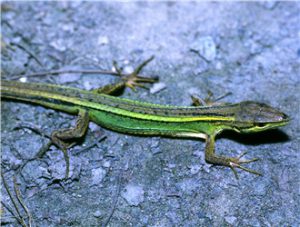
Northern Grass Lizard
A tiny, very easy lacertid lizard of central and eastern China - shy but hardy, basking in grass and dropping its long tail to escape.

Large-headed Turtle
A Chinese-endemic 'big-head' turtle that looks like a Reeves' but with a huge triangular head it cannot retract - a threatened, somewhat delicate water turtle.

Eastern Painted Turtle
One of four painted-turtle subspecies - smaller, plainer and a bit harder to keep than the western form, but a classic, hardy North American pet with a red-edged shell.

Map Turtle
A variable, attractive North American water turtle with a raised midline keel and fine 'map' line-markings. Sensitive to poor water quality - keep the tank clean. The common pet forms are the Mississippi and false map turtles.

Asian Leaf Turtle
A common, beginner-friendly semi-aquatic turtle of the genus Cyclemys - four subspecies differ in shell and neck pattern; hardy and interactive, great for newcomers.