Northern Grass Lizard
2 Photo Gallery

1 Overview
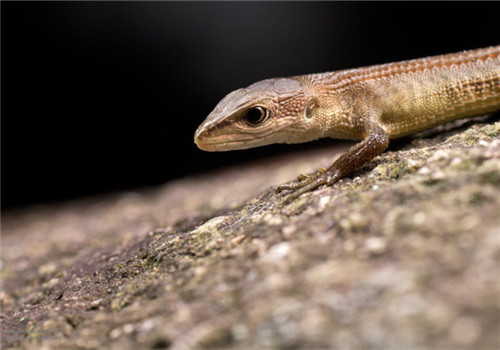
The northern grass lizard (Takydromus septentrionalis) is a small lacertid lizard found across Shaanxi, Gansu, Jiangsu, Shanghai, Anhui, Hubei, Sichuan, Zhejiang, Fujian and more of China.
SOURCE NOTE: family Lacertidae (source listed as Lacertidae). A small, hardy, easy lizard.
2 Appearance
Slender, a small lizard showing head-size sexual dimorphism and diet shift during development. Snout slightly blunt; snout length about equal to eye-ear distance; external nostril between nasal, postnasal and first supralabial; large ear opening about eye diameter. Well-developed limbs; when appressed they reach each other’s palms; one pair of preanal pores.
Top of head with symmetrical large scales; keeled large dorsals in longitudinal rows; abdomen large near-square scales. Tail easily autotomised. Back green-brown, belly grey-white, lower sides green. Slender, about 50-60 mm body; tail over twice the body length.
3 Care & Feeding
Wild ones may bite at first; very shy, so avoid handling or they may refuse food from stress. No bathing needed; brief sun (1-2 h) in mild afternoon. Not social – keep alone. In late October they brumate until early April (about 6 active months), hiding under grass roots, tree roots or field-ridge soil holes, or roadside stones.
4 Habitat & Environment
Wild ones like hills, farmland, tea gardens, wasteland, roadside grass, shrubbery. A tank about twice the lizard’s length suffices. Bromates late October to early April; hides under grass or tree roots or field-ridge holes, or roadside stones. In spring or autumn active midday in sunny grass; less at noon in summer, foraging in shade; flees when startled.
5 Diet & Feeding
A small lizard; common question is what to feed. Likes mealworms (from bird-flower markets). Ensure vitamins via greens (lettuce or rape leaves) or apple. Also grasshoppers, crickets, spiders – almost any live insect. Overall very easy to keep.