Search Results
478 results for “FIV”

Chinese Pit Viper
The Chinese Pit Viper (Gloydius shedaoensis), also called the Shedao pit viper, is a venomous, Chinese-endemic snake found on Liaoning's Snake Island and nearby Northeast China. A stout, silver-gray viper with a black brow stripe, it feeds mainly on birds and is listed on the IUCN Red List with roughly 10,000 individuals remaining.
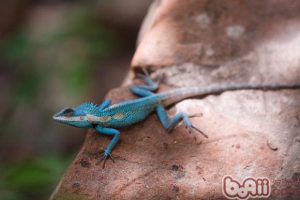
Calotes mystaceus
The white-lipped tree lizard (Calotes mystaceus), also called the arrow-spined agama, is found in Myanmar, Thailand, Vietnam, and China's Yunnan. A small, forest-dwelling agamid, it needs high humidity (about 75%) and temperatures of 25-30 deg C.

Kapuas Mud Snake
The Kapuas Mud Snake (also called the color-changing snake) is found in swamps and swamp forests along Indonesia's Kapuas River. A rear-fanged colubrid discovered only around 2005, it is venomous but not yet kept as a pet.
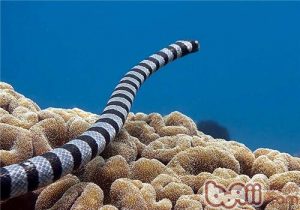
Yellow-lipped Sea Krait
The yellow-lipped sea krait (Laticauda colubrina) is a moderately sized, venomous sea snake found from the Indian Ocean to the Pacific. Despite its potent neurotoxic venom, its small mouth and low aggressiveness make it little threat to humans, and it retains enough land ability to climb ashore.
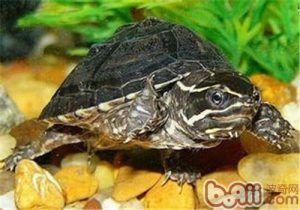
Mud Turtle
The Mud Turtle is not a single species but a group of turtles sharing common traits in body structure or distribution, classified under one family. The family Kinosternidae includes the mud turtles and musk turtles.
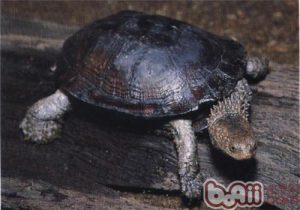
Chaco Side-necked Turtle
The Chaco Side-necked Turtle is a turtle of the genus Acanthochelys, first found in Argentina, Paraguay, and Bolivia. Because side-necked turtles are taxonomically complex, identifying species by appearance alone is difficult, and the Chaco Side-necked Turtle is neither widespread nor commonly seen in the market.
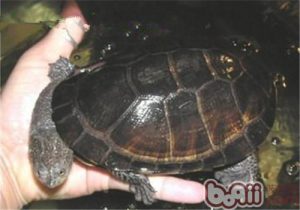
Acanthochelys radiolata (Brazilian Radiolated Swamp Turtle)
The Brazilian radiolated spiny-necked turtle is a rare Brazilian species in the genus Acanthochelys, named for the radiating pattern on its carapace. It is difficult to keep and seldom seen in captivity.

Pyxis planicauda (Malagasy Flat-tailed Tortoise)
The flat-tailed tortoise is found along the west coast of Madagascar, closely resembling the spider tortoise but recognized as a distinct species. It is a shy, mostly herbivorous tortoise that aestivates through the dry season.
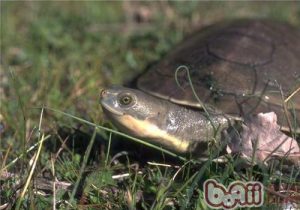
Emydura australis (Australian Big-headed Turtle)
The Australian big-headed side-necked turtle is carnivorous and lives in shallow water, aestivating in pond mud during the dry season. In the wild it consumes large numbers of mosquito larvae, making it beneficial to people, though it is rare and its trade is strictly controlled.

Bell’s/Lowveld Hinge-back Tortoise
Bell's Hinge-back Tortoise (Kinixys belliana) is a relatively common hinge-back tortoise that lives a solitary life in dry habitats. Demanding in its care, it is not recommended for beginner keepers.