Bell’s/Lowveld Hinge-back Tortoise
2 Photo Gallery
View All 8 Photos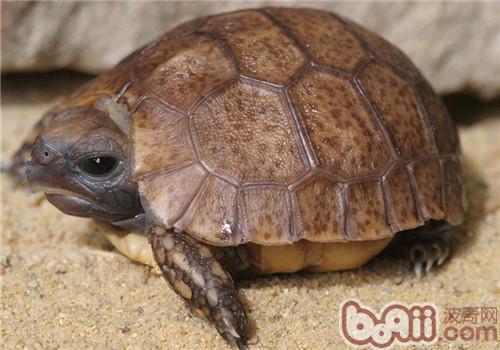


1 Overview
Bell’s Hinge-back Tortoise is a relatively common species of the hinge-back genus, usually living a solitary life and preferring dry habitats. It is not very common in the domestic pet market but can be found; its care demands are high, so it is not suitable for beginners. It mainly inhabits grasslands and sparse plains, and sometimes appears in woods near the seashore.
2 Physical Characteristics
Bell’s Hinge-back Tortoise is the largest and most representative species of the hinge-back tortoises. It has three subspecies, each with some differences. Below we introduce its appearance and how to identify the subspecies.
Appearance: Bell’s Hinge-back Tortoise can reach a shell length of 22 cm, with one caudal scute and a hooked upper jaw. Distributed across mainland Africa south of the Sahara and Madagascar, it has three subspecies and is the most widespread and abundant hinge-back tortoise. The three subspecies have non-overlapping ranges.
Subspecies Identification: Kinixys belliana belliana is the Eastern Bell’s Hinge-back, distributed in East African countries; Kinixys belliana nogueyi is the Western Bell’s Hinge-back, distributed in West African countries; Kinixys belliana zombensis is the Southern Bell’s Hinge-back, distributed in southern African countries and on Madagascar.
Among the three, the Western Bell’s Hinge-back is the most common. Although their ranges do not overlap, they are sometimes hard to tell apart. Briefly: K. b. belliana (Eastern): usually five toes on the front foot, dark-bordered carapace scutes with yellow-brown markings. K. b. nogueyi (Western): usually only four toes on the front foot, uniform earth-yellow carapace with brown outer scute borders and few pale markings. K. b. zombensis (Southern): usually only four toes on the front foot, pale yellow carapace base covered with broad black radiating markings.
3 Care & Husbandry
Bell’s Hinge-back Tortoise is usually rather difficult to keep, but that does not stop people from liking it. For a time it was banned from import, but now some can be found in the market, and more people are trying to keep it.
Care Notes: In 2001 the United States announced a ban on importing wild Sulcata, leopard, and Bell’s hinge-back tortoises, because these three African turtles carry a high proportion of ticks, which are vectors of heartwater disease in livestock. Bell’s Hinge-back is a grassland tortoise that also appears in shrubland, requiring relatively high humidity and moisture, and fairly high temperatures. However, its light-intensity requirement is not as high as that of typical African tortoises, so very strong lighting is not needed.
Breeding Points: Sex is distinguished mainly by the tail—males have a thick tail, females a short one, and males have a concave plastron. Males are strongly territorial, so it is best to keep only one male, or violent ramming conflicts occur during breeding season. Females lay 4–8 eggs per clutch. At an incubation temperature of 30°C, hatching takes about 90–120 days. With sufficient feeding, females can lay twice a year. Although not a mainstream species, long-kept individuals can show good interaction and personality with their owner; their merits are appreciated only by those who admire them.
4 Habitat & Environment
Bell’s Hinge-back Tortoise is not very demanding about environment, but temperature control matters. Generally it does not hibernate, but in hot summer it does estivate, so both too-high and too-low temperatures are unsuitable.
Temperature: The optimal living temperature is 27–30°C. Wild individuals estivate, so do not let it get too high—avoid exceeding 35°C. At night it can drop to 20°C, but around feeding keep at least 27°C to aid digestion.
Humidity: The optimal environmental humidity is 60–85%. Because of its wide distribution and distinct wet seasons locally, it can adapt to a broad humidity range. Although not as moisture-demanding as K. erosa and K. homeana, by distribution it seems to prefer humid environments, so in the enclosure keep relative humidity at 75–85% and provide a water dish for temperature regulation.
Bell’s Hinge-back Tortoise is most active when it begins to rain, but in extreme heat it digs holes in dried-up puddles to hide and conserve moisture, then waits for the next rain. In milder weather it forages at dawn and dusk.
5 Feeding Requirements
Bell’s Hinge-back Tortoise is not overly picky, but generally it is a strict vegetarian, so in captivity avoid too much meat and ensure dietary variety and health.
In the wild it mainly eats pasture grass, greens, leaves, flowers, and fruits, but also snails, some small insects, and animal carcasses. Foods to provide in captivity include:
1. Main feed (>90%): dark leafy green plants, such as choy sum, Chinese kale, purslane, dandelion, plantain, alfalfa, wild mustard, pasture grass, chrysanthemum, garland chrysanthemum, mulberry leaves, and hibiscus leaves.
2. Occasionally (<10%): earthworms, slugs, snails, grasshoppers, super mealworms, crickets, etc. Also cactus plants, aloe, figs, carrots, apples (with skin), peaches, various berries, kiwi, pumpkin, beans, peas, almonds, fungi, and nutritionally balanced high-quality commercial tortoise pellets.
3. Never feed (0%): overly juicy fruits and vegetables, tomatoes, bananas, lettuce, cabbage, cauliflower, Chinese cabbage, cucumber, rhubarb, and broccoli.
Bell’s Hinge-back Tortoise needs high fiber, high calcium, low phosphorus, and moderate protein. Once accustomed to the environment its appetite is very good; but most are wild-caught, so initially they may be selective or refuse food—note this.