Search Results
42 results for “Daily Care, Breed Info”

How to Train a Well-Rounded Dog
Training curbs a pet's natural scatterbrained ways, turning spontaneous behavior into good obedience through gradual tasks. First understand the dog - its breed, size, temperament and purpose - and match your time, budget and space while limiting nuisance to neighbors. The core is the conditioned reflex: use the dog's natural responses to food, novelty and threat, with consistent commands and gestures, rewarding and reinforcing daily in short sessions (never too much). The only shortcut is practice, patience, consistency and rewards - and exercising together works too.

What Are the Differences Between Tortoises and Sea Turtles?
Tortoises and sea turtles differ greatly in form, habitat, and habits, even though both belong to the order Testudines. Tortoises live on land, needing only occasional soaking and unable to stay in water long; sea turtles spend life at sea, coming ashore only to lay eggs and bask. A tortoise's shell is thick and domed, with short sturdy legs that bear its weight; a sea turtle's shell is thin and smooth, with long front flippers. Tortoises can pull their limbs inside when threatened; sea turtles cannot. Both are omnivorous, but tortoises eat roots, leaves, fruit, and vegetables, while sea turtles favor seaweed. Knowing these differences helps any keeper care for them correctly.

Can a Sulfur-Crested Cockatoo Learn to Talk?
Sulfur-crested cockatoos can learn to talk, but their mimicry is weak compared with other parrots, and they manage only simple words. Training takes patience and works best when started young, around two months. Train in the early morning when the bird is active and hungry, use food rewards, keep the room quiet, and begin with short phrases like 'hello' or 'thank you,' repeating the same line daily until learned. A recorder can help. These loud, large birds also need a roomy, sturdy cage and a calm home to stay healthy.
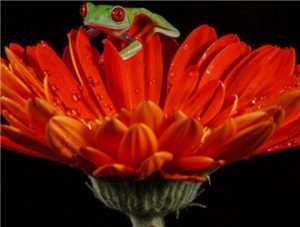
Red-eyed Tree Frog
The iconic big-eyed, green-and-orange hylid of Central American rainforests - fully nocturnal and a live-food specialist. An amphibian, not a reptile.

Amboina Box Turtle
The most common and cheapest of the seven box turtles (Cuora amboinensis) - shy, very aquatic, and the most beginner-friendly of the box turtles.
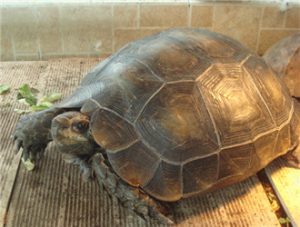
Burmese Mountain Tortoise
The Burmese Mountain Tortoise (Manouria emys) is one of Asia's largest tortoises, a shy forest dweller from western India to Vietnam and Sumatra. It loves warmth and humidity, shuns bright light, and is a committed herbivore that rarely accepts animal food.
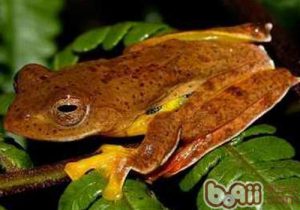
Rhacophorus bipunctatus
Rhacophorus bipunctatus, a flying-tree-frog relative from India, Myanmar, and Malaysia, has toe pads for climbing and can change color like a chameleon. An arboreal frog that needs a planted, humid terrarium and live, moving prey.

Fire Crest Lizard
The fire crest lizard is a typical arboreal lizard found in the moist forests near waterways of Southeast Asia (Thailand, Malaysia, Indonesia). A carnivorous, insect-eating species, males are large, brilliantly colored, and aggressive, and are best kept singly.
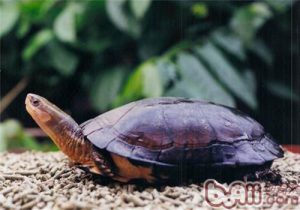
Zhou’s Box Turtle
Zhou's Box Turtle (Cuora zhoui) is a rare and precious turtle in China, found only in Guangxi and Yunnan provinces. Wild populations are nearly depleted, and most knowledge about the species comes from captive husbandry experience.
Privacy Policy
Who We Are ChirpyPet (“we”, “us”, or “our”) is a pet-care knowledge portal dedicated to helping pet lovers worldwide care for their animals — from breed identification to disease prevention and daily health. Our website is located at chirpypet.com (the “Site”). This Privacy Policy explains what personal information we collect, why we collect it, and […]