Rose-ringed Parakeet
2 Photo Gallery
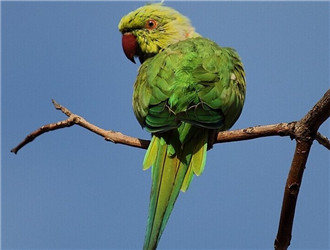
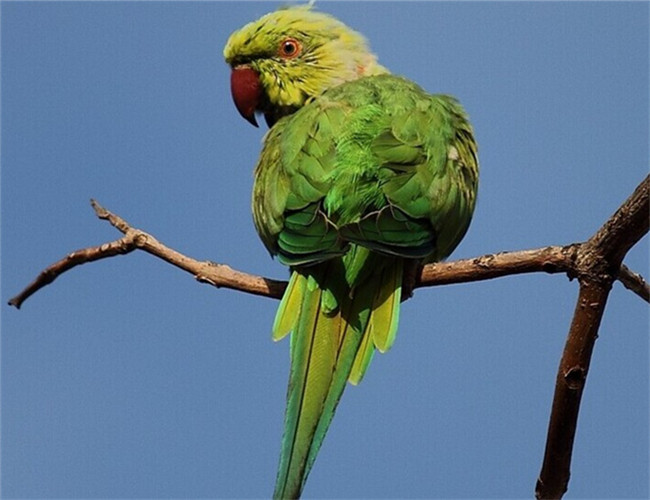
1 Rose-ringed Parakeet Breed Overview
The Rose-ringed Parakeet (also called the Ring-necked Parakeet) is cautious and careful about both food and play, and newly imported chicks are especially wary of people.
When flying to foraging areas, Rose-ringed Parakeets form tight formations and fly quite fast; in some regions they migrate seasonally, with the destination determined entirely by food availability.
Chinese name: Rose-ringed Parakeet
Chinese alias: Ring-necked Parakeet
English name: Rose-ringed Parakeet
Binomial: Psittacula krameri
Kingdom: Animalia
Phylum: Chordata
Class: Aves
Order: Psittaciformes
Family: Psittacidae
Tribe: Psittacula (ring-necked tribe)
Distribution: Africa and Asia
2 Rose-ringed Parakeet Physical Characteristics
A fully grown Rose-ringed Parakeet should weigh about 108 g and measure 380–420 mm in length. It is a medium-sized bird; juveniles and females look similar, with a pale pink beak, and only begin developing adult plumage at around 18 months, taking at least 32–36 months to reach full adult coloring.
The male has a bright green head that fades to pale blue on the sides of the neck and behind the ear coverts. A narrow black line runs from the base of the bill back along the lores to the eye. The chin and throat are black and extend back and down the neck sides to join a narrow rose-red neck ring descending from the nape—one of its distinctive features. The upperparts are bright grass green, turning blue near the rose-red neck ring; the rump and uppertail coverts are especially glossy, and the tail gradually lengthens, with the central tail feathers longest, blue-green with a greener base and a narrow yellow tip, the outer tail feathers greener outward. The wings are green, with the lesser and median coverts slightly bluish and the greater coverts and flight feathers dark green. The underparts are paler, more grayish-green than the back, and the vent, thigh coverts, underwing coverts, and axillaries are pale yellow.
The female lacks the black chin and throat, the black stripe on the head, and the rose-red neck ring; her tail is shorter, and the rest of the plumage is similar to the male. The iris is pale yellow, the bill coral red, and the legs and toes slate gray or slate green.
3 Rose-ringed Parakeet Living Environment
Most parrots have long lifespans, and the Rose-ringed Parakeet is no exception—well cared for, it can live around 30 years. In the wild it favors various forests and open countryside, thorny plains, dry forest areas, open secondary woodland, and grasslands.
In Asia they inhabit areas below 1,600 m, and in Africa below 2,000 m, frequently appearing in farmland, suburbs, parks, gardens, and even public spaces in cities; they sometimes visit orchards and coffee plantations to feed and are considered agricultural pest birds in many areas. But during peak insect seasons the Rose-ringed Parakeet is a farmer’s helper. They adapt quickly to new environments, enjoy bathing, and have strong chewing instincts—provide toys and branches for them to chew.
4 Rose-ringed Parakeet Feeding Guidelines
The Rose-ringed Parakeet is fairly hardy and not overly sensitive to changes around it, so it is relatively easy to keep. Its talking ability is not as good as that of the larger parrots, but a bird kept from around a year old will start mimicking sounds and speech.
Do not feed only a single type of seed mix. Parakeets mainly eat seeds, nuts, berries, plant shoots, flowers, and nectar; they occasionally visit farmland orchards and cereal fields, causing considerable damage to rice.