Magpie Robin
2 Photo Gallery
1 Magpie Robin Breed Overview
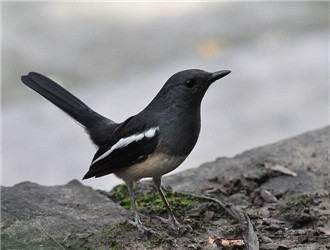
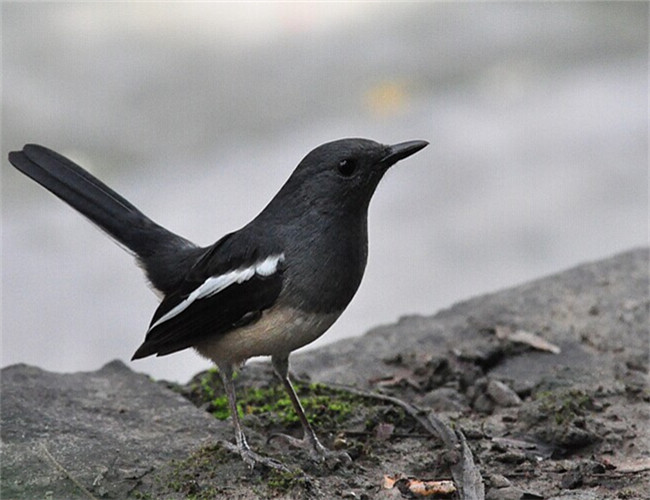
The Magpie Robin, also called the Magpie-Robin (Copsychus saularis), has many aliases like Zhizha and Xinbird. The name ‘Four-Joy’ comes from its habit of singing cheerfully on branches or building eaves, drawing much attention—hence ‘Four-Joy Bird.’ Except for being smaller than a magpie, its appearance is very similar.
Chinese name: Magpie Robin
Chinese aliases: Pigshit-char, Zhizha, Xinbird, or Four-Joy
English name: Magpie robin
Binomial: Copsychus saularis
Kingdom: Animalia
Phylum: Chordata
Subphylum: Vertebrata
Class: Aves
Subclass: Neornithes
Order: Passeriformes
Family: Muscicapidae
Distribution: Widely in China south of the Yangtze, reaching Hainan, Guangdong, Hong Kong, Guangxi, Fujian in the south; north to Shaanxi, Henan, southeastern Gansu; west to Sichuan, Guizhou, Yunnan.
2 Magpie Robin Physical Characteristics
Magpie Robin (details)
The Magpie Robin’s most typical feature is its extremely long tail, about 21 cm long. People often confuse it with the magpie, but the Magpie Robin is smaller, so identification is easy.
The Magpie Robin is a small bird. The male’s upper body is mostly black with white wing patches, and the lower body black front and white back—very striking. The female’s upper body is gray-brown with white wing patches, and the lower front also gray-brown, back white. Features are clear and easy to identify in the field. The similar magpie is significantly larger, same color in both sexes.
The male’s forehead, crown, sides of head, nape, hindneck, sides of neck, back, shoulders through to the upper tail coverts are all black with a blue metallic sheen. The central two pairs of tail feathers are black, the rest white with only a faint black spot at the base; the fourth outer pair has black only on the inner web or both webs. Wings black-brown; the small, median, and inner secondary coverts and inner webs of inner secondaries are white, forming a broad white wing patch, obvious in flight. The lower throat, chin, upper chest, cheeks, and sides of neck are the same bright blue-black as the head; lower chest, belly, and under-tail coverts white, some flanks and under-tail slightly gray. The female is similar but upper body mostly black-gray or dark brown-gray; forehead, lores, sides of head, cheeks, throat, chest dark gray or gray-brown; rest of underparts white slightly tinged brown. The juvenile is gray-brown or dark brown above, throat and chest tan or yellow-brown with dark brown edges, otherwise like the adult. Iris brown, bill black, tarsus and toes black-brown or gray-brown.
3 Magpie Robin Living Environment
Magpie Robin (details)
The Magpie Robin is widely distributed in China and kept by many. In the wild it lives about 5 years; captive birds outlive wild ones, up to about 10 years. It can also be kept on a bird stand like a robin, with a special charm.
The Magpie Robin defecates a lot with a strange odor; it also loves water baths, so the cage bottom is easily soiled. Clean the cage bottom and droppings tray (or cage pad) every one to two days; bathe it in a bath cage. Clean the water pot daily and change fresh water. Change the powder feed in the food pot with each bottom cleaning. During the molt (months 8–10) reduce baths; in the south, a gauze cover is needed in summer; in the north, indoor wintering above 15°C is best.
4 Magpie Robin Care Tips
Magpie Robin (details)
The Magpie Robin has two subspecies; the common one in China is the South China subspecies. Like other birds, it catches food with its beak. Many keepers cannot tell male from female.
The Magpie Robin is a famous songbird, so usually only males are kept. The sexes differ in color and are easy to tell. The male is black-and-white like a magpie. The female’s head, neck, chest, and back are gray-black without metallic sheen, belly dirty white. Male juveniles have brown-yellow breast spots and white-and-ochre small coverts; female juveniles have pale gray breast spots and white fine dots on small coverts.
5 Magpie Robin Feeding Guidelines
Magpie Robin (details)
Unlike other birds, the Magpie Robin digests pelleted feed poorly, so consider powder feed. In the wild it catches insects to fill up, so captive birds can also be given insects appropriately.
Generally the synthetic feed is Super Black Gold No.1 Four-Joy/Baby Bird formula, very suited to the Magpie Robin and Baby Bird gut; powder feed is the staple, plus insects like locusts, ground crickets, leaf rollers, mealworms, or beef/mutton mince (strips). Sometimes dried grasshoppers as a supplement. Some use fresh river shrimp instead of insects. Increase the protein feed ratio (especially live insects) and supplement multiple vitamins.