Horned Parakeet
2 Photo Gallery
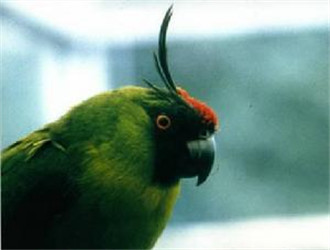
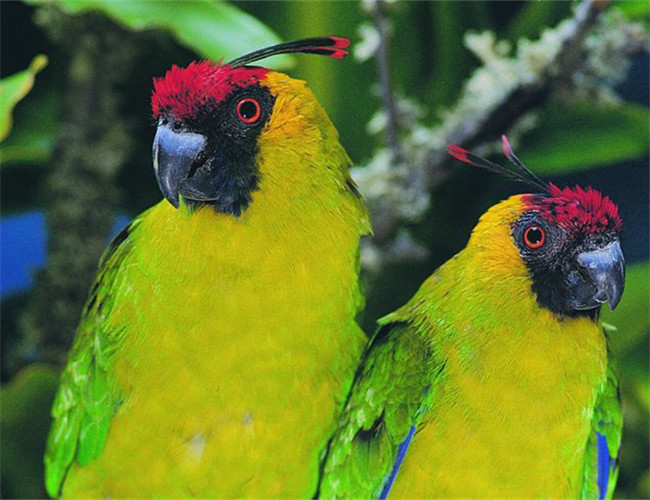
1 Horned Parakeet Breed Overview
The Horned Parakeet is a very rare and expensive variety and a typical perching bird. It has a handsome look and very bright plumage. Native to New Zealand, it is now mainly distributed in New Caledonia, a French overseas territory.
Chinese Name: Horned Parakeet
Latin Name: Eunymphicus cornutus
Other Names: Tufted parrot, unicorn parrot, horned parrot
Kingdom: Animalia
Phylum: Chordata
Class: Aves
Order: Psittaciformes
Family: Psittacidae
Genus: Eunymphicus
Species: Horned Parakeet
Subspecies: None
Described by and Year: Gmelin, 1788
English Name: Horned Parakeet
2 Physical Characteristics of the Horned Parakeet
The Horned Parakeet is a typical perching bird and a very rare, expensive variety. Native to New Zealand, it is now mainly distributed in New Caledonia, a French overseas territory, but is not widespread worldwide.
The Horned Parakeet is 32 cm long and weighs 140 g. Among parrots it is fairly large, a very rare and costly species, with mainly green plumage, a bright red forehead, and two unique tufts of feathers atop the red crown. Black feathers grow on the red fleshy crest with red tips. The cheeks are orange-yellow with black on the sides, the lower cheek black-green; the nape and upper back are bright orange-yellow, green or yellow-green. The rump is green-orange and the wing coverts green. The primaries have violet-blue outer webs and black inner webs; the secondaries have dark outer edges and green undersides. The underparts show a pale yellow-green tone, and the coverts are slightly blue. The tail tip strongly mixes green and blue, with a dark gray underside. The beak is gray-blue with a black tip, and the legs and feet are black.
3 Horned Parakeet Living Environment
The Horned Parakeet is a very rare and expensive species, and because it is so scarce worldwide, captive keeping is uncommon. It is a typical perching bird with zygodactyl feet, two toes forward and two back, ideal for grasping.
In the wild the Horned Parakeet usually inhabits humid forests and open woodland, favoring mixed forests of Araucaria trees up to 1,200 m elevation, and avoids coconut plantations and coastal areas. It lives in New Caledonia as an endemic species, highly scattered locally; the largest populations are on the main island, accounting for 57 percent and 42 percent of the southeastern mountains, and it is also common in the central range.
4 Horned Parakeet Feeding Guidelines
Captive Horned Parakeets are rare; if you are lucky enough to keep one, you can refer to its wild diet. Its main foods are fruit, berries, seeds, nuts, flowers, and plant buds.
The Horned Parakeet is similar to many Australian parakeets and can breed at about 8 months, but do not rush them to breed, it only harms the bird and helps nothing, especially the female, risking health and dangerous egg-binding. Mishandling can be fatal. Use a nest box like those for Australian parakeets, about 20 x 20 x 35 to 45 cm; it lays 3 to 5 eggs, hatching in about 21 to 22 days, with chicks feathered in 5 to 6 weeks. Parents usually rear well, but infertile eggs are common.