Galah
2 Photo Gallery
1 Galah Breed Overview
The Galah (Eolophus roseicapillus) is one of the most widely distributed parrots in Australia. Its charming plumage has made it a favorite pet bird for many. Note that after sexual maturity the Galah may become aggressive.
Chinese Name: Galah
Latin Name: Eolophus roseicapillus, Cacatua roseicapilla
Aliases: Rose-breasted Cockatoo, Rose Cockatoo
Kingdom: Animalia
Phylum: Chordata
Class: Aves
Order: Psittaciformes
Family: Cacatuidae
Genus: Eolophus
Species: Eolophus roseicapillus
Subspecies: 3
Named by and year: Vieillot, 1817
English Name: Galah
2 Galah Appearance
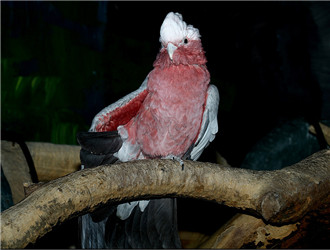
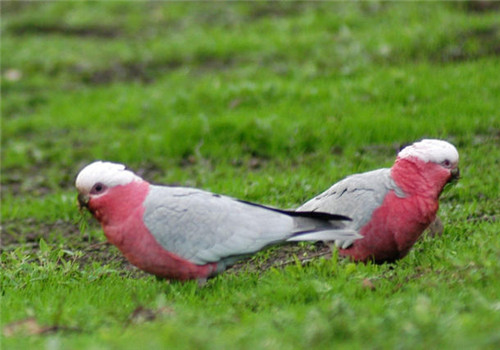
The Galah is mainly distributed in eastern, central, and northern Australia, and has also been introduced to Tasmania. It likes forests, grasslands, and semi-arid areas, and is a favorite pet bird. It has 3 subspecies, 35-36 cm long, 270-350 g, with a dark pink body; the forehead, crown, and neck are pale pink with a whitish tinge; the wings and tail are grey; the lower belly, around the vent, the secondary coverts, the rump, and the inner uppertail feathers are pale grey-white.
3 Galah Living Environment
Although widely distributed, the Galah is listed as Least Concern (LC) on the 2012 IUCN Red List ver 3.1. In captivity, keep the air circulating and the drinking water clean.
The Galah likes forests, grasslands, semi-arid areas, pastures, parks, and is seen in human courtyards and towns. In northern Australia it frequents forested hills; in the south it prefers temperate lowland forests. In summer it is seen in woodlands, mainly cool, shady spots near rivers; in winter it prefers drier woodlands at mild elevations. Year-round it visits city parks and gardens. It likes open areas and almost always avoids dense forest.
The Galah usually gathers in loose flocks, sometimes nearly a thousand at a ranch. Its call is harsh and grating, and it often travels with the Sulphur-crested Cockatoo. It is omnivorous, eating various plant seeds like oats, wheat, and grasses, plus insects and larvae, berries, buds, flowers, and eucalyptus seeds. It drinks in several ways – gulping at a pond’s edge, scooping in flight like a swallow, or landing mid-pond with its bill in the water. It likes ground foraging and especially grain crops and sunflower fields, often causing heavy crop damage. Captive-bred birds are lively and curious and even wild-caught ones tame easily, making a favorite pet, but after sexual maturity the personality may turn aggressive.
4 Galah Feeding Guidelines
The Galah is among the most widely distributed Australian parrots, and its charming plumage makes it a favorite pet. In captivity, refer to its wild food needs.
The Galah is omnivorous, eating various plant seeds like oats, wheat, and grasses, plus insects and larvae, berries, buds, flowers, and eucalyptus seeds. It drinks in several ways – gulping at a pond’s edge, scooping in flight like a swallow, or landing mid-pond with its bill in the water. It likes ground foraging and especially grain crops and sunflower fields, often causing heavy crop damage.