Dusky-headed Conure
2 Photo Gallery

1 Dusky-headed Conure Breed Overview
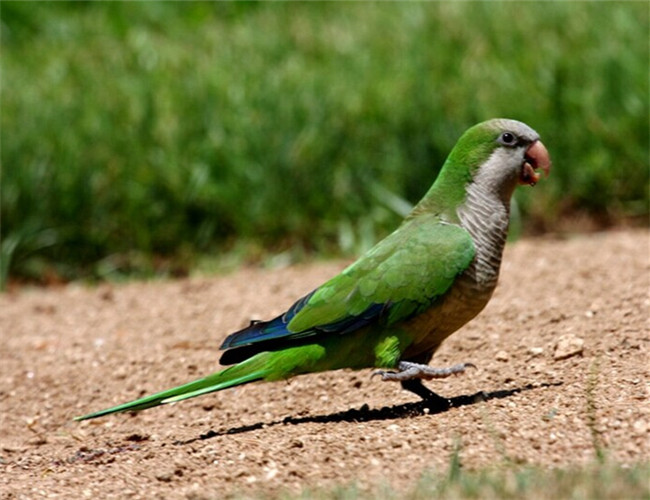
The Dusky-headed Conure (Aratinga weddellii), also known as the Dusky-headed Parakeet, has a dusky-gray head as its name suggests. It feeds on seeds, fruit, nuts, berries, and flowers. Usually found in pairs, gathering in small flocks during breeding, and distributed in Brazil, Colombia, and Peru.
Chinese Name: Dusky-headed Conure
Chinese Aliases: Dusky-headed Parakeet
English Name: Dusky-headed Conure
Binomial: Aratinga weddellii
Kingdom: Animalia
Class: Aves
Order: Psittaciformes
Family: Psittacidae
Tribe: Arini (Conure tribe)
Distribution: Southeastern Amazon basin of Colombia, eastern Ecuador, eastern Peru, and northeastern and northwestern Brazil.
2 Dusky-headed Conure Physical Characteristics
The adult Dusky-headed Conure is about 27 cm long, with an ideal weight of 95-115 g. This parrot is quite quiet, occasionally softly calling only in flight, making it very suitable as a family pet bird.
The Dusky-headed Conure is mostly green with a yellow-green lower belly; the head is gray-brown, each feather edged with a dark blue tone; the upper breast is olive-green; the first primary flight feather is black with a blue tip, and the other wing feathers are green with blue edges; the upper tail is green with blue, the underside black; the bare skin around the eye is red-gray; the bill is black, the iris pale yellow. Juveniles are the same color as adults but darker.
3 Dusky-headed Conure Living Habits
In the wild the Dusky-headed Conure mainly inhabits areas with rivers. Its advantage is quietness, making it hard to detect. It likes to travel in groups, so the risk of capture is high.
When food is abundant, the Dusky-headed Conure occasionally gathers in large flocks of 75-100; normally it leads a nomadic life and likes riparian areas, sometimes even nesting or roosting in trees there. Although nomadic, it rarely flies over dense forest; when foraging it is quite quiet, calling only in flight, its call is somewhat like the White-eyed Conure’s but slightly sharper.
4 Dusky-headed Conure Care Tips
The Dusky-headed Conure’s breeding season is usually in February; it breeds oviparously, generally nesting in trees, and some use woodpecker or termite nest holes. It is a typical climbing bird.
The Dusky-headed Conure usually lays 3-4 eggs per clutch, with a 24-day incubation. The hatched chicks stay in the nest about 55 days, fed by the female, and build their own nest once fully fledged.
The Dusky-headed Conure feeds mainly on seeds, fruit, nuts, berries, and flowers, and also seeks decaying trees for insects and larvae. It usually visits riverside forests to eat mineral-rich soil to supplement minerals.