Angora Rabbit
2 Photo Gallery

1 Breed Overview
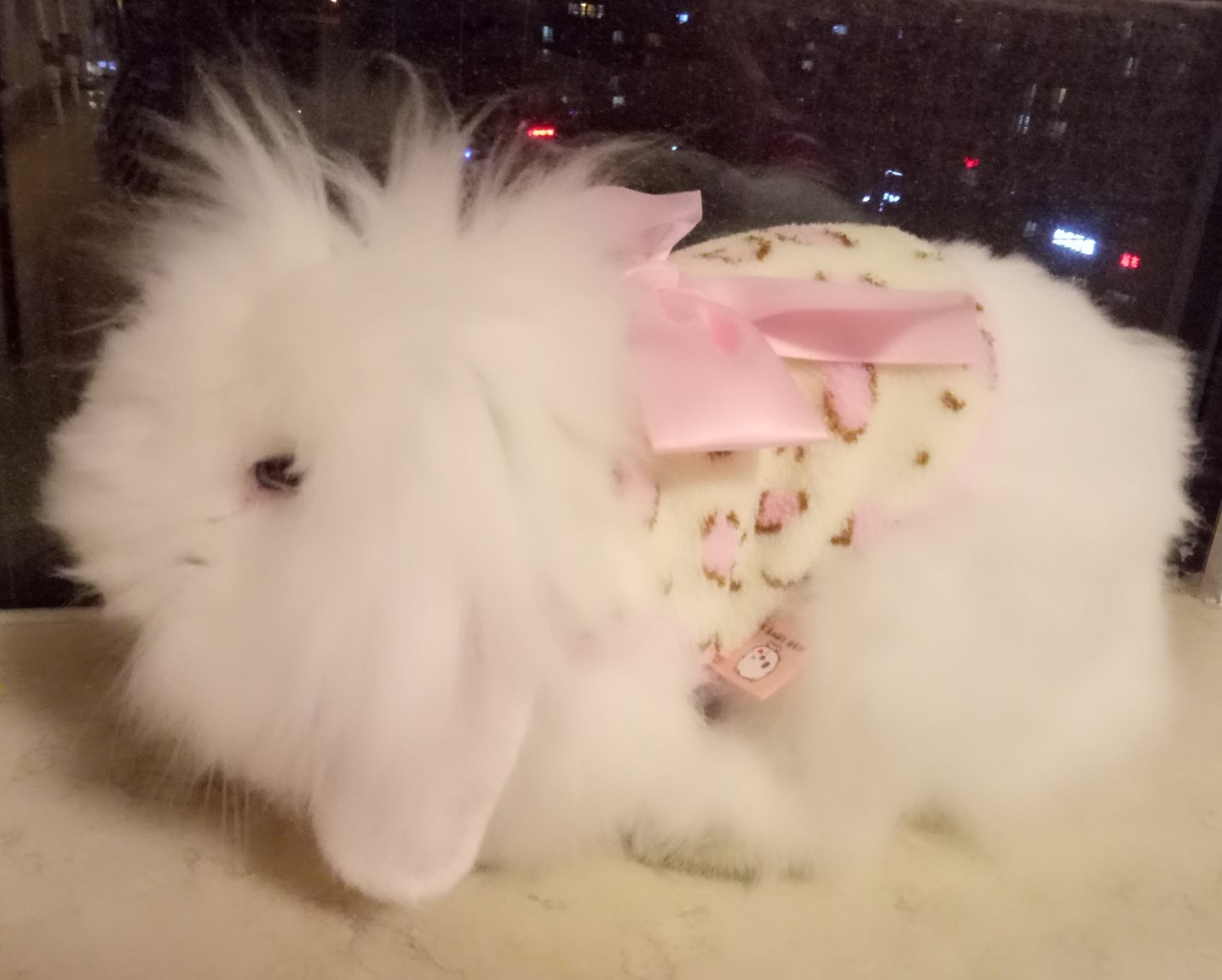
The Angora Rabbit is the ‘grass-mud rabbit’ that went viral online. In fact it is a very ordinary wool rabbit breed — it produces a lot of fur and is not expensive, so it is nothing like the scarce alpaca; on the contrary, many Angora rabbit farms exist in China. As people increasingly like fluffy pets, the Angora Rabbit has also entered ordinary homes as a pet.
The Angora Rabbit comes from Ankara Province, Turkey; Ankara was formerly called Angora in the West, and was renamed the Turkish ‘Ankara’ in 1930 per Turkey’s postal law. Because its fine, long fur resembles that of the Angora goat and Angora cat, it is called the Angora Rabbit. The French royal court kept it as a pet in the mid-18th century, and by the end of that century it was popular across Europe.
Key facts: Chinese name an ge la tu (Angora rabbit); binomial Angora; order Lagomorpha, family Leporidae; distribution from Ankara Province, Turkey; classified into roughly five types: English Angora, French Angora, German Angora, Satin Angora, and Giant Angora; price not high and varies, generally 300–500 yuan, some reaching 800.
2 Morphological Characteristics
The Angora Rabbit is a world-recognized, typical wool rabbit breed. Before shearing, it looks comically charming; because the fur on its face and ears grows slowly, when the full coat has not grown in, it looks very cute.
The Angora Rabbit is kept mainly for its sleep-time silky, fine, soft fur. The fur is only 11 microns in diameter — finer and softer than cashmere. It has a comic look, like a fur ball with a face. Most are gentle but need careful grooming. Brushing is necessary to prevent fur loss and shedding. Wool block (a hard mass of fur) is a common Angora problem and must be dealt with quickly. Shear it about once every three to four months.
Rabbits are not as allergenic as many other animals. A well-cared domestic rabbit lives about 7–12 years, while wild rabbits live shorter; they need care. The Satin Angora has fewer guard hairs, so its coat tangles more easily. When keeping one, prevent wool block; fur blocking the digestive tract is a potential killer. A proper diet lowers its sensitivity to wool block.
3 Care Knowledge
In Angora care, the hardest part is the fur. The problems fur causes are not only matting — the Angora easily swallows fur into its stomach, causing wool block (hairball syndrome).
Like other rabbits, the Angora needs a lot of hay. Fiber from hay helps prevent wool block. It is also strongly recommended that Angora and other long-haired breeds get pelleted feed with at least 13% fiber; the fiber content is on the feed bag’s nutrition table. Also, dehydration can cause fecal impaction, so provide plenty of water and a salt lick to encourage drinking.
Because a rabbit digests fur while grooming itself, shearing at least every 90 days or so is considered necessary to prevent wool block. A papaya dietary supplement (papaya vitamin tablets sold at grocery stores) helps break down wool block in the digestive tract. Fur a rabbit swallows cannot be coughed or vomited up; once the gut fills with swallowed fur, it slowly starves. Left untreated, wool block is fatal.
Leave a wide space in the cage for exercise and for placing fresh, horse-quality hay daily; this helps clear fur from the digestive system and prevent wool block — a method widely used by professional Angora breeders. Another common method is adding fresh pineapple and papaya to the feed; their bromelain and papain help break down (proteolyze) wool block and pass it out. Another way to relax the fur: place a pinecone for the rabbit to play with. The rabbit will keep nibbling and tossing it, and the pinecone becomes an effective fur collector in the cage. Replace it when gnawed apart or covered in fur.
4 Living Environment
Each rabbit needs about 2 square meters of living space, which also lets it exercise fully; squirrel cages, large bird cages, and cat cages on the market can all be used. A rabbit-specific toilet can fit in the cage; some rabbits are naturally clean and relieve themselves in a set corner (place a square toilet there), while others need training. The breeding season brings messy urine-spraying and territory marking; timely neutering or spaying improves this.
5 Feeding Guidelines
The Angora Rabbit’s food is simple — it is an animal that needs only forage, but for tooth-wearing and body needs you can supply food around the clock without harm.
One: Feeding the Angora. Rabbits are almost entirely herbivorous. Because they have 28 teeth that grow for life, they need lots of hay to wear them; otherwise over-long teeth cause disease. Rabbits should not eat vegetables and fruit as staples — long-term feeding easily causes bite problems and, with a lack of rough fiber, gut stasis. The idea that rabbits love carrots is a myth, and feeding vegetables is a very outdated method.
The scientific method: fixed-time, fixed-amount pellets daily, unlimited hay 24 hours a day (only timothy or Australian oat hay as the main hay — lawn grass is not for rabbits), and water always available (best in a ball-tip bottle; drinking from a bowl easily causes mouth inflammation). Rabbits can also be trained to use a toilet.
Two: Can the Angora drink water? No creature on earth needs no water! Some still believe the superstition that giving a rabbit water means instant death, and even pet shops tell owners not to. A rabbit, like any animal, will die without water. Some think watery vegetables and wild grass supply enough moisture — wrong! The water in produce is molecularly different from drinking water and cannot replace it!