LionHead Rabbit
2 Photo Gallery

1 Breed Overview
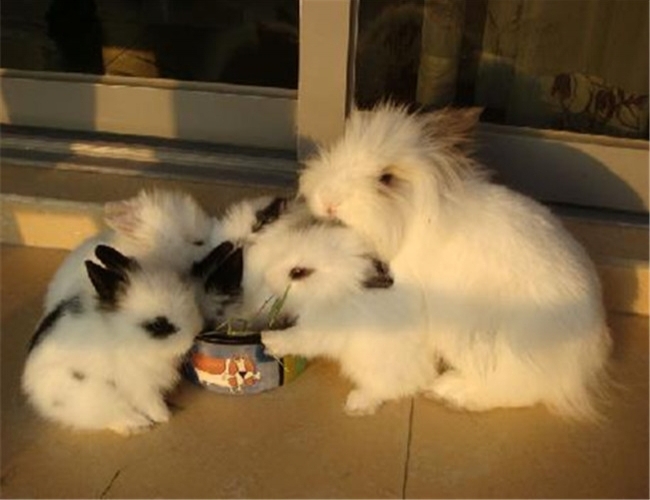
The LionHead rabbit gets its name from the mane of long fur around its head, which makes it look like a tiny lion. It has a gentle temperament and a small, neat body, giving an impression of docile cuteness. In China it has long been kept as a pet rabbit; it is widely distributed, affordable, and has always been a favorite of girls and children.
The LionHead originated in Belgium and is a European breed, though it is not yet recognized by the ARBA (American Rabbit Breeders Association). It resembles the Mini Rex — round face, round body, flat nose — but has longer front legs and a ruff of fur around the neck (forming a ‘V’ that frames the neck), which gives it a lion-like look. Its ears stand upright in a triangle shape, are furless, and do not exceed about 3 inches.
Key facts: Chinese name shi zi tu (lion rabbit); alias lion-head rabbit; English name LionHead; origin Netherlands, United States (and Belgium); body length up to about one foot (35 cm) when adult; average adult weight 3–4 pounds (about 1.5 kg); coat colors include pure white, agouti, brown, and white with black patches; temperament timid, clean-loving, gentle and well-behaved; reproduction viviparous (live-bearing).
Price: the LionHead is relatively expensive — an ordinary rabbit costs around 20 yuan, while a LionHead stays around 80–150 yuan.
2 Morphological Characteristics
The LionHead looks like a small lion because the fur under its neck is long while the body fur is relatively short, creating a contrast like the mane around a lion’s neck — which is why people love to call it the lion rabbit.
The LionHead is native to the Netherlands, the United States, Belgium and nearby regions, and is a highly ornamental pet. The largest adults reach about one foot long; it is a small rabbit, very cute, and comes in many rich colors — white, brown, blue-gray and more. Its biggest feature is very dense, fluffy fur, especially on the head. With those flying sideburns and long eyebrows, doesn’t it look just like a cartoon lion? That is exactly where its name comes from.
The LionHead has a flat nose and long front legs; long fur on the neck, cheeks and top of the head; colors include pure white, agouti, brown, and white with black patches. It is close to the Angora rabbit, but its ears are wider and triangular, and the neck fur is longer like a male lion’s mane — hence the name. Adult weight is around 1.5 kg and body length around 35 cm.
Recognizing association: the British Rabbit Council. The LionHead is not recognized by the American Rabbit Breeders Association because the offspring are not yet standardized; but the breed has been confirmed in Britain and continental Europe.
3 Care Knowledge
As a pet-rabbit breed, the LionHead is always well liked. It is a breed that rarely falls ill and is sturdy, but a rabbit’s life is short compared with a dog’s, so learning how to give the best care within its limited life takes continuous study.
One: Keep the cage clean.
Never take the cage setup lightly. First, avoid a wire-mesh floor if possible; put a soft pad or soft cloth on the bottom, because a rabbit’s hind feet naturally have a sensing cushion used to detect predators. Standing on a wire floor long-term makes lumps grow on the foot pads and twists the feet into a splay, hurting movement; severe cases make the rabbit resist being picked up.
A rabbit will pick one of the four cage corners as its toilet and sleeps on the diagonal corner; just put a soft cloth on the sleeping spot and it rests at ease. Spreading wood shavings is a set step — to absorb urine and keep shed fur from floating around; remember to change them often, or the rabbit easily gets skin disease such as hair loss on the toes or calluses. Put wood shavings in the rabbit toilet. To train it to use the toilet, pick it up and place it in the toilet as soon as it defecates, and it will learn where to ‘go’.
Two: Does the LionHead need baths?
To keep the LionHead’s majestic look, regular coat care is essential. Comb it at least once a day, or the fur will mat into clumps — which spoils the appearance and makes later care harder. Have a pet-shop professional do clipping, or you may easily cut its tender skin.
Bathing a pet is its own art, but rabbits are very clean by nature; if you wipe the body and clear eye discharge daily, bathing it once every three months is fine. Remember to bathe it in warm water during sunny weather, then give it a sunbath — pleasant and with no ‘chilling’ risk! You can also use dry shampoo powder: sprinkle it on the rabbit, then comb out the powder, and the rabbit smells fresh at once.
Three: Don’t let the LionHead get sick.
Diarrhea in a LionHead is a danger signal — it means either overeating or stress, or a gastrointestinal or liver disease. If an underage LionHead has diarrhea, coccidiosis is the most likely cause; take it to an animal hospital at once.
The LionHead can grow to about 2 jin (roughly 1 kg); it is a very fragile little life, so give it the most thorough care.
4 Living Environment
The LionHead is not demanding about its environment and adapts quickly to a new one, but we should still provide a reasonable setting — this not only gives it a comfortable life but, more importantly, helps prevent disease. So what is a reasonable environment?
One: Suitable temperature. The rabbit is a temperate animal; the ideal raising temperature is 30–32°C (86–90°F). Keep the living space at normal room temperature with good air flow — not too cold, not too hot.
Two: Suitable humidity. The proper humidity for raising rabbits is 40–60%. Rabbit death rates are higher in the plum-rain season; dampness causes disease, so the hutch must stay dry and well ventilated.
Three: Avoid wind and rain. If not kept indoors, don’t let the rabbit sit in the sun too long, and don’t let it enjoy ‘the moisture of rain’ — both make it prone to illness.
Four: Protect furniture and appliances. A rabbit naturally gnaws or chews anything to wear its teeth; furniture, cushions, wires or curtains may all be damaged, so watch for danger — especially electrical appliances and wires, lest it get electrocuted.
Five: Arrange the environment by season. Guard against heat in summer and cold in winter. In high heat, prepare a fan to avoid heatstroke; when winter comes, a considerate owner can drape old clothes or blankets around the cage and set a yellow light bulb so the rabbit’s winter is warm too. But be careful with the bulb — keep it outside the cage so the baby rabbit is not burned.
Try not to keep the LionHead confined to the cage all the time; when you are home, let it out to roam and exercise — better for its health and for interaction with you.
5 Feeding Guidelines
In your mind, what should a rabbit eat — carrots? In fact a rabbit’s favorite food is hay, and the LionHead is no exception. A correct, reasonable diet keeps it healthy, so here is advice on feeding the LionHead.
One: Choose the feeding method by growth stage.
1. Kits 0–4 months: unlimited timothy hay + one handful of alfalfa per day + two meals of one handful of rabbit pellets per day + unlimited drinking water (cooled boiled water or pure water).
2. Rabbits 4–6 months: unlimited timothy hay + one handful of alfalfa per day + two meals of one handful of pellets + unlimited drinking water.
3. Rabbits over 6 months: unlimited timothy hay + one handful of alfalfa per day + two meals of one handful of pellets + unlimited drinking water.
Two: Why feed this way?
For rabbits 0–6 months, the body is still growing, so the diet needs a transition — mainly gradually reducing alfalfa. Why reduce it? Alfalfa is a high-calcium, high-protein hay (newborn kits need calcium intake and supplementation to grow); for a rabbit in its growth stage you only need to maintain, not supplement. Once the rabbit is adult (6 months), it no longer needs alfalfa.
Drinking water is necessary for rabbits. You can also offer snacks such as carrot, vegetables, peanuts, and oatmeal, but only in very small amounts.