Double Yellow-headed Amazon
2 Photo Gallery
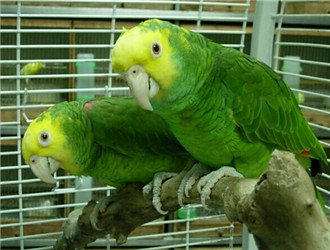
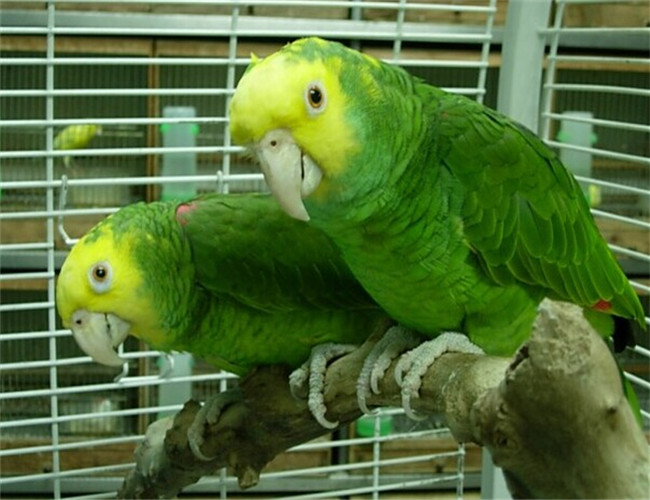
1 Double Yellow-headed Amazon Breed Overview
Double Yellow-headed Amazon (details)
The Double Yellow-headed Amazon, as the name suggests, has yellow head feathers. There are currently four subspecies, mainly distributed in Central America and Mexico. The yellow head feathers generally do not extend over the whole neck and chest until after about 6 years of age or later.
The Double Yellow-headed Amazon has strong talking ability. It inhabits tropical savannas, deciduous forests, and Pacific swamp forests, mostly in lowlands below 500 m. It moves in flocks or small groups. Severe habitat destruction and rampant illegal capture have sharply reduced wild numbers, and the Double Yellow-headed Amazon subspecies is listed as a first-class protected bird.
Chinese Name: Double Yellow-headed Amazon
English Name: Double Yellow-headed Amazon
Binomial Name: Amazona ochrocephala oratrix, Amazona ochrocephala oratrix t
Kingdom: Animalia
Phylum: Chordata
Class: Aves
Order: Psittaciformes
Family: Psittacidae
Subspecies: 4
Distribution: Central America, Mexico
2 Physical Characteristics of the Double Yellow-headed Amazon
Double Yellow-headed Amazon (details)
The ideal Double Yellow-headed Amazon should be 42–47 cm long, with green feathers covering the whole body. This bird is listed as a first-class nationally protected bird. The immature Double Yellow-headed Amazon has yellow head feathers that change with age.
The Double Yellow-headed Amazon has gray feet, orange irises, and gray-white beak. Reaching adult coloration takes about six years. The yellow head feathers extend over the whole neck and chest only after 6–7 years or later, varying by age and bloodline. The common “big yellow cap” does not have as large a yellow area on head, chest, belly, and shoulders as the Magna and Tres Marías subspecies, but older big yellow caps may turn entirely yellow on the head and even neck, varying by individual.
3 Double Yellow-headed Amazon Living Environment
Double Yellow-headed Amazon (details)
As a parrot, the Double Yellow-headed Amazon naturally has strong basic talking ability. Its attractive looks and affectionate personality have long made it a popular pet bird. In the wild it inhabits tropical savannas, deciduous forests, and Pacific swamp forests, mostly in lowlands below 500 m.
As numbers dwindle and most are first-class protected, foreign prices have risen steadily, especially for the Magna and Tres Marías subspecies. But the market has many common big yellow caps falsely sold as Magna Doubles for high profit and under the guise of legal trade—buyers should beware.
In the northern (Atlantic) lowlands they prefer semi-arid areas; southern populations like wetter plains. In Belize they mainly frequent pine plains and adjoining evergreen woodland. Sometimes, lacking food or hit by forest fires, they roam to other areas.
4 Double Yellow-headed Amazon Care and Breeding
Double Yellow-headed Amazon (details)
The best breeding period for the Double Yellow-headed Amazon is each spring, but northern populations begin mating around July. During the breeding season a pair may mate many times a day. Captive-bred Doubles are generally not afraid of people, but once acclimated they become robust and may turn aggressive. The male guards outside the nest box, raising neck feathers in a threatening posture when approached; do not open and inspect the nest box often during incubation, and supply varied nutrition to the parents during breeding.
5 Double Yellow-headed Amazon Feeding Guidelines
Double Yellow-headed Amazon (details)
As it ages, the Double Yellow-headed Amazon’s food needs change. The young mainly eat healthy low-fat foods; in the wild most Amazons fill up on sorghum, bananas, mangoes, and other crops.
Many Double Yellow-headed Amazons have vitamin A deficiency, but supplements are easily overdone, so the best method is to add vitamin-A-rich foods to the daily diet, such as dark leafy greens and yellow vegetables like carrot, corn, and pumpkin. Feed mainly pellets, vegetables, and fruit, or a few seeds (except safflower and sunflower seeds), with nuts as occasional treats. You can share your low-fat, low-salt food. Avoid food with preservatives, colorings, or other additives. Do not feed avocado, chocolate, or alcohol.
Food is very important for the Double Yellow-headed Amazon; most Amazons easily change eating habits. If you are late with a meal, some will bite to show displeasure. For training, food rewards are most effective—they will do their utmost for a snack.