Tanimbar Corella
2 Photo Gallery
1 Tanimbar Corella Breed Overview
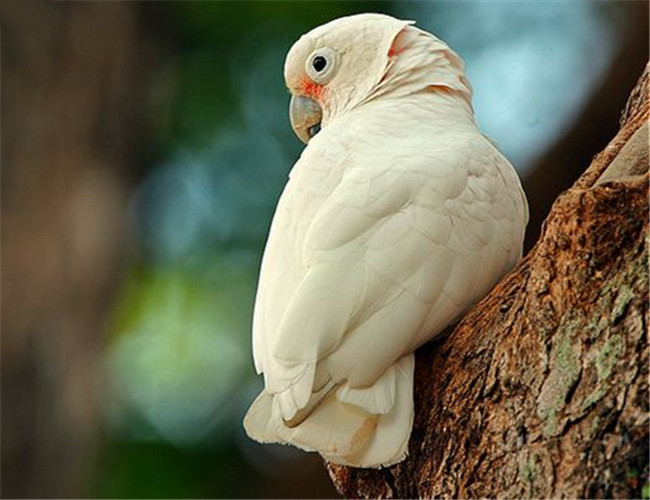
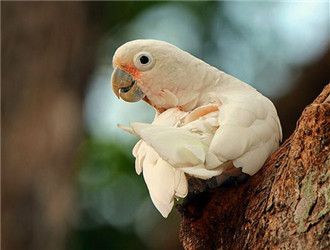
The Tanimbar Corella is among the smallest white cockatoos, so its appearance is very endearing. Among cockatoos, the Tanimbar Corella has one of the best talking abilities; it is very intelligent and easily learns many tricks and skills.
Chinese Name: Tanimbar Corella
Latin Name: Cacatua goffiniana
Other Names: Goffin’s Cockatoo, Little White Cockatoo
Kingdom: Animalia
Phylum: Chordata
Class: Aves
Order: Psittaciformes
Family: Cacatuidae
Genus: Cacatua
Species: Tanimbar Corella
Subspecies: None
Described by and Year: Finsch, 1863
English Name: Tanimbar Cockatoo
English Name: Goffin’s Cockatoo
English Name: Tanimbar Corella
2 Physical Characteristics of the Tanimbar Corella
The Tanimbar Corella is among the smallest white cockatoos, its appearance very pleasing, and its talking ability is fairly good among cockatoos. So how do you identify it?
The Tanimbar Corella is 32 cm long, a small white parrot. The lores have a clear pink tone, and the cheeks and ear coverts show a pale yellow tint. The body feathers are basically translucent pink, especially on the lower parts and chest with a pink look. The underside of the wings and tail have yellow inner webs. The beak is gray-white. The eye-ring is bluish white. The iris is brown and the feet black-gray. The female’s iris is redder than her mate’s.
The Tanimbar Corella’s beak is thick and strong, the upper mandible hooked downward with notches on the edges and a cere at the base. The upper mandible joins the skull like a hinge, moving freely. The beak base has a cere; the tongue is fleshy and soft with a horny spoon-shaped tip. The wings are slightly pointed, the legs short and sturdy, with four toes, two front and two back (zygodactyl), and sharp curved claws suited to climbing.
3 Tanimbar Corella Living Environment
Since the 1970s the Tanimbar Corella has suffered from habitat destruction and capture for trade; today the global population is over 200,000. Captive breeding is somewhat difficult and requires special attention to breeding conditions.
The Tanimbar Corella mainly lives in coastal forests, also found in secondary forests and reforestation plots, or sparse scattered woodland. In Maluku Province, Indonesia, the wild population (released back to the wild) extends to the Kai Islands. Given its very small range, it is considered monotypic. Little is known of its lifestyle. It often lives in large flocks of over 300, commonly in lowland coastal forests.
4 Tanimbar Corella Feeding Guidelines
Captive adult Tanimbar Corellas are shy at first but quickly adapt to a new environment and become very lively. Besides the environment, what to feed them matters greatly.
The Tanimbar Corella nests in tree hollows, laying 2 to 3 eggs; the pair take turns incubating, hatching after 30 days. The chick down is pale yellow, and feathers grow in about 10 weeks; it leaves the nest after about 10 weeks but still depends on the parents for food for several weeks. In the wild it sometimes forages in croplands, especially loving corn fields.