Platycercus eximius
2 Photo Gallery
1 Platycercus eximius Breed Overview
The Eastern Rosella (Platycercus eximius) is one of the more common Australian long-tailed parrots. Its market price is not high, making it very suitable for beginners starting with Australian long-tailed parrots. It has 3 subspecies and has developed the most color variants among rosellas.
Chinese Name: Eastern Rosella
Latin Name: Platycercus eximius
Alias: Seven-grass Parrot
Kingdom: Animalia
Class: Aves
Order: Psittaciformes
Family: Psittacidae
Distribution: Southeastern Australia, Tasmania, and nearby islands
Diet: Seeds, grain, fruit, nectar, insects
2 Platycercus eximius Appearance
Wild Eastern Rosellas are fairly stable in number, so they are commonly kept. By rough count, there are over 500,000 worldwide. Wild birds like open woodlands and forests along rivers.
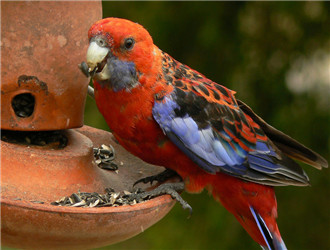
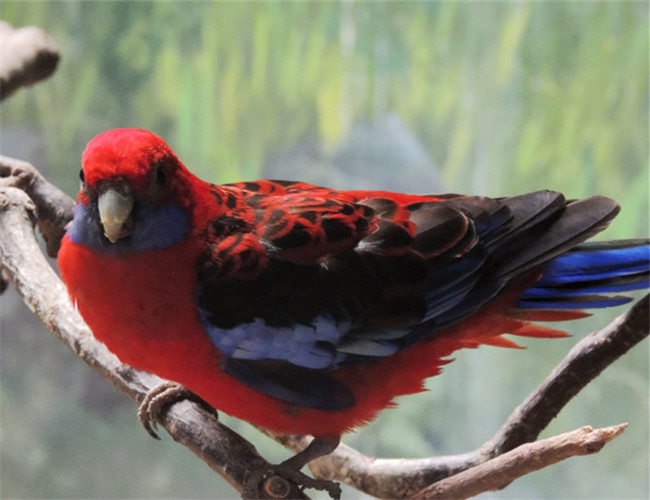
The Eastern Rosella is 30-33 cm long. Its plumage is very bright; the female’s red head and chest feathers are duller than the male’s, her white cheek patch is pale grey, and her crown has a touch of green, while the male’s red is bright, his cheeks pure white, and his crown red with no green.
3 Platycercus eximius Living Environment
The Eastern Rosella is not hard to keep and is a good choice for beginners with Australian long-tailed parrots. In captivity, keep it clean on schedule, deworm regularly, and provide small branches or toys.
The Eastern Rosella is not suited to small cages. In the wild it likes open woodlands, various forests, riverside forests, forest edges, grasslands, eucalyptus woods, shrubs, and farmland – mostly areas with over 400 mm annual rainfall below 1,250 m, usually in pairs or small flocks of 8-20, occasionally larger gatherings after breeding to early spring, often mixing with the Crimson Rosella, Pale-headed Rosella, and Red-rumped Parakeet. It sometimes visits farmland or orchards, causing serious loss to farmers.
4 Platycercus eximius Feeding Guidelines
In captivity, water is essential. Wild Eastern Rosellas eat mainly seeds, grain, fruit, nectar, and insects. So what is best to feed them in captivity?
Staple: millet. Nutrition: oily feeds (peanuts, sunflower seeds, hemp seeds) occasionally, not too much. Vitamins: leafy greens (rape, bok choy, lettuce, spinach) and fruit. Other: grit (essential, like the staple, daily, aids digestion) and calcium (oyster shell fragments).