Emberiza aureola
2 Photo Gallery
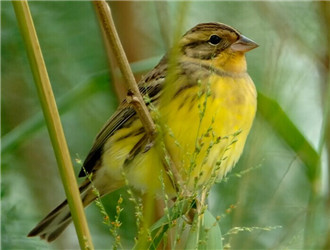
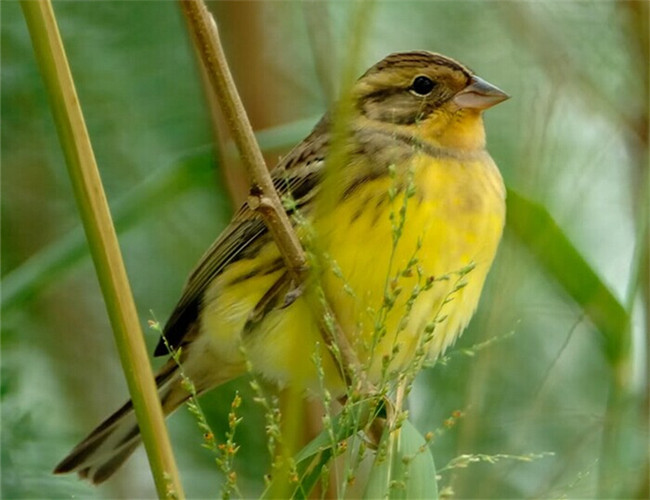
1 Emberiza aureola Breed Overview
The Yellow-breasted Bunting (Emberiza aureola), also known as the Rice bird, has two subspecies. For various reasons the species is now endangered and may go extinct within ten years. The state has listed it in the national directory of beneficial or economically and scientifically valuable terrestrial wildlife under protection. It is mainly distributed from northern Europe to Siberia, northern Japan, and China, wintering in India and other regions.
Chinese Name: Yellow-breasted Bunting
Chinese Aliases: Yellow gall, Rice bird, Yellow belly, Yellow petal, Wheat-yellow sparrow, Old iron back
Binomial Name: Emberiza aureola
Kingdom: Animalia
Phylum: Chordata
Class: Aves
Order: Passeriformes
Family: Emberizidae
Genus: Emberiza
Species: Yellow-breasted Bunting
Distribution: Korean Peninsula, Japanese archipelago, Kuril Islands
2 Physical Characteristics of the Emberiza aureola
From the back, the Yellow-breasted Bunting’s plumage is very similar to a sparrow’s, and both are small birds; adults reach about 15 cm in length. Its typical feature is the pale yellow underside, especially the chest.
The male has a black forehead, crown, chin, and throat; the crown and upperparts are chestnut or chestnut-red. The tail is blackish-brown, with the outer two pairs of tail feathers bearing long wedge-shaped white spots; the wings are blackish-brown with a narrow white bar and a broad white wing patch. The underside is bright yellow with a deep chestnut band across the chest. The female’s upperparts are brown or yellowish-brown with bold dark central stripes; the lower back and uppertail coverts are chestnut-red; wings and tail blackish-brown; the median coverts have broad white tips and the greater coverts narrow gray-brown tips, forming two pale wing bars; the eyebrow stripe is creamy white.
Females and immatures have a sandy crown stripe with slightly darker crown stripes on each side; the creamy eyebrow is more obvious; the back color and stripes are slightly paler than the male’s; the shoulder white spots and wing patches are grayer than the male’s, and the underside yellow is duller. In both sexes the lower back and uppertail coverts are chestnut-red; the outer two pairs of tail feathers have wedge-shaped spots on the outer web. In flight the white wing patches are clearly visible and, together with the body color, are the main identifying feature. The upper mandible is gray, the lower mandible pinkish-brown, and the feet pale brown.
3 Emberiza aureola Living Environment
Because the Yellow-breasted Bunting is now state-protected, it is no longer permitted to keep as a pet bird, yet many still keep it. So what environment should captive keeping provide?
The Yellow-breasted Bunting is a granivore with small, dry droppings, so a cage with a solid bottom is suitable. A single male can be kept in a siskin cage, marsh tit cage, or canary cage. For pairs and breeding, use a canary breeding cage or a box cage for society finches or zebra finches. In nature it builds an open bowl-shaped nest, so use a canary’s open grass nest; provide some cover for seclusion.
The Yellow-breasted Bunting generally does not bathe in water, but fine sand should be spread on the cage floor. To keep the sand clean, change it weekly, and refresh food and water every other day. Give as much sunlight as possible, but avoid direct summer sun, or the drinking water may evaporate and the bird die of thirst.
4 Emberiza aureola Feeding Guidelines
Many keep the Yellow-breasted Bunting mainly for ornament, so males are kept at a high rate. This bird eats mainly grains, so droppings are few and care is easy. Some keep it for ornament, others for breeding; the purpose changes the feeding. Normally use barnyard grass, millet, rice, broom corn millet, sorghum, and weed seeds as staple feed, one type alone is fine, but a proportional mix is best.